
Top 12 Best Shotshell Reloader Hacks You Can’t Miss
Many people who reload their own shotgun shells know the frustration of dealing with a poorly made reloader. A cheap or unsuitable shotshell reloader often jams, makes inconsistent shotshells, or breaks after only a few uses.
Choosing the best shotshell reloader can mean the difference between smooth, consistent loading sessions and constant interruptions that waste time and materials.
The quality of a shotshell reloader depends mostly on its build material, precision fit of the dies, and power range. Steel construction stands up to repeated pressure better than aluminum.
A reloader designed to handle common shotgun shell sizes, like 12 gauge and 20 gauge, without excessive play will produce more reliable shells. Power adjustment also matters because it changes shot patterns and pressures; a model offering precise and repeatable powder charge settings is preferable. Easy cleaning access helps maintain safety and long-term use.
Need a Quick Check?
| Image | Product | Price |
|---|---|---|
Our Top Picks 1  | Lee Precision II 12GA Press | Check Price |
Our Top Picks 2  | Lee Load-All 2 12GA | Check Price |
Our Top Picks 3 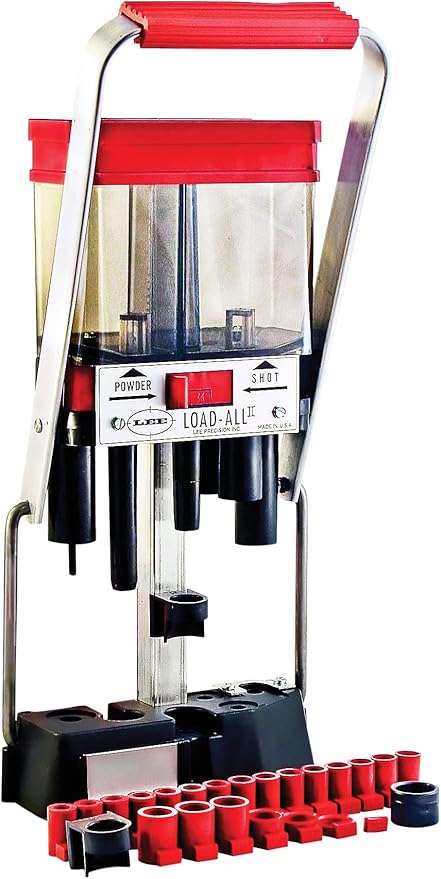 | Lee Precision II 16GA Press | Check Price |
Our Selected Top 12 Shotshell Reloader You Can Trust
This list features carefully chosen shotshell reloaders that offer reliable performance for various needs. Each review explains how well it works, who it fits best, and highlights its main advantages and drawbacks to help you make an informed decision.
1. Lee Precision II Shotshell Reloading Press 12 GA
Lee Precision II Shotshell Reloading Press 12 GA is designed for those looking to reload 12 gauge shotshells with precision and reliability. It suits sportsmen who want consistent performance in a compact setup.
Its biggest strength lies in delivering solid functionality without taking up too much space.
Setting it up involves a straightforward process thanks to its manageable size and included Lee Precision 90011 Load-All II kit. Day-to-day use focuses on smooth operation that keeps things moving without requiring constant adjustments.
The press’s moderate weight and dimensions make it easy to handle while maintaining steadiness during the loading sequence.
Performance excels in reliable shell reloading, delivering consistent shotshells every time. The build quality feels solid and durable, made from materials that hold up well under regular use. The most appreciated feature is its consistent performance, while the main complaint centers on some users finding the weight lighter than expected, which affects stability during heavy use.
Consistent performance is noted as the strongest praise, ensuring shotshells reload effectively every time. The common gripe relates to its light weight, which can make the press feel less stable when used extensively on harder surfaces.
Those seeking a compact and straightforward reloading press with reliable output will find it suitable. People wanting something heavier and potentially more stable might want to explore larger, heftier models elsewhere.
Pros
- Compact size fits small workspaces
- Reliable and consistent shell reloading
- Easy to set up and use daily
- Includes complete Load-All kit
Cons
- Lighter weight may reduce stability
- Material specifics not detailed
| Specification | Details |
|---|---|
| Item Dimensions LxWxH | 10.08 x 8.23 x 9.09 inches |
| Item Weight | 0.17 kg |
| Package Weight | 1.95 kg |
| Included Components | Lee Precision 90011: 12G Load-All Ii |
| Material | Other |
2. Lee Precision Load-All 2 Shotshell Press 12 Gauge
Reloading 12 gauge shotshells feels straightforward and reliable with this press, suited for anyone wanting control over their ammo setup. Its biggest strength lies in the included 24 shot and powder bushings, which provide flexibility during loading without extra purchases.
Setup is pretty simple, with the whole system fitting into a compact 19 by 9 by 4-inch workspace. Daily use involves swapping the bushings to get the right shot and powder amounts, making it easy to tailor loads.
The press itself is light enough at 1.77 kg to move around but stays firm on the bench during operation. The multi-colored design helps keep different parts visible and organized.
Its design ensures consistent, precise shotshell reloading every time, backed by durable build quality typical of Lee Precision. Strong points include the efficiency in handling powder and shot separately. A common downside mentioned is the somewhat limited to 12-gauge shells only, which restricts broader use.
The parts feel sturdy though cleaning after several uses can be a bit fiddly.
The press consistently delivers precise shot and powder measurements thanks to the variety of bushings included. A frequent issue is that cleaning the tool after use demands patience due to its design and small parts. The product offers solid performance for dedicated 12-gauge shell reloaders.
Reloaders who stick to 12-gauge will appreciate the control and parts included here. Those wanting wider gauge versatility should look elsewhere, as this press focuses solely on 12-gauge shot shells without expansion options.
Pros
- Includes 24 shot and powder bushings
- Compact size fits small workspaces
- Lightweight at 1.77 kg for easy handling
- Reliable build quality by Lee Precision
Cons
- Supports only 12-gauge shells
- Cleansing parts can be awkward
| Specification | Details |
|---|---|
| Item Package Dimensions L x W x H | 19 x 9 x 4 inches |
| Package Weight | 1.77 kg |
| Item Dimensions LxWxH | 19 x 9 x 4 inches |
| Brand Name | Lee Precision |
| Model Name | 90013 |
| Included Components | Shotshell Press |
3. Lee Precision II Shotshell Reloading Press 16 GA
Lee Precision II Shotshell Reloading Press 16 GA is a solid choice for anyone looking to reload 16 gauge shotshells with consistent results. It suits both beginners and experienced reloaders who value straightforward operation and reliability above all else.
Setting up the press is fairly simple, and it takes up minimal space thanks to its compact dimensions. The process focuses on getting each shell ready quickly, with a strong feel in the lever that helps with the repeated motions of resizing, depriming, and loading. Regular maintenance is manageable as the parts are easy to access and clean after use.
Performance-wise, it handles the main routine of shotshell reloading effectively, delivering uniform results with each cycle. The materials used contribute to a durable build, standing up to frequent use without much worry. Users appreciate how sturdy it feels, though some point out that the manual steps require attention to detail and can feel a bit slow during larger batches.
Reliable performance in resizing and loading 16 gauge shells stands out as a key strength, with a solid feel during operation. The main drawback mentioned is the slower pace when working through many shells due to manual handling steps.
Reloaders focusing solely on 16 gauge loads who need something simple and durable will appreciate this press. Those looking to reload multiple gauges or seeking faster automated options should explore other models.
Pros
- Compact size fits small workspaces well
- Offers consistent shotshell resizing
- Easy to maintain and clean
- Sturdy construction holds up over time
Cons
- Manual steps can slow down large batch reloading
- Not specialized beyond 16 gauge shells
| Specification | Details |
|---|---|
| Item Weight | 1.7 kg |
| Package Weight | 2.16 kg |
| Item Dimensions LxWxH | 5.08 x 6.77 x 1.06 inches |
| Package Dimensions L x W x H | 20.5 x 11 x 5.5 inches |
| Model Year | 2011 |
4. Lyman Shotshell Handbook 6th Edition

Printed on high-quality paper and designed with a clear layout, this handbook suits anyone looking for reliable shotshell reloading information. Its biggest strength lies in the up-to-date data covering wads, hulls, powders, and primers, making it an essential reference.
Daily use involves easy access to detailed technical data and case identification, all presented in full color for quick reading. The inclusion of a non-toxic data section helps those concerned about safety.
You’ll find it straightforward to find specifics without flipping through dense text due to its structured format and classic style.
Performance is excellent for a handbook, offering trusted reloading info that has been a standard for years. The build is simple, a sturdy paper book with a durable cover in a bright orange size that’s easy to locate on a shelf or workbench.
The standout praise highlights its comprehensive content, though some mention it could include even more up-to-date data.
The handbook is praised for its thorough and up-to-date reloading information packed into a clear, colorful format that’s easy to use. The most common complaint is about the paper format, which some feel limits durability compared to digital references and occasionally lacks the very latest updates available elsewhere.
Reloaders who value printed guides with detailed, organized technical data will benefit greatly. Those needing immediate digital updates or a more rugged format for workshop use might look for an electronic alternative instead.
Pros
- Full color and easy to read
- Includes newest wads, hulls, powders, primers
- Non-toxic data section for safety
- Made in the USA with solid build quality
Cons
- Paper material less durable than digital alternatives
- Some desire even more recent data updates
| Specification | Details |
|---|---|
| Item Package Dimensions L x W x H | 10.83 x 8.58 x 0.55 inches |
| Package Weight | 1.15 kg |
| Item Dimensions L x W x H | 11 x 1 x 8.5 inches |
| Item Weight | 2 pounds |
| Material | Paper |
| Included Components | Book |
5. MEC 600 Jr Mark V 12 Gauge Press

Known for its sturdy design, the MEC 600 Jr Mark V 12 Gauge Press suits anyone serious about loading their own 12 gauge shotshells. Its single biggest strength lies in reliable operation, making it a solid choice for consistent shotshell reloading.
Setting up the press involves mounting it securely to a bench and arranging the components included. Daily use focuses on smooth shell handling and straightforward adjustments tailored for 12 gauge shotshells.
The mechanism feels balanced for repeated cycles without excessive effort, allowing steady work without strain.
Performance hits the mark by delivering consistent shell reloading with every pull of the handle. Build quality leans on heavy-duty materials to withstand frequent use. Common praise highlights durability and effective reload action.
Some point out that calibration can take a bit of patience before hitting the perfect setup.
This shotshell reloader consistently handles 12 gauge shells with dependable durability that stands up to frequent use. Its main drawback is the time needed to fine-tune the settings during the first setup to achieve smooth operation. Adjustments are straightforward but require patience.
People dedicated to 12 gauge shotshell reloading and who want a tough, reliable press will find it fits well. Those needing a press for multiple gauges or faster setup might prefer different options more suited to versatility or quicker calibration.
Pros
- Built to last with heavy-duty materials
- Easy to mount on a workbench
- Reliable and consistent shell reloading
- Includes necessary presses for 12 gauge
Cons
- Initial calibration can be time-consuming
- Single gauge focus limits versatility
| Specification | Details |
|---|---|
| Brand Name | MEC |
| Model Number | 844712 |
| Included Components | Presses |
| Item Type Name | MAYVILLE ENGINEERING CO 600 jr mark v shotshell reloader |
| Set Name | MEC Shotshell Reloader – 600 Jr Mark V |
| Manufacturer | United Sporting Company |
6. MEC Loader 600 Jr Mark V .410 Gauge
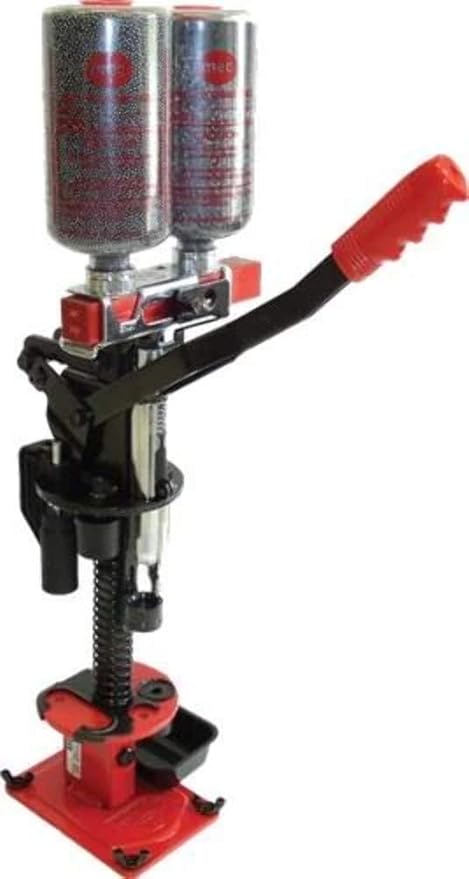
A solid choice for anyone serious about reloading .410 gauge shotshells, this press stands out for its reliable crimp quality. Ideal for those valuing precision, it offers a cam-action crimp die that consistently restores shells to their original condition, making it a better pick over cheaper, less precise alternatives.
Setting up the loader is straightforward, especially important during busy reload sessions. The one-piece Spindex Crimp Starter ensures shell alignment is spot on, which means each crimp matches the original crease perfectly. Handling primers takes some manual effort unless you upgrade with the E-Z Prime 285 CA, which removes the need to place primers one by one.
Reloading pace supports four to six boxes per hour, which works well for moderate reloading sessions.
Performance is strong thanks to its core components, delivering consistent shell returns with an adjustable setup for 3 shells. The build is solid and ready for regular use across various gauges including .410 bore. The clearest compliment focuses on the quality of the crimp every time, with the most frequent downside being the manual primer loading unless extra parts are added.
The standout feature is the reliable, perfect crimping that replicates original shell creases each time, praised for precision and consistency throughout use. A common complaint is the need to handle primers individually unless an additional primer feed upgrade is purchased, which adds to the initial cost and setup.
Reloaders focused on accuracy and shell condition will find this model fitting their needs perfectly. Those who prioritize faster or fully automated primer feeding might want to consider a different solution or invest in the additional E-Z Prime 285 CA for the primer feed upgrade.
Pros
- Consistent crimp quality with cam-action die
- One-piece Spindex Crimp Starter ensures correct alignment
- Adjustable for 3″ shells for versatility
- Supports moderate reloading speed of 4-6 boxes per hour
Cons
- Primer feeding is manual without upgrade
- Limited to specific gauges, including only .410 bore for this model
| Specification | Details |
|---|---|
| Model | 84474103 |
| Brand Name | MEC |
| Gauge | .410 bore |
| Adjustable for Shell Length | 3″ |
| Number of Items | 1 |
| Unit Count | 1 Count |
7. Lee Precision Load-All 2 Shotshell Press 12 Gauge
Reloading your own 12 gauge shotshells can save time and money, especially if you load frequently or want control over your loads. Lee Precision’s Load-All 2 Shotshell Press fits well for those focused on 12 gauge shells, offering reliable station work with a simple design.
Its biggest strength lies in its straightforward and sturdy construction.
Setup involves mounting the press securely and switching gauges carefully if needed, remembering that converting to 16 or 20 gauge limits the shell lengths you can load. The press is fairly light at 4 pounds, making it manageable on a bench.
Day-to-day use involves adjusting for shell length within its limits and trusting its components to deliver consistent resizing and priming.
Performance centers on providing steady reloading for standard 12 gauge shells without the ability to load longer shotshells like 2 1/2 or 3 1/2. Build quality is solid with durable materials, though there’s a notable tradeoff in gauge conversion compatibility. The main complaint is around the lack of support for certain shell lengths, which can limit versatility for some reloaders.
Most praise highlights its dependable construction and consistent reloading of standard 12 gauge shotshells. The biggest sticking point is the inability to handle longer shells or fully support all gauges after conversion, restricting its use for some reloaders.
Reloading enthusiasts focused on 12 gauge shot shells with standard lengths will appreciate this press’s durability and simplicity. Those needing flexibility for longer shells or multi-gauge use might want to look at other options that accommodate a wider range of cartridges.
Pros
- Compact and manageable 4-pound weight
- Solid, durable materials for everyday use
- Compatible with standard 12 gauge shells
- Simple design eases basic reloading steps
Cons
- Cannot load longer 2 1/2″ or 3 1/2″ shells
- Conversion to 16 or 20 gauge limits shell options
| Specification | Details |
|---|---|
| Item Weight | 4 pounds |
| Item Dimensions LxWxH | 19 x 9 x 4 inches |
| Package Weight | 2.58 kg |
| Package Dimensions L x W x H | 18.19 x 12.6 x 10.63 inches |
| Compatible Shell Lengths | Does not load 2 1/2″ or 3 1/2″ shells |
8. Johnny Clip 12 Gauge Quad Loader

Quick and easy reloads stand out with the Johnny Clip 12 Gauge Quad Loader, designed for both beginners and experts. Its ability to work with LOAD 2 and LOAD 4 shotgun shell loading techniques makes it a reliable choice for anyone wanting fast, consistent shell handling.
Attaching the loader is straightforward thanks to built-in belt loops and MOLLE compatibility, requiring no extra hardware. Daily use feels natural as the integrated shell stops hold shells firmly, ensuring they won’t fall out while on the move. Switching between different shells stays simple and secure, helping maintain pace during reloading sessions.
The loader performs well in delivering accurate shell alignment thanks to its precision-engineered retention stops. Build quality comes from J&L Dynamics, using aluminum female posts for mounting SafariLand ELS, adding strength and durability. Most users value its secure grip on shells, although some find the attachment setup could feel limiting with non-compatible gear.
Strong shell retention allows for precise and repeatable alignment, which most users appreciate during active reloading. The shell stop design prevents accidental loss but might not fit all gear setups conveniently due to its attachment method.
Those looking for fast, dependable reloads on standard MOLLE-equipped vests or belts will find this loader very useful. Users needing more versatile mounting options or non-conventional attachments might want to look elsewhere.
Pros
- Optimized for LOAD 2 and LOAD 4 techniques
- Integrated shell stops for secure retention
- Built-in belt loops and MOLLE compatibility
- Includes aluminum posts for SafariLand ELS mounting
Cons
- Attachment can be restrictive with non-standard gear
- Limited mounting options beyond included components
| Specification | Details |
|---|---|
| Brand Name | J&L Dynamics, LLC |
| Manufacturer | J&L Dynamics, LLC |
| Included Components | Two 8/32 aluminum female posts for mounting SafariLand ELS |
| Model Number | Johnny Clip 2×4 |
| Manufacturer Part Number | Johnny Clip 2×4 |
9. Lee Precision Load-All 2 Shotshell Press .410 Bore

Reloading .410 gauge shotgun shells suits shooters who want consistent results and an easy setup. Perfect for hobbyists or small-scale reloaders, it stands out for handling both 2-1/2 and 3 shells with a reliable design built to keep the process smooth and steady.
Setting up takes little time thanks to a large hopper that holds over 5 pounds of shot, reducing the need for constant refills. The built-in primer catcher with an accessible drawer keeps spent primers cleaned up during use. With 14 shot bushings and 33 powder bushings included, adjusting loads is straightforward, and the recessed stations help speed up shell positioning during reloading sessions.
Precision and durability are front and center with a time-tested design meant to produce consistent velocity and reliable shot patterns. Constructed primarily of nylon, it feels solid yet manageable in size and weight.
Often praised for its capacity to reload up to 200 shells per hour, some note the press’s weight might require a stable setup to avoid movement during heavy use.
Reloading at 200 shells per hour is a notable strength, as is the consistent shot velocity it delivers. The nylon build means it’s lighter but can feel less steady than metal presses during vigorous use.
Ideal for hobbyists reloading .410 shells who appreciate the included accessories and ease of use. Those needing a heavier-duty or metal press might want to explore other options for greater stability.
Pros
- Handles 2-1/2″ and 3″ .410 gauge shells
- Large hopper holds over 5 pounds of shot
- Built-in spent primer catcher with easy empty drawer
- Comes with full load data and bushing charts
Cons
- Press weight may require stable mounting
- Primarily made from nylon, not metal
| Specification | Details |
|---|---|
| Item Dimensions LxWxH | 18 x 6.75 x 2.75 inches |
| Item Weight | 3.7 pounds |
| Includes | 33 powder bushings, 14 shot bushings, complete load data |
| Suitable Shells | .410 gauge 2-1/2″ and 3″ |
| Manufacturer | Lee Precision |
10. Mayville Engineering CO 9000GN28 Progressive Shotshell Reloader

Offering a solid build and progressive action, this shotshell reloader is suited for anyone serious about reloading efficiency. Its standout feature is the ability to handle multiple stages smoothly, making it ideal for active reloaders aiming to boost throughput without complicated setups.
Daily use involves setting up the press on a sturdy workbench within a medium-sized workspace. The design allows you to feed one cartridge at a time while it handles multiple loading stages progressively. Adjustments are straightforward, and the size is manageable enough for regular cleaning and maintenance.
The included presses come ready to work, fitting most standard shotshell components directly.
Performance hinges on consistent pressure application across loading stages, which it delivers well thanks to careful engineering. The heavy steel construction clocks in at 25.3 pounds, providing stability and durability during repeated cycles. Strong praise goes to its consistent shell quality and steady handle action, while some mention its size could be awkward in smaller setups.
The press earns high marks for reliable, consistent shell production thanks to its progressive design and sturdy build. Handling multiple reloading stages smoothly is a highlight, although its weight and dimensions present challenges for tight spaces or portable use.
Reloaders focused on volume and durability will appreciate its solid construction and efficient cycling. Those with limited workspace or needing a lighter press might prefer more compact alternatives better suited to small or mobile setups.
Pros
- Progressive loading for faster shell assembly
- Heavy-duty steel construction ensures long life
- Compact enough for standard reloading benches
- Adjustable settings for various shell sizes
Cons
- Relatively heavy at 25.3 pounds
- Size may be cumbersome in smaller work areas
| Specification | Details |
|---|---|
| Item Weight | 25.3 pounds |
| Package Dimensions (L x W x H) | 22.5 x 17.15 x 10.15 inches |
| Model Name | MEC progressive 9000N grabber shotshell reloader |
| Included Components | Presses |
| Part Number | 9000GN28 |
11. 12 Gauge Magazine Loader for Armscor Shotguns 2-Pack

SIEGMANNS VR60 12 Gauge Magazine Loader for Armscor Shotguns 2-Pack simplifies loading shells into 12-gauge magazines with much less effort. Perfect for anyone who spends a lot of time at the range or in training and needs a reliable way to reduce thumb fatigue while loading magazines for various models.
Using the loader involves matching it to the correct Armscor-compatible magazine, like the RIAVRPA40 or VR80. It fits securely and guides each shell into the magazine, making the process faster and easier. Its plastic construction keeps it lightweight and manageable during long practice sessions, reducing hand strain and speeding up reloads.
Loading shells feels smoother, cutting down the effort usually needed to push them against tough springs. Built from durable plastic in a compact design, it holds up well through repeated use.
Most praise focuses on reducing thumb soreness, while some say it only fits specific Armscor magazine models, limiting versatility.
Many appreciate how this loader significantly cuts down the thumb strain usually felt when pressing shells into tough magazines. Common complaints focus on its limited compatibility, with the design only fitting certain Armscor magazine models, which may not suit everyone.
People who regularly work with compatible Armscor shotguns and want to speed up loading without hurting their thumbs will find this handy. Those with other shotgun magazine brands or looking for a more universal tool should look elsewhere.
Pros
- Fits multiple Armscor magazine models precisely
- Reduces thumb fatigue during extended loading
- Speeds up the loading process noticeably
- Lightweight plastic design
Cons
- Only compatible with select Armscor magazines
- Plastic may wear with heavy use
| Specification | Details |
|---|---|
| Item Package Dimensions L x W x H | 3.94 x 3.78 x 2.24 inches |
| Package Weight | 0.09 kg |
| Brand Name | SIEGMANNS |
| Model Name | VR60 |
| Material | Plastic |
| Included Components | Speed Loaders |
12. SplashNColor 12 Gauge Magazine Loader for Rock Island Armory

Loading magazines for the Rock Island Armory VR60 or VR80 feels straightforward and quick with this loader. Best suited for shooters who want to spend less time loading and more time firing, it truly cuts down on loading hassle. The biggest appeal is how much faster it makes filling shotgun magazines compared to doing it by hand.
Setup is simple, just grab the loader and align it with your shotgun magazine. Its compact size means it fits easily in your shooting kit without adding weight or bulk.
Day-to-day, it reduces thumb strain by speeding up the process, and the black ABS material feels durable yet light enough to carry conveniently. This loader is easy to handle and clean after use, making range sessions smoother.
Performance-wise, it does exactly what it promises: fast magazine loading without sticking or jams. The ABS construction keeps it lightweight at just 1 ounce but still sturdy enough for regular use. Customers praise the speed it adds to reloading, while the most frequent complaint points to its specific fit, working only with Rock Island Armory VR60 and VR80 magazines.
Most users appreciate how quickly the loader fills magazines, making shooting sessions more efficient. The main drawback is that the loader only works with Rock Island Armory VR60 and VR80 magazines, limiting its use for people with other shotgun models.
This loader suits shooters with Rock Island Armory VR60 or VR80 models who want to save loading time and reduce hand fatigue. Anyone with different magazines or gauges should consider another option that fits their gear better.
Pros
- Speeds up 12 gauge magazine loading
- Lightweight at just 1 ounce
- Simple setup and easy handling
- Durable ABS material construction
Cons
- Only fits Rock Island Armory VR60 and VR80
- Limited to 12 gauge magazines
| Specification | Details |
|---|---|
| Item Dimensions LxWxH | 1.6 x 1.6 x 2.4 inches |
| Weight | 1 ounces |
| Material | ABS |
| Color | Black |
| Compatible Models | Rock Island Armory VR60, VR80 |
| Warranty | 2-Year Warranty |
Best Shotshell Reloaders Comparison Table
| Product | Brand | Gauge Compatibility | Weight | Warranty |
|---|---|---|---|---|
| Lee Precision II 12GA Press | Lee Precision | 12GA | 0.17 kg | – |
| Lee Load-All 2 12GA | Lee Precision | 12GA | 1.77 kg | – |
| Lee Precision II 16GA Press | Lee Precision | 16GA | 1.7 kg | – |
| Lyman Shotshell Handbook 6th | Lyman | Shotshell Handbook (Paper) | 2 lb | 1 Year |
| MEC 600 Jr Mark V | MEC | – | – | – |
| MEC 600 Jr Mark V | MEC | – | – | – |
| Lee Load-All 2 12GA Reloading | Lee Precision | 12GA | 4 lb | – |
| Johnny Clip 12GA Quad Loader | J&L Dynamics | 12GA | – | – |
| Lee Load-All 2 .410 Bore | Lee Precision | .410 Bore | 3.7 lb | Standard Guarantee |
| Mayville MEC 9000GN28 Reloader | MEC | – | 25.3 lb | – |
| Armscor 12GA Magazine Loader | SIEGMANNS | 12GA | 0.09 kg | 1 Year |
| SplashNColor Rock Island Loader | SplashNColor | 12GA | 1 oz | 2 Year |
- BrandLee Precision
- Gauge Compatibility12GA
- Weight0.17 kg
- Warranty–
- BrandLee Precision
- Gauge Compatibility12GA
- Weight1.77 kg
- Warranty–
- BrandLee Precision
- Gauge Compatibility16GA
- Weight1.7 kg
- Warranty–
- BrandLyman
- Gauge CompatibilityShotshell Handbook (Paper)
- Weight2 lb
- Warranty1 Year
- BrandMEC
- Gauge Compatibility–
- Weight–
- Warranty–
- BrandMEC
- Gauge Compatibility–
- Weight–
- Warranty–
- BrandLee Precision
- Gauge Compatibility12GA
- Weight4 lb
- Warranty–
- BrandJ&L Dynamics
- Gauge Compatibility12GA
- Weight–
- Warranty–
- BrandLee Precision
- Gauge Compatibility.410 Bore
- Weight3.7 lb
- WarrantyStandard Guarantee
- BrandMEC
- Gauge Compatibility–
- Weight25.3 lb
- Warranty–
- BrandSIEGMANNS
- Gauge Compatibility12GA
- Weight0.09 kg
- Warranty1 Year
- BrandSplashNColor
- Gauge Compatibility12GA
- Weight1 oz
- Warranty2 Year
How to Choose the Best Shotshell Reloader
Choosing the right shotshell reloader depends on factors like ease of use, durability, and compatibility with different shell sizes. Prioritizing these helps avoid frequent repairs and ensures consistent, safe reloads, ultimately saving money and preventing frustration during the reloading process.
Reloading Capacity
Reloading sessions can slow down quickly if the machine struggles to handle multiple shells or requires constant reloading of parts. A device that holds a decent volume, often 50 or more shells per session, reduces downtime and keeps the process moving smoothly.
This is especially true for anyone loading different shell sizes or gauges, like 12, 20, and 28 gauge, where compatibility matters.
Speed is affected by how efficiently the machine feeds shells through its system and how fast each step completes. Models that can process more rounds per hour without binding or jamming help with bulk reloading tasks. Machines that specify compatibility with common gauges and adjustable settings save time and prevent frustration when switching between types.
Consider capacity and speed together; a fast machine that only holds a few shells will often require more frequent reloads, slowing you down overall.
Build Quality and Materials
The frame and components endure a lot of stress from constant use, so sturdy materials make a noticeable difference. Steel and heavy-duty aluminum usually stand up better to repeated action compared to cheaper plastics. In areas exposed to powder or primers, corrosion resistance is necessary because these substances can promote rust or deterioration without proper materials.
Internal parts like springs, levers, and dies also need to be crafted well to maintain smooth operation over time. Machines with tight tolerances in these mechanisms tend to be more reliable, avoiding wear that leads to frequent malfunctions or replacements.
Checking for parts made from hardened steel or treated metals often indicates longer lifespan and consistent performance.
Ease of Use and Setup
Clear, straightforward instructions are critical, especially for newcomers or for setups involving multiple load specifications. Machines that require minimal tools for changes and have intuitive controls make the reloading process more predictable.
Adjustments like shell length, powder charge, and shot volume must be accessible and easy to fine-tune without guesswork.
Maintenance frequently involves cleaning or removing shells, and poor accessibility can turn what should be a quick task into a frustrating session. Models with open designs or tool-free access points are much easier to work with regularly. This reduces downtime and minimizes errors from incomplete setups or stuck shells.
Safety Features
Handling primers and powder requires good safety measures to prevent accidental ignition or spills. Machines that include secure primer feeding mechanisms reduce the risk of primers falling out or detonating unintentionally.
Features like powder and shot funnels designed to minimize spills also improve safety and cleanup.
Many devices are built with safety standards in mind, such as insulated handles and guards around moving parts. Checking that the product meets relevant local or industry safety certifications helps ensure the operator is protected during each stage of the reloading process. A well-designed safety system reduces the chances of accidents considerably.
Precision and Consistency
Inconsistent powder charges or uneven shot placement can cause unreliable ammunition performance and pose safety risks. Accurate measurement systems that deliver uniform charges every time play a key role in load consistency.
Some machines use precise dials or digital readouts that help maintain the exact powder amount needed.
Uniform crimping and proper shell seating ensure that the shell holds together and chambers correctly without loose components. Good repeatability means you won’t have to adjust settings constantly after the first few rounds, speeding up your work and improving reliability. Look for equipment known to produce consistent results batch after batch.
Proper Maintenance and Care for Long-Lasting Shotshell Reloaders
Keeping a shotshell reloader in good condition requires regular cleaning after every use. Powder residue and dirt can build up on the dies and shell holders, which might cause misfires or inconsistent loads.
Use a brush and a solvent suitable for firearms to remove any debris from the critical moving parts.
Lubrication is key to preventing wear and ensuring smooth operation. Apply a light oil to the ram and pivot points, but avoid excess oil near the powder chamber to prevent contamination. Inspect the screws and bolts frequently to make sure everything remains tight and aligned.
Key maintenance tips:
- Clean all components thoroughly after reloading sessions.
- Use appropriate lubricants to reduce friction.
- Store the reloader in a dry, dust-free area.
- Replace worn parts promptly to maintain accuracy and safety.
Consistent care like this can extend the life of your equipment and ensure reliable performance over time.
Common Mistakes to Avoid When Reloading Shotshells
One common mistake is failing to inspect primers and hulls before reloading. Using damaged or unsuitable components can lead to dangerous pressure spikes or misfires. Always discard cracked primers and cracked or deformed hulls to prevent accidents.
Overloading powder or using the wrong charge amount is another frequent error. Each load should follow the manufacturer’s specifications carefully since too much powder can cause excessive pressure, while too little can result in poor performance.
Skipping the resizing step on plastic hulls leads to poor seating of components and inconsistent chambering. Resizing ensures the shell fits the chamber correctly and avoids feeding problems.
Finally, not counting components or reloading out of sequence can cause missing or double primers and shells, which is both unsafe and wasteful.
Avoid these pitfalls by:
- Carefully checking all components before reloading.
- Following exact load data and instructions.
- Ensuring proper shell resizing and inspection.
- Maintaining an orderly workflow during reloading.
Comparing Single-Stage and Progressive Shotshell Reloaders for Different Needs
Single-stage shotshell reloaders handle one shell at a time, offering greater control over each step in the process. This makes them suitable for beginners or those who prefer to fine-tune individual components. Reloaders of this type are generally simpler mechanically and easier to troubleshoot.
Progressive shotshell reloaders speed up the process by performing multiple steps automatically, often allowing several shells to be reloaded with one pull of the handle. They work well for users who reload large volumes of shotgun shells regularly, like competitive shooters or hunters who go through a lot of ammo.
The trade-off involves setup and maintenance. Progressive reloaders require more adjustment and cleaning, and mistakes during operation can affect multiple shells at once. Single-stage reloaders minimize that risk but take more time per shell.
Choosing between them depends on your priorities: precision and simplicity or quantity and speed.
People Also Asked
How Do I Properly Size Shotshells for My Reloader?
Properly sizing shotshells involves adjusting the sizing die on your reloader to match the shells’ hull dimensions. Using a caliper to measure the hull and carefully following your reloader’s manual helps ensure consistent sizing to avoid feeding or chambering issues.
What Safety Precautions Should I Take When Using a Shotshell Reloader?
Always wear safety glasses and keep powder and primers away from open flames or sparks when using a shotshell reloader. Work in a clean, well-lit area and never mix powders or primers from different manufacturers to reduce the risk of accidents.
How Do I Clean and Maintain My Shotshell Reloader?
Clean your shotshell reloader after every few uses by wiping down parts with a dry cloth and using a brush to remove residue from dies and moving components. Apply a light oil to metal parts to prevent rust, but avoid excessive lubrication that can attract dirt.
What Are Common Problems When Using a Shotshell Reloader?
Common problems include improperly sized shells causing jams, inconsistent powder charges, and primers not seating correctly. These issues often come from insufficient cleaning, incorrect adjustments, or using worn components, so regular checks and maintenance help reduce problems.
How Long Does a Typical Shotshell Reloader Last with Regular Use?
A well-maintained shotshell reloader can last several years with regular use, depending on build quality and how often you reload. Keeping components clean, replacing worn parts on time, and following manufacturer recommendations help extend the machine’s lifespan.
Conclusion
Choosing a shotshell reloader comes down to capacity, build quality, and ease of use. A machine that can handle the volume you need without frequent reloads will save time. Durable materials and straightforward mechanisms reduce maintenance and frustration during reloading sessions.
Consider how precise the tool is if you want consistent loads, which matter most for safety and performance.
Pick a reloader that fits your available workspace and budget since some machines require more room and investment than others. Think about how often you will use it to avoid overbuying features you don’t need. Check the comparison table and detailed reviews above to find the best match for your specific needs and shooting routine.