
Top 12 Best Hand Primer Tool That Will Change Your Work!
Many who work with small engines or hydraulic systems know the frustration of a primer tool that slips, leaks, or fails to create enough suction. The best hand primer tool delivers consistent pressure and a tight seal, avoiding wasted fuel or air bubbles that can stall equipment.
A poorly chosen tool often wastes time and effort, forcing repeated attempts to get the job done right.
Durability and fit are key to a reliable hand primer tool. Those made from solid metal or reinforced plastic resist wear and handle higher pressure without cracking.
Size matters too, the nozzle should match your fuel line diameter, usually between 3/8 and 1/2 inch, to ensure a proper seal. A design that allows easy disassembly simplifies cleaning, which keeps the tool functioning smoothly over many uses.
Need a Quick Check?
| Image | Product | Price |
|---|---|---|
Our Top Picks 1  | Frankford Arsenal Scale | Check Price |
Our Top Picks 2  | Hornady Priming Tool | Check Price |
Our Top Picks 3  | RCBS Auto Primer | Check Price |
Our Selected Top 12 Hand Primer Tool Worth Your Money
This list features a variety of hand primer tools designed for different needs and skill levels. Each review covers how the tool performs, who it is best suited for, and highlights its strengths and weaknesses to help you make an informed choice.
1. Frankford Arsenal Platinum Series Precision Scale
Perfect for anyone looking to remove primers quickly and with minimal effort, this hand primer tool stands out for its versatility and ergonomic design. It suits reloaders dealing with a wide range of calibers, offering consistent performance and comfort over long sessions.
Its biggest strength lies in handling everything from small pistol cases to large rifle brass without hand fatigue.
Setup involves simply loading your brass into the spring-loaded case holder, which assists with easy removal of deprimed cases. The universal collet system adapts to calibers from .20 cal up to .338 Lapua, making it ready for most reloading needs. Removing spent primers is straightforward thanks to the primer catch tube, which slides out for quick cleaning.
The ergonomic aluminum handle springs back automatically, making repetitive use less tiring.
It efficiently crushes primers on a variety of brass types including military crimped primers, rifle, and pistol cases. The aluminium construction feels solid and durable in hand with a full-length grip that supports comfort through bulk depriming tasks. A common drawback is its slightly larger size, which some may find cumbersome for storage.
However, performance remains reliable and fast throughout.
The tool gets high marks for being comfortable and reducing hand strain even during ample depriming sessions. Most users note the large size as a minor inconvenience but appreciate the versatility and durability of the aluminum build.
Anyone reloading various calibers regularly will find it a solid choice. Those who need something compact for occasional or travel use might prefer a smaller, less bulky alternative.
Pros
- Works with pistol, rifle, and military crimped primers
- Spring-loaded handle returns automatically for ease
- Universal collet covers wide caliber range
- Ergonomic full-length aluminum grip reduces fatigue
Cons
- Larger size may be cumbersome for some users
- Primer catch tube needs regular cleaning
| Specification | Details |
|---|---|
| Item Dimensions LxWxH | 13 x 12 x 2 inches |
| Package Weight | 0.29 kg |
| Universal Collet System Caliber Range | .20 cal up to .338 Lapua |
| Material | Aluminum |
| Handle | Spring loaded, ergonomic |
| Included Components | Hand Deprimer |
2. Hornady Handheld Priming Tool
Aluminum construction makes this priming tool both lightweight and durable for handheld use. It suits reloaders looking for a solid, portable device, with precision as its standout feature. Compact and easy to handle, it fits well into any reloading setup.
Setup involves placing the tool comfortably in your hand, using the included handheld priming unit to seat primers with controlled force. Its size and weight, around 8 x 7 x 3 inches and only 16 ounces, allow for easy handling over long sessions.
Cleaning is straightforward since it’s a simple mechanical design with few parts.
It performs consistently when seating primers, meeting the essential need for precision and reliability. The aluminum body feels sturdy and well-machined, resisting wear during regular use. Strong praise often highlights its lightweight feel and ease of use.
A common drawback is the lack of a more secure primer hold during quick reloading cycles.
This tool receives strong praise for being lightweight and comfortable during extended reloading, making it easy to control primer seating depth. On the downside, people often notice that the primer grip isn’t always tight, which can slow down speed and require occasional adjustments.
Reloaders focused on precision and light handheld use will appreciate this product’s design and durability. Those needing very fast priming or extra primer security might want to look for tools specifically designed for high-volume tasks or with added grip features.
Pros
- Lightweight aluminum design
- Compact and easy to hold
- Lifetime warranty adds confidence
- Simple construction for easy cleaning
Cons
- Primer hold can feel insecure
- Not ideal for very rapid priming
| Specification | Details |
|---|---|
| Material | Aluminum |
| Item Dimensions LxWxH | 8 x 7 x 3 inches |
| Item Weight | 0.27 g |
| Package Weight | 16 ounces |
| Included Components | Hand held priming tool |
| Warranty | No-Risk, Lifetime Warranty |
3. RCBS Auto Priming Tool
Green metal construction and a unique single-stage lever system are the first things you’ll notice about the RCBS Auto Priming Tool. Best suited for those who want fast and accurate priming without fuss, it fits well in most reloading setups and aims to save time during preparation.
Setup is straightforward, with two primer rod assemblies and two feed tubes included, making replacement or switching simple. Day-to-day use involves pulling the lever to drop primers smoothly. At 2.25 pounds, it’s solid but not bulky, and the green color helps it stand out on a crowded bench.
Handling it feels sturdy, and the metal build inspires confidence during repeated use.
The core strength lies in the accurate placement of primers thanks to the lever system, keeping your priming consistent. The metal frame stands up well to regular use, though some note the size takes a bit of bench space. Most praise how fast it is, while the common complaint highlights occasional difficulty with primer feeding when not perfectly aligned.
Accuracy and speed are praised mostly, with many appreciating how reliably primers drop using the lever system. Some users experience occasional jams or misfeeds if primers are not aligned exactly right, requiring a careful hand during operation.
Reloaders focused on quick, consistent priming will appreciate this tool’s design and durability. Those who need a smaller, more compact tool or are priming less frequently might want to consider alternatives with less bench space requirement.
Pros
- Accurate priming with single-stage lever
- Includes extra primer rods and feed tubes
- Heavy metal build for durability
- Compact dimensions fit most benches
Cons
- Can be awkward if primers aren’t perfectly aligned
- Larger footprint than simpler hand primers
| Specification | Details |
|---|---|
| Item Weight | 2.3 pounds |
| Dimensions (LxWxH) | 14.4 x 5.4 x 2.8 inches |
| Material | Metal |
| Included Components | Two primer rod assemblies, two primer feed tubes |
| Model Name | 9460 |
4. Lyman Gunsmithing Tools
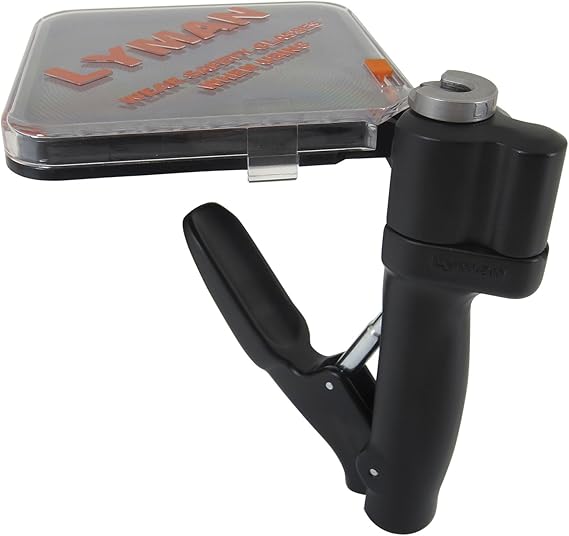
Lyman Gunsmithing Tools specializes in hand priming for reloaders who want a reliable, no-fuss setup that fits standard shell holders. Its biggest strength is the ability to switch between large and small primers instantly, without losing or fiddling with tiny parts.
Setting it up is straightforward thanks to the inclusion of two primer trays with built-in punch assemblies for both large and small primers. The trays have shut-off gates that keep primers in place, so you don’t have to worry about spills when changing sizes.
The ergonomic shape helps reduce hand fatigue during longer sessions, making it practical for hobbyists or anyone loading ammunition regularly. Shell holders are standard, so compatibility is rarely an issue.
It performs consistently well in seating primers firmly, and the build quality is solid enough to last through many reloading cycles. The no-small-parts design is especially convenient, meaning fewer chances of losing something critical.
Some users mention it can feel a bit bulky for smaller hands, but most appreciate its durability and easy handling.
Many appreciate the tool’s built-in shut-off gates and primer trays that stop primers from spilling during changes. The most common fuss is about its bulkiness for those with smaller hands, which can affect ease of use over time. Durability and no loose parts stand out as useful features in everyday handling.
This hand priming tool suits reloaders wanting a straightforward, durable setup that manages different primer sizes without extra hassle. People seeking a more compact or specialized device might want to look elsewhere, but those needing reliable, easy primer seating with standard shell holders will be satisfied.
Pros
- Works with standard shell holders
- Instant primer size changeover
- No small parts to lose
- Ergonomic design reduces fatigue
Cons
- Can feel bulky for smaller hands
- Limited to primers supported by included trays
| Specification | Details |
|---|---|
| Brand Name | Lyman |
| Included Components | Lyman 7777810 “E-ZEE Prime” Hand Priming Tool |
| Recommended Uses For Product | Reloading ammunition, Hunting, Tactical activities, Sport shooting, Hobbyist use |
| Tray Type | Integrated |
| Model Number | 7777810 |
5. Lee Precision Priming Tool Kit
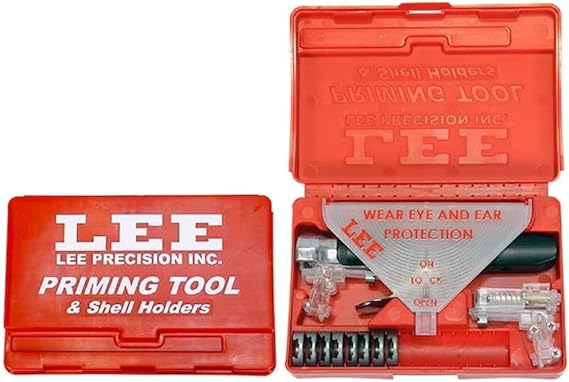
Reloading primers by hand can be a slow and fiddly process, especially if you need to switch between cartridge types. The Lee Precision Priming Tool Kit is designed for anyone looking to speed up that task with a reliable, all-in-one setup. Its biggest strength lies in the wide compatibility thanks to multiple shell holders stored neatly in one box.
Getting started is straightforward with the kit including eight popular shell holders right out of the box. The molded storage case keeps everything organized, with room for 10 more shell holders you might add later.
Handling the tool day-to-day feels sturdy and compact, making it easy to carry and set up on a reloading bench without needing extra space.
Priming is smooth and efficient, thanks to the Auto-Prime mechanism, which delivers consistent results across over 130 cartridges. The build quality stands out for being solid yet light at just 1.2 pounds.
Some users mention the molded case could be more durable, but the tool itself holds up well under regular use and keeps primers firmly in place without slipping.
The tool gets high marks for its dependable priming action and wide cartridge compatibility, making it easy to switch between rounds. A common point of complaint is that the molded storage case isn’t very sturdy, which could be an issue if you take it on the go frequently.
People who want a versatile, lightweight priming tool for a range of cartridges will appreciate this kit. Those looking for a heavy-duty case or a more instructional setup should look elsewhere to meet those specific needs.
Pros
- Includes 8 common shell holders
- Compact molded storage case
- Works with over 130 cartridge types
- Lightweight at 1.2 pounds
Cons
- Storage case feels fragile during transport
- No instructions included in the box
| Specification | Details |
|---|---|
| Item Dimensions LxWxH | 5.8 x 4.8 x 1.5 inches |
| Package Weight | 1.2 pounds |
| Number of Items Included | 1 (Priming Tool Kit) |
| Shell Holders Included | 8 popular types, fits 130+ cartridges |
| Extra Shell Holder Slots | Holds 10 additional shell holders |
| Model Year | 2012 |
6. Lee Precision Auto Bench Priming Tool

A big plus is the triangular tray made to hold all brands of primer boxes, fitting neatly for anyone who reloads regularly. Ideal for people looking for an ergonomic hand primer that keeps things organized and in one place, it’s especially helpful when switching between different primer sizes.
Setting up the device takes just moments. The ergonomic design makes it comfortable to handle during use, and having both large and small primer trays means you don’t have to swap parts often.
The acrylic material keeps it lightweight yet sturdy while the tray holds primers firmly, simplifying loading without constant refills.
It performs its job reliably thanks to a straightforward design and durable acrylic construction. The primers drop smoothly into their spots without sticking or jamming, which helps fasten the process. A noted downside is occasional difficulty getting very small or large primers to settle perfectly every time, but it mostly works as expected without complications.
Primers load smoothly and hold well in the tray, making daily priming easier and faster. The main complaint is occasional difficulty with primer sizes that don’t settle consistently, requiring a bit of extra care during use.
Reloaders who manage a variety of primer sizes will appreciate the tray design and ergonomic handling. Anyone needing precise fit with unusual primer sizes might want to consider a different tool better tailored to those specifics.
Pros
- Triangular tray accepts all primer box brands
- Ergonomic design reduces hand fatigue
- Includes both large and small primer trays
- Lightweight acrylic construction
Cons
- Small primers sometimes hard to settle perfectly
- Not all primer sizes fit flawlessly every time
| Specification | Details |
|---|---|
| Item Package Dimensions L x W x H | 11.18 x 10.75 x 2.01 inches |
| Package Weight | 0.45 kg |
| Item Dimensions LxWxH | 11 x 7 x 2 inches |
| Item Weight | 0.3 kg |
| Material | Acrylic |
7. RCBS Rock Chucker Supreme Auto Priming Tool

Reloaders looking to speed up primer seating will appreciate an automatic tool designed for high-volume use. It works well across various calibers and is known for making the priming process faster and more consistent, which is its biggest strength for anyone handling lots of rounds.
Setting it up involves attaching the priming tool to a press or using it by hand, benefiting from an ergonomic design that reduces strain. The automatic priming mechanism cuts down manual effort. Its size is compact at 6 x 3 x 2 inches, and it weighs 1.2 pounds, making it comfortable to handle for longer sessions without feeling bulky.
The tool performs with reliable primer seating every time, which ensures cartridges like the .22 Hornet chamber accurately. Made from aluminum, it feels solid and durable.
The most common praise notes consistent and accurate primer seating, with complaints generally about it being heavier than some simpler hand primers. It balances well between build quality and ease of use.
The strongest point is its consistent and accurate primer seating that speeds up high-volume reloading sessions. The most common downside is the weight, which some find heavier compared to smaller manual primers.
Reloaders who handle large quantities of ammunition will enjoy the reduced effort and speed. Those seeking a lightweight, ultra-basic priming tool should explore simpler, lighter options instead.
Pros
- Automatic priming speeds up reloading
- Ergonomic design reduces hand fatigue
- Consistent primer seating for accuracy
- Compact and manageable size
Cons
- Heavier than simpler hand primers
- Might feel bulky for some users
| Specification | Details |
|---|---|
| Item Dimensions (LxWxH) | 6 x 3 x 2 inches |
| Item Weight | 1.2 pounds |
| Material | Aluminum |
| Model Name | 9358 |
| Color | Black |
8. Lee Precision Auto Prime Hand Priming Tool

Compact and lightweight, this hand priming tool fits easily into any reloading setup. Designed for adult users who hunt or reload frequently, its standout feature is how simple it makes priming without bulky equipment. It suits anyone looking for handheld precision in a small package.
Setting up involves placing the case and primer into the tool, which is intuitive thanks to its size and shape. Weighing just 22.68 grams, it offers excellent control and less fatigue during repetitive priming. Its multi-color design doesn’t add bulk, and the single included piece makes storage straightforward without extra parts to manage.
The tool performs reliably when pressing primers into cases, delivering consistent seating. Build quality feels sturdy despite its light weight, constructed from other materials engineered for durability. Common praise highlights its ease of use and precision, while complaints mention its limited functionality beyond priming and occasional awkward handling for larger calibers.
Its strongest advantage is easy and precise primer seating which suits steady, careful reloading. Most users find it simple and efficient, although some note awkwardness handling bigger caliber cases.
Anyone needing a straightforward, portable priming device will appreciate its design. Reloaders handling many different case sizes or who want a multipurpose tool might look at other options.
Pros
- Compact size fits well in hand
- Lightweight for less fatigue
- Simple setup and operation
- Made in the United States
Cons
- Limited to priming only
- Can feel awkward with larger cases
| Specification | Details |
|---|---|
| Item Dimensions LxWxH | 5 x 4 x 1 inches |
| Item Weight | 22.68 g |
| Package Dimensions L x W x H | 5 x 3.5 x 0.2 inches |
| Package Weight | 0.02 kg |
| Model Name | 90031 |
| Country Of Origin | United States |
9. JEENDA Fuel Hand Primer Pump

JEENDA Fuel Hand Primer Pump is a reliable tool made to manually prime diesel fuel systems, perfect for those handling trucks and heavy equipment. Its biggest strength is the precise fit and compatibility with a broad range of engine models and truck types, ensuring dependable fuel system operation.
Setting up the primer pump involves connecting it via flare fittings at both inlet and outlet, suited for rear mounting on diesel trucks. Day-to-day use is straightforward with manual operation, making it easy to prime engines without needing extra tools or power sources.
Its vehicle-specific fit cuts down on installation adjustments, which saves time and hassle.
Performance-wise, the primer pump effectively creates the necessary suction to move diesel fuel through systems, helping avoid air locks. It is built solidly with durable materials designed to handle heavy truck environments. Praise often highlights its compatibility across multiple engine types, while some users note the manual hand operation may feel slow for larger fuel systems.
Many users appreciate how the pump fits well with different vehicle models and does its job reliably. Some find the manual priming a bit slow, especially when working with larger fuel systems that demand more effort.
Those needing a straightforward, durable hand primer for diesel trucks will find this pump suitable. Users looking for faster or powered priming solutions might want to explore other options.
Pros
- Vehicle-specific fit for precise installation
- Compatible with wide range of truck engines
- Rear mount design simplifies setup
- Manual operation requires no external power
Cons
- Hand operation can be slow for bigger fuel systems
- Limited to diesel fuel use only
| Specification | Details |
|---|---|
| Operation Mode | Hand |
| Mounting Type | Rear Mount |
| Inlet Connection Type | Flare |
| Outlet Connection Type | Flare |
| Gas Type | Diesel |
10. Lee Precision Auto Prime Hand Priming Tool
Priming brass cases by hand feels straightforward with this tool, especially for those doing small batches. It’s neat, compact, and ideal for hand loaders wanting consistent primer placement without bulky gear. The biggest plus is how it makes manual priming easier while maintaining accuracy with its dedicated shell holders.
Setting up involves selecting the correct shell holder, which fits only the Auto Prime model. The process is simple and the device remains stable through repeated use. It won’t take up much space and cleanup is easy thanks to the few parts involved.
You handle each case carefully and can feel the control over primer seating depth.
It really does the main job well, giving evenly seated primers without damage. The build is solid for a small hand tool, with a multi-colored finish adding some character.
Most praise is about its reliable fit for specific cases, while a common complaint is the need for special shell holders limited to this tool alone.
The tool delivers consistently accurate primer seating thanks to its tailored shell holders, but those same holders limit compatibility exclusively to this model. Users appreciate the control it offers during hand priming but note the restricted range of shell sizes as a drawback.
Hand loaders focused on manually priming smaller quantities will find this tool helpful and easy to use. It’s less suited for those needing fast or varied caliber priming, who should look for a model with interchangeable or universal holders.
Pros
- Compact design suits small workspaces
- Dedicated shell holders ensure precise fit
- Lightweight and easy to handle
- Simple setup with clear functionality
Cons
- Special shell holders only fit this tool
- Not suitable for high-volume priming
| Specification | Details |
|---|---|
| Item Dimensions LxWxH | 5 x 4 x 1 inches |
| Item Weight | 22.68 g |
| Model Name | 90206 |
| Manufacturer | ACK, LLC |
| Included Components | Shellholder |
| Color | Multi |
11. Fuel Line Primer Bulb

Fuel Line Primer Bulb is a manual tool made for quickly starting fuel flow in carburetors and low-pressure fuel systems. Perfect for people with boats, motorcycles, and cars, it excels with powerful suction and simple use, making fuel filter changes or fuel extraction hassle-free.
Setting up involves connecting the hose barb to the fuel line, which fits most carburetors and low-pressure systems. The large bulb pumps fuel rapidly with a unidirectional flow, so you can manually introduce or extract fuel without fuss. Using it is straightforward and reliable for daily maintenance tasks across a variety of vehicles.
The product does its job efficiently, moving fuel quickly thanks to its durable design. It is built with a large bulb for fast pumping and strong suction.
Positive feedback highlights the efficiency and ease of use. A common drawback is that it’s manual operation can feel tiring over longer periods or frequent use.
Strong suction and quick pumping stand out as clear benefits, making fuel delivery swift after maintenance tasks. Some find manual pumping laborious over time, especially when used frequently or for lengthy periods.
Those needing a dependable, universal-fit tool for quick fuel priming will appreciate its simplicity and strength. Users wanting less manual effort might want to explore powered options instead.
Pros
- Strong suction with large bulb design
- Fits most carburetors and fuel systems
- Quick unidirectional fuel flow
- Simple manual operation
Cons
- Manual pumping can be tiring during extended use
- Position for auto part is unspecified
| Specification | Details |
|---|---|
| Fit Type | Universal Fit |
| Compatible with Vehicle Type | Car, Motorcycle |
| Inlet Connection Type | Hose Barb |
| Gas Type | Diesel |
| Operation Mode | Manual |
| OEM Equivalent Part Number | 9001080A |
12. Fuel Primer Plunger Pump Kit

The nickel plated brass construction makes this hand primer pump tough and corrosion-resistant, perfect for ATV and snowmobile riders looking for a reliable fuel priming solution. Its key strength lies in the vehicle-specific fit that ensures proper installation and operation.
Setup involves mounting the pump on the fuel tank using the included T fitting and 3 feet of fuel line, which connects via hose barb and quick connect fittings. Regular use is straightforward since it’s mechanical, no batteries or power sources needed, allowing fuel to be drawn efficiently before starting the vehicle.
Performance matches what’s expected for a tank-mounted mechanical primer, delivering consistent fuel flow when operated. The nickel plated brass build stands out for durability and corrosion resistance.
Most reviews highlight its sturdy construction as a plus; occasional feedback notes the importance of confirming vehicle compatibility before purchase.
The nickel plated brass material provides great durability, keeping the primer resistant to corrosion for long-term use. Most common issues arise from buyers not confirming vehicle compatibility prior to ordering, which may lead to installation problems.
This primer suits those who require a sturdy, mechanical priming pump tailored for specific ATV or snowmobile models. Those needing a general universal fit or fuel type versatility might want to consider other options.
Pros
- Durable nickel plated brass body
- Includes “T” fitting and 3 feet fuel line
- Mechanical operation requires no power
- Vehicle specific fit for proper installation
Cons
- Must verify fit before purchase
- Limited to gasoline use only
| Specification | Details |
|---|---|
| Fit Type | Vehicle Specific Fit |
| Compatible Vehicle Type | ATV, Snowmobile |
| Mounting Type | Tank Mount |
| Operation Mode | Mechanical |
| Connector Type | Quick Connect |
Best Hand Primer Tools Comparison Table
| Product | Warranty | Weight | Material | Dimensions |
|---|---|---|---|---|
| Frankford Arsenal Scale | Limited Lifetime | 0.29 kg | Aluminum | 13 x 12 x 2 in |
| Hornady Priming Tool | No-Risk, Lifetime Warranty | 0.27 g | Aluminum | 8 x 7 x 3 in |
| RCBS Auto Primer | Limited Manufacturer | 2.3 pounds | Blend | 14.4 x 5.4 x 2.8 in |
| Lyman Gunsmith Tools | – | – | – | – |
| Lee Precision Priming Kit | – | 1.2 pounds | Other | 5.8 x 4.8 x 1.5 in |
| Lee Bench Priming Tool | Replacement part warranty | 0.3 kg | – | 11 x 7 x 2 in |
| RCBS Rock Chucker Auto | See manufacturer | 1.2 pounds | Aluminum | 6 x 3 x 2 in |
| Lee Auto Prime Hand Tool | – | 22.68 g | Other | 5 x 4 x 1 in |
| JEENDA Fuel Primer | – | – | – | – |
| Lee Auto Prime Hand Tool | – | 22.68 g | Other | 5 x 4 x 1 in |
| Fuel Line Primer Bulb | – | – | – | – |
| Fuel Primer Pump Kit | – | – | – | – |
- WarrantyLimited Lifetime
- Weight0.29 kg
- MaterialAluminum
- Dimensions13 x 12 x 2 in
- WarrantyNo-Risk, Lifetime Warranty
- Weight0.27 g
- MaterialAluminum
- Dimensions8 x 7 x 3 in
- WarrantyLimited Manufacturer
- Weight2.3 pounds
- MaterialBlend
- Dimensions14.4 x 5.4 x 2.8 in
- Warranty–
- Weight–
- Material–
- Dimensions–
- Warranty–
- Weight1.2 pounds
- MaterialOther
- Dimensions5.8 x 4.8 x 1.5 in
- WarrantyReplacement part warranty
- Weight0.3 kg
- Material–
- Dimensions11 x 7 x 2 in
- WarrantySee manufacturer
- Weight1.2 pounds
- MaterialAluminum
- Dimensions6 x 3 x 2 in
- Warranty–
- Weight22.68 g
- MaterialOther
- Dimensions5 x 4 x 1 in
- Warranty–
- Weight–
- Material–
- Dimensions–
- Warranty–
- Weight22.68 g
- MaterialOther
- Dimensions5 x 4 x 1 in
- Warranty–
- Weight–
- Material–
- Dimensions–
- Warranty–
- Weight–
- Material–
- Dimensions–
How to Choose the Right Hand Primer Tool
Key factors to consider include durability, ease of use, and compatibility with your specific needs. Choosing the right hand primer tool ensures efficient performance and reduces the risk of damage or replacement, ultimately saving money and avoiding unnecessary hassle.
Ergonomics and Grip
Spending an afternoon setting primers reveals how quickly a poorly shaped tool can tire your hand. Tools with slim or overly bulky handles cause finger cramps and wrist strain after a hundred or so rounds.
The difference shows in how much you’re willing to keep going without breaks.
A good hand tool here fits comfortably in your palm and has a grip texture that doesn’t slip but also doesn’t chafe. Sizes around 4 to 6 inches with an ergonomic curve accommodate most hand sizes without forcing awkward finger positioning. Soft rubberized grips or molded plastic shapes reduce fatigue by distributing pressure evenly.
When used for extended sessions, these design features keep your hand from cramping or slipping, making the job less taxing overall.
Durability and Build Quality
Tools made with low-quality metals or thin plastic usually show wear quickly, especially on moving parts like levers or primer cups. Rust and dirt find their way into exposed crevices, causing corrosion or stickiness in the action. Over time, this leads to misfires or parts breaking mid-session.
Look for bodies crafted from CNC-machined aluminum, steel, or reinforced polymer for sturdiness. Components handling the primers should resist impact and friction.
A solid pivot point with steel pins or bushings prevents loosening or wobbling. Finishes like anodizing or powder coating also protect surfaces from moisture and grime. Sturdy construction lasts through heavy use and outdoor exposure without the tool feeling flimsy.
Primer Efficiency and Performance
Creating a reliable vacuum seal with primer cups can be tricky. Tools that require excessive force or fail to hold the primer tightly waste time and cause inconsistent primer seating. Minimal effort should deliver a crisp striker blow that lights the primer every time.
Efficiency comes from well-fitted primer cups that match standard sizes, usually small rifle or large rifle primers. The striker’s spring tension matters; too weak and primers don’t ignite, too strong and it feels tiring.
Some tools accept multiple cartridge sizes, making them more versatile for different loaders. Consistent, strong strikes with minimal hand strain speed up the reloading process and reduce primers lost to misfires.
Ease of Maintenance and Cleaning
Primer residue and dirt can clog mechanisms quickly, leading to jams or misfires. Tools that easily come apart allow thorough cleaning after each use, preserving smooth operation. Being able to remove primer cups or internal parts without special tools saves time and hassle.
Availability of replacement primer components is important since cups and springs wear out naturally. Some models have removable primer trays or catchers that prevent buildup inside the device.
Designs with fewer crevices and smooth surfaces help dirt wash out during cleaning. Regular maintenance keeps the tool reliable and extends its lifespan.
Safety Features
Accidental primer discharge presents real risks, especially when loading near hands or other parts of reloading gear. Tools with locking mechanisms for the striker or levers prevent accidental strikes during handling or transport.
A secure primer seating system reduces the chance primers loosen or shift, which can cause jams or fail to ignite.
User controls that stay engaged unless deliberately released add an extra layer of safety. Some have a tactile lock or button that must be pressed before priming, cutting down on unintentional detonation.
Safe operation relies on a combination of physical locks and careful primer placement to avoid misfires and injury.
Tips for Efficient and Even Application with Hand Primer Tools
Pressure control is key for applying primer evenly by hand. Applying too much force can cause uneven layers and waste primer, while too little pressure leaves the surface inadequately covered. Moving the primer tool slowly and steadily helps avoid streaks or missed spots.
A smaller, angled applicator helps reach tight corners and edges without buildup.
Use a consistent pattern, such as working in overlapping strokes across the surface. This method ensures full coverage and prevents patchiness.
Wiping off excess primer on a rag before application limits drips and blobs. Allow the first coat to dry completely before applying a second one to maintain smoothness and durability.
- Control pressure for even layering
- Maintain steady, slow strokes
- Use angled tools for edges
- Overlap strokes to avoid gaps
- Wipe excess primer before applying
Proper Maintenance and Cleaning to Extend the Lifespan of Your Hand Primer Tool
Regular cleaning immediately after use prevents primer buildup on the tool, which can cause uneven application the next time and damage the applicator surface. Soaking the tool in an appropriate solvent, usually water or mineral spirits depending on the primer type, loosens dried material without harming the tool’s surface.
After soaking, gently scrub with a soft brush or cloth to remove remaining residue. Avoid abrasive tools that can scratch or degrade the applicator.
Dry the primer tool thoroughly before storing it to prevent rust or mold from moisture.
Store the tool in a clean, dry place away from direct sunlight and dust. Covering the applicator area can also help maintain its shape and functionality over time.
- Clean immediately after each use
- Use the correct solvent for soaking
- Scrub gently with a soft brush
- Thoroughly dry before storage
- Store in a dry, dust-free place
Common Mistakes to Avoid When Using Hand Primer Tools for Best Results
Applying primer too thickly is a frequent issue that leads to long drying times and visible brush marks. It’s best to apply several thin coats rather than one heavy one. Another mistake is neglecting surface prep; dirt, grease, or old paint residues cause poor adhesion and uneven texture.
Rushing the process before the primer dries or applying the next coat prematurely causes peeling and inconsistent coverage. Using the wrong type of primer or incompatible tools also affects the finish negatively.
Applying primer in extreme temperatures can alter drying time and curing, producing cracking or bubbling.
- Avoid thick primer layers
- Prep surfaces thoroughly before priming
- Let each coat dry fully
- Match primer type with surface and tool
- Use primers within recommended temperature ranges
People Also Asked
How Do I Choose the Right Size Hand Primer Tool?
Choose a hand primer tool based on the size of the primer cups you’ll be seating. Confirm it fits the caliber of your ammunition to avoid damage from using the wrong size. Trying a few in person can help ensure a perfect fit.
Is It Safe to Use a Hand Primer Tool Indoors?
Hand primer tools can be used indoors but do so in a well-ventilated area due to small amounts of primer residue or dust. A solid surface helps maintain control and safety during the priming process.
How Long Does a Typical Hand Primer Tool Last?
A typical hand primer tool can last several years with regular use, depending on quality and care. Keeping it clean and avoiding excessive force extends its lifespan.
How Do I Properly Clean and Maintain a Hand Primer Tool?
Clean a hand primer tool with a dry cloth after every use and occasionally apply light oil to moving parts. Avoid harsh solvents that can degrade the tool’s finish or components.
What Are Common Problems with Hand Primer Tools and Fixes?
Common problems include primers not seating evenly or tools jamming, often fixed by checking for debris, using the right size tool, and applying even pressure. Regular cleaning prevents most issues.
Conclusion
Choosing a good hand primer tool mostly depends on how comfortable it feels in your hand, how well it fits the cartridges you use, and how easy it is to work with repeatedly without causing strain. Durability matters too, since a tool that breaks or wears quickly will cost more over time. Keep these points in mind to pick something that suits your specific needs.
Consider how often you will use the tool and how much space you have for it before making a choice. Picking something too large or expensive for occasional use might not make sense.
Check the comparison table and reviews above to find the right balance between price, size, and features for your setup.