
Top 12 Best Scope for Bird Watching You Can’t Miss!
Watching birds through a cheap or poorly chosen scope often means dealing with blurry images and frustratingly narrow fields of view. The best scope for bird watching should provide clear, sharp details even at long distances, allowing you to spot birds without straining your eyes or moving constantly.
Quality scopes usually have objective lenses between 60 and 85 millimeters, which balance light intake and portability. Magnification levels from 20x to 60x work well for most birding situations without causing too much shakiness. A good scope should also be durable, water-resistant, and easy to clean, since outdoor conditions can quickly affect performance.
Comfortable mounting options or tripod compatibility also make extended use less tiring.
Need a Quick Check?
| Image | Product | Price |
|---|---|---|
Our Top Picks 1  | SVBONY SV28 Scope | Check Price |
Our Top Picks 2  | Flagship 20-60×80 Scope | Check Price |
Our Top Picks 3  | HD 20-60×80 Scope Phone | Check Price |
Our Selected Top 12 Scope for Bird Watching Picks for Every Need
This list features carefully chosen bird watching scopes suitable for various needs and skill levels. Each review highlights performance, ideal users, and key advantages and drawbacks to help readers make informed decisions based on their preferences and requirements.
1. SVBONY SV28 Spotting Scope 25-75×70
Great value for beginners looking for an easy-to-use spotting scope with strong zoom capabilities. Perfect for casual bird watchers who want solid detail without a complicated setup.
Its standout feature is its wide 25-75x zoom, allowing you to adjust magnification smoothly while tracking birds.
Setup is simple with its manual focus and zoom eyepiece, making it quick to adjust on the spot when spotting birds. The built-in extendable sunshade cuts down glare on sunny days. The spotting scope pairs easily with tripods and cameras, adding some versatility to how you observe or record.
Its non-slip and waterproof finish means handling it outdoors, even in damp conditions, feels reliable and secure.
Image quality is clear thanks to the 70mm objective lens that grabs plenty of light, ensuring good views in natural lighting. The 45-degree angle design makes viewing comfortable for long sessions. Solid construction with waterproofing protects it from sudden weather changes.
Reviews highlight the ease of use and decent zoom range as positives, while some mention that manual focus can take getting used to on moving targets.
The spotting scope receives praise for how easy it is to adjust zoom and focus for clear, detailed viewing in various lighting conditions. Some users find the manual focus a bit challenging when tracking fast-moving birds, needing patience for sharp images.
Ideal for beginners and casual bird watchers who want good magnification and portability without too much complexity. Those needing rapid autofocus or heavy-duty professional gear might look elsewhere for more advanced options.
Pros
- Wide 25-75x zoom for flexible viewing
- Large 70mm lens for better light gathering
- Waterproof with non-slip finish for durability
- Built-in sunshade reduces glare outdoors
Cons
- Manual focus can be tricky on fast-moving birds
- Equatorial mount may require adjustment for beginners
| Specification | Details |
|---|---|
| Zoom Ratio | 3:1 |
| Eye Piece Lens Description | Zoom eyepiece |
| Mount | Equatorial Mount |
| Focal Length Description | 380 millimeters |
| Field Of View | 64 feet |
| Additional Features | 45 degree, waterproof |
2. Flagship 20-60×80 Spotting Scope
Built with a solid altazimuth mount and an 80mm fully multi-coated green film lens, this spotting scope suits outdoor enthusiasts who want detailed and bright long-range views. Its standout feature is the variable 20x to 60x magnification paired with a smooth manual focus system that helps catch every detail in birdwatching or nature observation.
Setting up involves attaching the scope to a tripod and adjusting the variable zoom to fit what you’re watching. The manual focus knob allows fine-tuning for sharp clarity, while the reflex finderscope guides quick alignment.
Day-to-day use benefits from the smartphone compatibility, letting you snap or share what you see. The water-resistant body holds up well during hikes or cloudy mornings.
Its bright, clear images come from the BAK4 Porro prism and premium optics, delivering crisp visuals across a wide field of view ranging from 82.9 to 48 feet at 1000 yards. The build feels sturdy with an adapter power source.
Reviews often praise its sharp, detailed views, though some note the manual focus system can take practice for smooth operation.
Bright, crisp imagery stands out as the most praised feature, helping users spot detail at long distances clearly. The manual focus system, although precise, is often cited as requiring some skill to adjust smoothly, which can be a hurdle initially. The water-resistant body suits active outdoor use well.
Birdwatchers wanting detailed, bright views and smartphone functionality will find this a solid choice. Those preferring quicker autofocus systems or lighter, battery-powered scopes might want to consider alternatives better suited for casual or fast-paced use.
Pros
- Bright and clear images with BAK4 Porro prism
- Wide zoom range from 20x to 60x magnification
- Water-resistant and fog-free design
- Smartphone adapter for easy photo sharing
Cons
- Manual focus requires patience and practice
- Relies on external power adapter
| Specification | Details |
|---|---|
| Zoom Ratio | 60 multiplier x |
| Field Of View | 82.9 feet |
| Mount | Altazimuth Mount |
| Focus Type | Manual Focus |
| Coating | Fully Multi-Coated |
| Compatible Devices | Smartphone |
3. 20-60×80 HD Spotting Scope with Phone Adapter
Powerful zoom stands out immediately with a 20-60x magnification range, making it a great fit for bird watchers needing clear detail from afar. Its biggest strength is the dual focusing system that lets you quickly bring birds or distant landscapes into sharp view.
Setup includes attaching the tripod and phone adapter, both included in the box, which makes it easy to stabilize and capture images. Carrying it around feels solid but manageable at 2.6 pounds. Adjusting focus with the smooth dual knobs feels precise, and switching magnification is straightforward for day-to-day use on hikes or quiet mornings by wetlands.
Performance is strong within its zoom range, showing clear textures on mountain tops and close bird details like Wood Ducks feeding. Aluminum build offers durability without too much weight. Most praise this scope for clear views and quick focusing.
A common complaint involves the scope size being a bit bulky when moving around.
The scope is praised for its sharp, clear views and precision focusing, making distant birds and landscapes easy to observe and photograph. On the downside, the overall size and slightly heavier weight can make it less comfortable to carry for extended periods outdoors.
Anyone who values powerful magnification and stable viewing will appreciate this setup, especially when observing from fixed spots. Those seeking something lighter and more compact for long treks might want to look at smaller, more portable alternatives.
Pros
- Clear view with solid zoom from 20x to 60x
- Easy dual focus knobs for quick adjustments
- Includes tripod and phone adapter for convenience
- Durable aluminum construction resists wear
Cons
- Relatively bulky for long hikes
- Heavier than smaller spotting scopes
| Specification | Details |
|---|---|
| Magnification | 20-60x |
| Objective Lens Diameter | 80 mm |
| Item Weight | 2.6 pounds |
| Material | Aluminum |
| Package Dimensions | 16.57 x 7.05 x 4.69 inches |
| Included Components | Spotting Scope, carrying case, tripod, phone adapter |
4. 20-60×80 HD Spotting Scope with Phone Adapter

Bird watchers looking for powerful zoom without sacrificing ease of use will appreciate this 20-60×80 HD Spotting Scope. Its main strength lies in the adjustable magnification that lets you quickly locate birds at 20x and then zoom in fine up to 60x for detailed viewing.
Setting it up is straightforward, with the dual focusing system making a noticeable difference day-to-day. Quick-focus lets you catch moving birds fast, while fine focus sharpens details for close inspection. The phone adapter easily fits your device, allowing easy photo capture during your birding sessions.
The scope delivers sharp and bright images across its zoom range, handling distant landscapes and subjects with clarity. It feels solid and well-made, though the 4.5 mm eye relief can feel a bit tight during prolonged use. The most frequent praise relates to the generous field of view, making tracking birds simpler, while some users mention the eye relief as a drawback.
The large field of view paired with powerful zoom helps to track and examine birds with ease, a feature many appreciate. Most users note the eye relief as a limitation during extended use, which may cause discomfort for some.
Anyone wanting versatile magnification and image clarity will find this scope suitable. Those needing longer eye relief or lighter gear might want to explore other options better fitting those preferences.
Pros
- Wide zoom range from 20x to 60x
- Dual focusing for quick and precise adjustment
- Phone adapter included for easy photography
- Large objective lens offers bright images
Cons
- Eye relief of 4.5 mm can feel tight
- Heavier than some compact scopes
| Specification | Details |
|---|---|
| Magnification Minimum | 20 x |
| Magnification Maximum | 60 x |
| Objective Lens Diameter | 8 centimeters |
| Eye Relief | 4.5 millimeters |
| Field Of View | 86.4 feet |
5. 12×50 HD Monocular Telescope
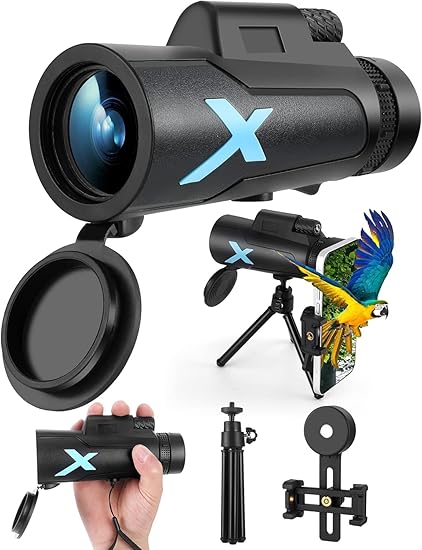
Trying to catch clear views of birds without carrying bulky gear can be frustrating. A 12×50 HD Monocular Telescope suits anyone looking for powerful magnification in a compact form. Its biggest strength lies in delivering bright, sharp images with a wide field of view, making spotting birds easier in natural settings.
Setting up the monocular is straightforward since it’s handheld and also tripod-adaptable with a standard 1/4-inch thread. The 12X magnification combined with a 6.5° field of view means you see more without constant repositioning.
Eye relief adjusts comfortably even if you wear glasses. No need to fuss over batteries, so it’s always ready when you want to use it during hikes or bird watching trips.
Performance-wise, it provides high-contrast, color-accurate views thanks to Fully Multi-Coating technology and a large BAK4 prism lens. The 53mm objective lens helps gather plenty of light for clearer images.
The monocular feels solid but lightweight, though some mention focusing manually requires patience. Most praise the clear view and comfort, but a common downside is the manual focus can be tricky for quick changes.
The monocular is praised for its sharp, bright images and comfortable viewing even when worn with glasses. At the same time, the manual focus is frequently noted as requiring some time to adjust, which can slow spotting fast-moving birds.
People wanting detailed views during steady bird watching sessions will appreciate its optical quality and build. Those needing quick focus changes or fast-paced tracking should consider alternative models with easier focus controls.
Pros
- Bright and clear images with large 53mm lens
- Adjustable eye relief suits glasses wearers
- Wide 6.5° field of view for scanning
- No batteries needed, always ready
Cons
- Manual focus can be hard to adjust quickly
- Some users find focusing needs patience
| Specification | Details |
|---|---|
| Zoom Ratio | 12x |
| Field Of View | 6.5 degrees |
| Eye Piece Lens Description | Multi-coated Eyepiece Lens With Adjustable Eye Relief For Comfortable Viewing |
| Mount | Handheld, Tripod-adaptable Mount With Standard 1/4-inch Thread |
| Focal Length Description | Approximately 195mm Focal Length Optimized For Compact Monocular Design |
6. 8×42 Waterproof Monocular Telescope
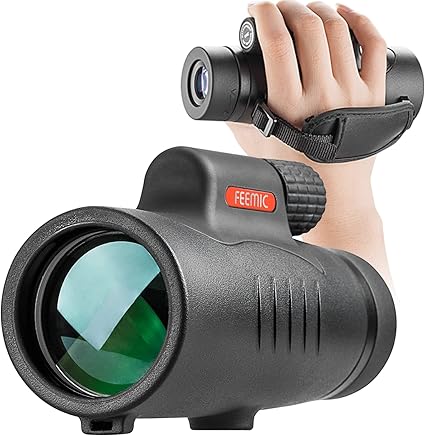
8X magnification combined with a large 42mm objective lens offers a bright and clear view perfect for bird watchers who want to spot details even at a distance. The wide 360ft field of view suits those who enjoy scanning large areas of wildlife without losing track of fast-moving birds.
Setting it up involves manually focusing using the provided manual focus ring, which responds smoothly once dialed in. The built-in reflex finderscope helps quickly locate subjects before zooming in.
Its rubber finish offers a good grip and shock resistance, making daily handling comfortable and the waterproof build means you don’t have to worry about unexpected weather or dusty trails.
Its main job of delivering a crisp, wide-angle view handles well thanks to full FMC green film BAK-4 prisms, producing detailed images with little distortion. The housing is solid, designed to withstand rough outdoor conditions, and the dust cover protects the lens from grime. Common praise highlights its clear optics and durable feel, while some find the manual focus slow when tracking moving birds.
Clear optics and a durable, weather-resistant design make it reliable outdoors. Users often mention the manual focus system is slow to adjust, which can be frustrating when following birds in motion. The dust cover and shockproof rubber make it resilient for rough environments.
Great for those needing a sturdy monocular with good magnification in varied weather. People who want quick autofocus or advanced mounts might look elsewhere, but bird watchers wanting a well-built, waterproof scope will find it suits their needs well.
Pros
- Wide 360ft field of view at 1000 yards
- Waterproof, fogproof, dustproof, and shockproof design
- Comes with dust cover for lens protection
- Rubber finish offers durable, secure grip
Cons
- Manual focus can be tricky with fast-moving subjects
- Altazimuth mount limits mounting flexibility
| Specification | Details |
|---|---|
| Power Source | Manual Power |
| Mount | Altazimuth Mount |
| Field Of View | 360 degrees |
| Coating | Fully Multi-Coated |
| Zoom Ratio | 8 multiplier x |
| Eye Piece Lens Description | Convex |
7. 40×60 Monocular with Smartphone Holder

Bird watchers looking for a powerful yet portable scope will find the 40×60 Monocular with Smartphone Holder an interesting option. Its standout feature is the high 40X magnification combined with a large 60mm lens, making distant birds appear bright and clear.
It suits those who want serious zoom without carrying a bulky set-up.
Setting it up is straightforward since it has a manual focus and comes with a tripod, so you can stabilize the view easily. Attaching a smartphone is simple as it has a built-in holder, allowing you to capture photos during your excursions.
The waterproof and fog-proof design means it works well outdoors in varying weather, which is a big plus for daily bird watching adventures.
The performance delivers sharp, high-contrast images thanks to the BAK4 prism and fully multi-coated lenses that let in plenty of light. Users praise the clarity, mentioning no black bars in the view.
The build feels solid rather than flimsy, but some note manual focusing takes a bit of getting used to. It holds up to regular use and offers excellent image quality for the price.
The 40×60 Monocular is praised for providing very clear and sharp images without black bars, making it a reliable option for bird watching. The most common downside mentioned is the manual focus, which can be tricky to adjust precisely at first.
Anyone wanting strong zoom and the ability to take photos with their phone will appreciate this scope. Those who prefer auto-focus or need a lighter, more compact device might look at other models instead.
Pros
- Clear and bright images with 40X magnification
- Smartphone holder makes photo capturing easy
- Waterproof and fog-proof for outdoor use
- Comes with tripod for steady viewing
Cons
- Manual focus requires practice for sharpness
- Larger lens size adds some weight to carry
| Specification | Details |
|---|---|
| Focus Type | Manual Focus |
| Finderscope | Straight-Through |
| Compatible Devices | Smartphone |
| Additional Features | Waterproof, Fog-proof, Smartphone Compatible, Tripod Included |
| Lens Type | Multi-coated Lens |
| Prism | BAK4 Prism |
8. Bushnell Prime 16-48×50 Spotting Scope

Ideal for bird watchers looking for clear details from a distance, the Bushnell Prime 16-48×50 Spotting Scope stands out with its fully multi-coated lenses delivering excellent brightness and clarity. Its compact and waterproof design suits those wanting reliable performance outdoors in varying weather conditions.
Setting up is straightforward with the included tabletop tripod and carrying case, making it easy to transport and protect the scope. Manual focus allows precise adjustments, letting you zero in on birds quickly.
Low dispersion glass improves color and contrast, especially in low-light moments like dawn or dusk. The lightweight build means it doesn’t feel cumbersome during long waits in the field.
Image sharpness across magnification levels is impressive, capturing fine details while keeping the view bright and clear. The build feels solid with weatherproof sealing guarding against moisture and fog. Most users praise the optical clarity, though some mention the manual focus requires patience for beginners.
Adjusting diopters helps compensate for eyesight variations, which adds to its usability.
The scope consistently delivers bright, clear views appreciated for spotting fine details, while its manual focus system demands steady hands and some practice to master. The IPX7 waterproof rating ensures dependable use even in wet conditions, a feature noted positively across various experiences.
Anyone wanting a reliable scope for casual bird watching and outdoor adventures will find this model suitable, especially those valuing portability and weather resistance. Users needing higher magnification or faster focusing may want to explore other options better tailored to those preferences.
Pros
- Bright, clear images even in low light
- Compact and lightweight for easy transport
- Waterproof and fog-proof for all weather
- Includes tabletop tripod and carrying case
Cons
- Manual focus can be tricky for beginners
- Maximum magnification limited to 16x
| Specification | Details |
|---|---|
| Objective Lens Diameter | 50 millimeters |
| Maximum Magnification | 16x |
| Water Resistance Level | Waterproof (IPX7) |
| Focus Type | manual |
| Exit-Pupil Diameter | 3.13 millimeters |
| Coating | Fully Multi-Coated |
9. Barska Colorado 15-40×50 Spotting Scope

Barska Colorado 15-40×50 Spotting Scope offers impressive magnification and clarity for bird watchers focusing on nearby distances. Suited for anyone needing sharp detail up to about 150 yards, its highest clarity range is where this scope really shines.
Setting up is straightforward with the included table tripod and soft carrying case, making it easy to pack and carry. The center focus system lets you quickly adjust sharpness, while the shock-absorbing rubber armor adds durability during outdoor use.
Fully coated optics with the porro prism system reduce glare and improve image quality on every outing.
Magnification ranges between 15x and 40x, providing high detail when watching birds within 150 yards, though images start to blur beyond that distance. Build quality feels sturdy thanks to the rubber armor protecting the scope.
Most praise concerns its clear, bright view at recommended distances. Some drawbacks include the image becoming blurry past 150 yards and a somewhat limited field of view at 3 degrees.
Crystal-clear views dominate in the 150-yard range, the distance where the scope performs best. Beyond that, blurriness increases noticeably, limiting its use for long-range observation. The rubber-coated body provides good protection against knocks, a common benefit mentioned.
Bird watchers focusing on mid-range distances will appreciate its clarity and included accessories. Those seeking a wider field of view or better long-range sharpness might want to look elsewhere. Portability and ease of setup make it a practical choice for casual use.
Pros
- Sharp clarity up to 150 yards
- Shock absorbing rubber armor
- Comes with tripod and soft case
- Fully coated optics reduce glare
Cons
- Image blurs beyond 150 yards
- Narrow 3-degree field of view
| Specification | Details |
|---|---|
| Eye Piece Lens Description | Fully Coated |
| Mount | Table Top Mount |
| Focus Type | Center Focus |
| Focal Length Description | 15-40mm |
| Field Of View | 3 degrees |
| Zoom Ratio | 40 multiplier_x |
10. ZEISS Conquest Apia 20-50×65 Spotting Scope

Lightweight and compact, this scope is great for anyone who spends long hours birdwatching outdoors. Its 20x to 50x zoom is perfect for getting close without straining your eyes. The standout feature is the sharp and clear view from edge to edge, making it easy to spot fine details in birds even at higher magnifications.
Setting up is simple, thanks to the manual focus and Arca-Swiss mount. Carrying it on hikes is comfortable due to its 11.7-inch length and light weight. The detachable throw lever on the zoom lets you adjust magnification one-handed, which comes in handy when trying to keep your spot steady during birdwatching sessions.
It delivers bright, sharp images thanks to Extra-low Dispersion glass and ZEISS T multi-coating that works well in low light. The FieldFlattener Technology means you get edge-to-edge sharpness without distortion. The hydrophobic LotuTec coating keeps rain and water off the lens, making it reliable in wet conditions.
Most users mention how clear the image is, though some find manual focusing a bit slow when tracking fast birds.
Sharp, bright images across the entire field of view is the strongest feature users praise repeatedly. The manual focus mechanism, while precise, is often mentioned as a challenge when following quick-moving birds during active birdwatching.
Casual or serious birdwatchers who spend hours outdoors prioritizing image clarity and portability will appreciate it. Those who want faster autofocus or more versatile imaging options may want to consider other models better suited to rapid changes in viewing distance.
Pros
- Compact and lightweight for easy carrying
- Edge to edge sharpness with FieldFlattener Technology
- Hydrophobic coating repels water well
- Detachable throw lever for one-handed zoom
Cons
- Manual focus can feel slow tracking fast birds
- Only compatible with smartphone for imaging
| Specification | Details |
|---|---|
| Eye Piece Lens Description | Coated Eyepiece Lens |
| Mount | Arca-Swiss Mount |
| Focus Type | Manual Focus |
| Focal Length Description | 20-50 mm |
| Field Of View | 144 feet |
11. Winchester Supreme Optics 20-60×80 Spotting Scope

Great for bird watchers seeking sharp, vibrant views at varying distances, this spotting scope shines with its 20-60x zoom and bright lens clarity. Best suited for outdoor use where detail matters most, its standout feature is the fully multi-coated lenses that help catch colors vividly, even as light fades.
Setup is straightforward since it comes with a bench tripod, making positioning steady without extra gear. Manual focus through a twist-up eyepiece lets you adjust quickly to follow fast-moving birds. The rubber armor makes it easy to grip and shields it from weather.
A carrying case and lens cloth simplify transport and upkeep in the field.
Spotting birds is easy with the full 20-60x zoom range that reveals clear details, while the wide 99-foot field of view helps you track activity without constantly scanning. It’s built solid with nitrogen-sealed, waterproof housing to keep moisture out.
Reviews consistently praise the lens quality but mention the manual focus can slow capturing quick action.
Lenses deliver vivid colors and crisp details that bring birds to life, even in low light. Common frustrations come from the manual focus, which can slow quick adjustments when the action is fast. The scope’s rugged, waterproof design keeps it reliable no matter the weather.
Ideal for bird watchers who prioritize optical quality and don’t mind spending a moment on focusing. Those needing rapid autofocus or lighter weight might find better options elsewhere. Perfect for serious observers who want a durable, versatile tool for their outdoor adventures.
Pros
- Fully Multi-coated Lenses for bright, clear images
- Includes bench tripod for stable viewing
- Rubber armor protects against impacts and weather
- Wide zoom range adapts to different distances
Cons
- Manual focus can be tricky on fast-moving birds
- Heavier build may tire some users over long periods
| Specification | Details |
|---|---|
| Zoom Ratio | 20x-60x |
| Field Of View | 99 feet |
| Focus Type | Manual Focus |
| Mount | Tripod Mount |
| Eye Piece Lens Description | Twist-up |
12. Burris Signature HD 20-60×85 Spotting Scope

Constructed with premium HD optics and an advanced apochromatic lens system, this spotting scope suits bird watchers who want sharp, detailed views throughout the day. Its biggest strength lies in producing clear, color-fringe-free images at all magnifications, making distant birds appear crisp and vivid.
Setup is straightforward thanks to an integrated tripod foot that fits any tripod head using standard 1/4 – 20 screws. Adjusting the viewing angle is quick, allowing comfortable use whether you’re standing, sitting, or lying down.
The broad 20-60x magnification range covers a variety of distances without sacrificing clarity, ideal for a range of birding scenarios.
Performance excels in delivering edge-to-edge resolution without color fringing, enhancing fine detail recognition necessary for bird identification. It feels solid and well-built, designed to last with daily outdoor use. The main praise centers on the sharpness and lack of distortion, while a common drawback is the scope’s considerable size, which can be cumbersome to carry on long hikes.
The clear, color-fringe-free images allow detailed bird watching without eye strain, praised as a major benefit. The common complaint is about the scope’s weight and size, which can be tiring to manage during extended outdoor sessions.
People who don’t mind carrying heavier gear and prioritize image quality will appreciate this scope. Those seeking something lighter or more compact for casual bird watching might want to look at smaller alternatives.
Pros
- HD lenses remove color fringing
- Adjustable viewing angles for comfort
- Compatible with standard tripod mounts
- Large objective lens for bright images
Cons
- Size makes it less portable on long walks
- No lightweight option for casual outings
| Specification | Details |
|---|---|
| Objective Lens Diameter | 8.5 centimeters |
| Lowest Useful Magnification | 20 x |
| Magnification Range | 20-60x |
| Compatibility | Rifle |
Best Scopes for Bird Watching Comparison Table
| Product | Magnification Range | Objective Lens Diameter | Coating | Mount Type |
|---|---|---|---|---|
| SVBONY SV28 Scope | 3:1 zoom | – | FMC | Equatorial Mount |
| Flagship 20-60×80 Scope | 20-60x | 80 mm | Fully Multi-Coated | Altazimuth Mount |
| HD 20-60×80 Scope Phone | 20-60x | 80 mm | – | – |
| HD 20-60×80 Scope Phone Adapter | 20-60x | 80 mm | – | – |
| 12×50 HD Monocular | 12x | 50 mm | Multi-coated | Handheld/Tripod-adaptable |
| 8×42 Waterproof Monocular | 8x | 42 mm | Fully Multi-Coated | Altazimuth Mount |
| 40×60 Monocular Smartphone | 40x-60x | 60 mm | Multi-coated | – |
| Bushnell Prime 16-48×50 | Up to 16x | 50 mm | Fully Multi-Coated | Tripod Mount |
| Barska Colorado 15-40×50 | 15-40x | 50 mm | Fully Coated | Table Top Mount |
| ZEISS Conquest Apia 20-50×65 | 20-50x | 65 mm | Coated | Arca-Swiss Mount |
| Winchester Supreme 20-60×80 | 20-60x | 80 mm | Fully Multi-Coated | Tripod Mount |
| Burris Signature HD 20-60×85 | 20x minimum | 85 mm | – | – |
- Magnification Range3:1 zoom
- Objective Lens Diameter–
- CoatingFMC
- Mount TypeEquatorial Mount
- Magnification Range20-60x
- Objective Lens Diameter80 mm
- CoatingFully Multi-Coated
- Mount TypeAltazimuth Mount
- Magnification Range20-60x
- Objective Lens Diameter80 mm
- Coating–
- Mount Type–
- Magnification Range20-60x
- Objective Lens Diameter80 mm
- Coating–
- Mount Type–
- Magnification Range12x
- Objective Lens Diameter50 mm
- CoatingMulti-coated
- Mount TypeHandheld/Tripod-adaptable
- Magnification Range8x
- Objective Lens Diameter42 mm
- CoatingFully Multi-Coated
- Mount TypeAltazimuth Mount
- Magnification Range40x-60x
- Objective Lens Diameter60 mm
- CoatingMulti-coated
- Mount Type–
- Magnification RangeUp to 16x
- Objective Lens Diameter50 mm
- CoatingFully Multi-Coated
- Mount TypeTripod Mount
- Magnification Range15-40x
- Objective Lens Diameter50 mm
- CoatingFully Coated
- Mount TypeTable Top Mount
- Magnification Range20-50x
- Objective Lens Diameter65 mm
- CoatingCoated
- Mount TypeArca-Swiss Mount
- Magnification Range20-60x
- Objective Lens Diameter80 mm
- CoatingFully Multi-Coated
- Mount TypeTripod Mount
- Magnification Range20x minimum
- Objective Lens Diameter85 mm
- Coating–
- Mount Type–
How to Choose the Best Bird Watching Scope
Choosing a bird watching scope involves considering factors like magnification, lens quality, and portability, as these affect image clarity and ease of use. Selecting the right features ensures better viewing experiences and prevents unnecessary expenses on unsuitable equipment.
Optical Quality and Coatings
Glare can quickly ruin a good viewing session, especially when the sun is low. Lens coatings specifically designed to reduce reflections make a noticeable difference by improving contrast and color accuracy. Using optics with multicoated lenses helps in getting clear, bright images without the annoying haze or ghosting common in cheaper options.
Glass quality plays a direct role in sharpness and minimizing distortion around the edges of the view. Higher grade glass ensures details remain crisp even at higher magnifications.
Daily use often exposes equipment to moisture and temperature changes, so waterproof and fogproof features are essential. These prevent internal fogging that occurs when moving between environments, which otherwise interrupts viewing and can degrade optical components. Opt for sealed optics with nitrogen or argon purging to keep the insides dry and clear in challenging weather.
Size and Portability
Heavy optics become uncomfortable quickly, especially during long hikes or extended observation periods. Choosing lighter models around 1 to 2 pounds keeps arm fatigue at bay and encourages more frequent use without discomfort. Compact designs that fit easily in a backpack or side pocket make transportation straightforward for travel or day trips.
Ergonomic design impacts how easily you can hold and adjust the device in the field. Rubberized grips and well-placed controls reduce slipping and allow for quick adjustments without fumbling, which saves valuable sighting time. Small details like these make a big difference over hours of use.
Durability and Build Materials
Materials like magnesium alloy or high-quality polycarbonate offer a strong yet lightweight frame that stands up to accidental bumps and rough handling. This is crucial when exploring uneven terrain or dense vegetation. The design of the housing also matters; models with reinforced edges and bump guards absorb shocks better, preventing damage to internal components.
Dust and moisture can degrade optics fast if the construction isn’t tight. Optics sealed to IPX7 or similar standards keep particles and water out during rain or dusty conditions. Proper sealing combined with durable casing extends the lifespan of the device and maintains performance without frequent maintenance.
Ease of Focus and Mounting Options
Focusing mechanisms vary widely. Larger knobs with smooth rotational movement allow for precise focusing without overshooting the subject. Coarse and fine focus options can be helpful depending on the distance and subject type.
Quicker, reliable focus adjustments reduce frustration and lost viewing opportunities.
Having the ability to mount the optics on a tripod stabilizes the view significantly, especially at higher magnifications where even slight hand shakes blur details. Check for standard tripod compatibility.
Userfriendly controls like clearly marked adjustment dials and non-slip rings contribute to faster, more accurate setup out in the field, which is important during fleeting wildlife sightings.
Tips for Maximizing Your Bird Watching Experience with a Scope
Choosing the right spot is crucial when using a scope for bird watching. Setting up near areas with minimal human disturbance and good natural cover increases the chances of observing birds in action. Use a stable tripod or support to keep the scope steady; even slight movements can disrupt your view and cause eye strain.
Adjust magnification thoughtfully:
- Start with a lower magnification to locate the bird.
- Once focused, increase the magnification to study details like color patterns or behavior.
Use the scope in natural light conditions to get the clearest image. Early morning or late afternoon provides soft lighting, which can make it easier to distinguish fine features.
Keep spare batteries or lens cloths on hand to ensure smooth operation over longer observation periods.
Essential Maintenance and Care for Longevity of Your Bird Watching Scope
Keeping a bird watching scope in good condition extends its usability and performance. Regularly clean the lenses using a microfiber cloth and a gentle lens cleaner to avoid scratching or coating damage.
Store the scope in a dry, padded case to protect it against moisture and physical shocks. Avoid leaving it exposed to direct sunlight or extreme temperatures, as these can affect the optics and seals.
Check and tighten any loose screws or fittings every few outings. This prevents alignment problems that can reduce image clarity over time.
Apply a small amount of silicone grease on moving parts if they feel stiff, but avoid over-lubricating to prevent dust accumulation.
Comparing Scopes to Binoculars: Which Is Better for Bird Watching?
Scopes and binoculars each have distinct advantages for bird watching depending on the setting and purpose. Scopes provide higher magnification and clearer detail from longer distances, making them ideal for stationary observation in open areas.
Binoculars, however, offer quicker target acquisition and a wider field of view, which helps in tracking fast or nearby birds while on the move.
Consider these points:
- Scopes usually require a tripod to keep them steady, adding extra gear.
- Binoculars are handheld and more compact for spontaneous use and quick scans.
- Scopes tend to have better optical clarity at high zoom but limited peripheral vision.
Choosing between a scope and binoculars comes down to your typical bird watching conditions and mobility needs.
People Also Asked
How Do I Properly Clean and Care for My Birdwatching Scope?
Use a soft brush or cloth to remove dust, then clean the lenses gently with lens cleaner and a microfiber cloth. Avoid wiping lenses dry, as this can scratch them. Keeping the lens caps on when not in use helps prevent dirt buildup.
What Size Scope Is Ideal for Beginner Bird Watchers?
A scope with 20-60x magnification paired with a 60-80mm objective lens works well for beginners. It balances magnification and light allowing good image clarity without being too heavy or complicated. Practice focusing on nearby birds to get comfortable.
Are Birdwatching Scopes Safe to Use in Bright Sunlight?
Most birdwatching scopes can handle bright sunlight but avoid pointing the scope directly at the sun. Excessive light through the lens can damage your eyes and the optics. Using lens covers and adjusting the angle helps protect the gear and your vision.
Can I Use My Scope with Different Tripod Mounts?
Many scopes come with standard tripod screws or adapters that fit common mounts, so you can switch between tripods. Double-check the mounting type before pairing, as some require special plates. Using a stable tripod reduces shake and improves viewing.
How Long Do Typical Birdwatching Scopes Last with Regular Use?
With regular use and proper care, birdwatching scopes typically last many years, often 5 to 10 years or more. Avoid dropping or exposing them to water without protection. Storing them in a dry case after each use extends their life and maintains lens clarity.
Conclusion
Choosing the right scope for bird watching mostly comes down to clear optics, a comfortable size and weight, and how easy it is to use on the go. Sharp image quality helps spot details at a distance, while a lightweight design makes long walks easier.
Stability is important too, so a steady mount or tripod compatibility can make a difference during extended viewing sessions.
Consider where you’ll be watching birds and how often before buying. A heavier, more expensive scope may be worth it for frequent use in open areas, but lighter, simpler models suit casual or urban birders better.
Go back to the comparison table and product descriptions to see which options align with your needs and budget. This helps avoid overspending on features that don’t fit your regular bird watching spots.