
Top 12 Best Shotgun Reloader You Can’t Miss Today!
Reloading shotgun shells can quickly become frustrating when the equipment is unreliable or poorly made. A cheap or ill-fitting press often causes shells to jam or become unevenly assembled, leading to wasted components and time. Finding the best shotgun reloader means avoiding these common issues by choosing a model that handles the sizing and crimping stages consistently, so your rounds come out uniform and ready for use without extra tinkering.
Durability and ease of use matter most when selecting a shotgun reloader. Solid steel construction prevents the press from flexing under pressure, while a properly sized shell holder ensures a snug fit for 12, 20, or 16 gauge shells, keeping them steady during reloading. Smooth operation with adjustable measurements makes maintaining consistent trim and crimp lengths easier, and simple disassembly helps keep the press clean from powder residue that can build up after repeated use.
Need a Quick Check?
| Image | Product | Price |
|---|---|---|
Our Top Picks 1  | Lee Precision Load-All II 12GA | Check Price |
Our Top Picks 2  | Lee Precision Load-All 2 12GA | Check Price |
Our Top Picks 3  | MEC 9000GN 12GA | Check Price |
Our Selected Top 12 Shotgun Reloader for Different Needs
This list features a range of shotgun reloaders designed for various skill levels and needs. Each review covers performance, suitable users, and key advantages and drawbacks to help you find the best match for your reloading requirements.
1. Lee Precision Load-All II Shotshell Reloading Press 12 GA
Lee Precision Load-All II Shotshell Reloading Press stands out by focusing solely on 12-gauge shotshells, ideal for hunters wanting reliable reloading. It suits those looking for a basic, sturdy tool designed for handling standard shotgun shells with consistency. Its biggest strength lies in providing a simple, dedicated setup that gets the job done without complicated adjustments.
Setup involves mounting the press firmly, then following a straightforward process tailored to 12-gauge shotshells. Daily use is practical since the unit occupies under a foot in height and just over 10 inches in width, making it reasonably compact for a reloader.
The mechanical operation is simple, requiring little power and offering good control over each step, from resizing to seating the shot and crimping.
Performance is solid for reloading 12 GA shotshells, handling the basic functions well with a durable material that withstands regular handling. The build reflects a no-frills approach, functional without unnecessary extras.
Strong points include reliability and straightforward operation, while common criticism highlights that it is single-purpose and could feel limited for someone wanting flexibility for other calibers or types.
Many appreciate the straightforward, reliable operation tailored specifically for 12-gauge shells, which makes reloading predictable and effective. Common concerns revolve around the lack of versatility, as it does not support other calibers or more complex reloading tasks.
Those primarily focused on 12-gauge shotgun reloading will find this press meets their needs well. Anyone needing a multi-caliber machine or more advanced features would benefit from considering other options offering greater adaptability.
Pros
- Dedicated 12 GA shotshell design
- Compact size fits limited workspace
- Simple and reliable operation
- Durable construction for regular use
Cons
- Only designed for 12-gauge shells
- Limited functionality beyond basic reloading
| Specification | Details |
|---|---|
| Item Dimensions LxWxH | 10.08 x 8.23 x 9.09 inches |
| Package Weight | 1.95 kg |
| Item Weight | 0.17 kg |
| Product Type | SPORTING GOODS |
| Brand Name | Lee Precision |
| Model Year | 2011 |
2. Lee Precision Load-All 2 Shotshell Press 12 Gauge
Lee Precision Load-All 2 Shotshell Press 12 Gauge is built for people looking to reload 12 gauge shells efficiently. It stands out for its complete setup including 24 shot and powder bushings, making it a practical choice for anyone serious about shotshell reloading.
Setting up the press is straightforward, with components that fit well together. Day-to-day use revolves around the convenient bushings that control powder and shot amounts, which simplifies consistent shell loading.
The overall size and weight keep it stable on the bench without being too bulky for regular use.
Reliability in delivering properly reloaded shells is strong. It handles the reloading process solidly thanks to the well-made components. Its multi-colored, sturdy design offers durability, though some find cleaning a bit fiddly after extensive use.
The press feels solid without being overly heavy, balancing use and maintenance needs.
Strong points include the completeness of the reloading kit with a variety of bushings for different loads. The most common downside mentioned relates to cleaning difficulties after prolonged sessions, which can demand extra effort.
Those focused on steady, customizable 12 gauge shell reloading will find this press fitting their needs well. Individuals prioritizing easy maintenance or more detailed material info may want to explore other options.
Pros
- Complete kit with 24 shot and powder bushings
- Stable design weighing 1.77 kg
- Good size for bench use at 19 x 9 x 4 inches
- Durable materials for consistent reloading
Cons
- Cleaning can be challenging after heavy use
- Materials not specified in detail
| Specification | Details |
|---|---|
| Item Package Dimensions (L x W x H) | 19 x 9 x 4 inches |
| Package Weight | 1.77 kg |
| Item Dimensions (L x W x H) | 19 x 9 x 4 inches |
| Included Components | Shotshell Press |
| Model Name | 90013 |
3. MEC 9000GN 12 Gauge Shotshell Press
Reloading 12 gauge shotgun shells feels straightforward and steady with a MEC 9000GN 12 Gauge Shotshell Press. Best for those who value a reliable progressive press that keeps up with medium-to-high volume work.
Its standout feature is its grabber system that helps maintain consistency with every shell loaded.
Setting up this press is fairly direct, as it arrives with all necessary components for operation. Day-to-day use involves adjusting feed and crimp stations, which the press handles without frequent hiccups.
Its design supports smooth cycling, keeping shells aligned properly for each step of the reloading process, which is crucial for maintaining quality loads.
The progressive mechanism makes it efficient, completing multiple stages of reloading per handle pull with dependable accuracy. Heavy-duty construction by Mayville Engineering ensures steadiness on the bench.
Most praise points to its solid build and consistent performance, while some mention the initial learning curve to get the timing just right as a downside.
Many users appreciate the press’s solid build and steady shell feeding, which contribute to consistent results. The main challenge with this model lies in dialing in timing early on, requiring patience and adjustment.
Anyone seeking a reliable and steady progressive press for 12 gauge shotshells will find this fits well. Those looking for something lighter or simpler might prefer different models with less setup and bench footprint.
Pros
- Consistent shell alignment for reliable reloading
- Solid, durable construction that lasts years
- Efficient progressive design speeds up the process
- Comes with all components needed to start
Cons
- Requires time to master timing adjustments
- Heavier build takes up significant bench space
| Specification | Details |
|---|---|
| Brand Name | MEC |
| Model | 9000GN12 |
| Unit Count | 1 Count |
| Part Number | 9000GN12 |
| Included Components | Presses |
| Manufacturer | United Sporting Company |
4. Lee Precision Load-All II Shotshell Reloading Press 16 GA
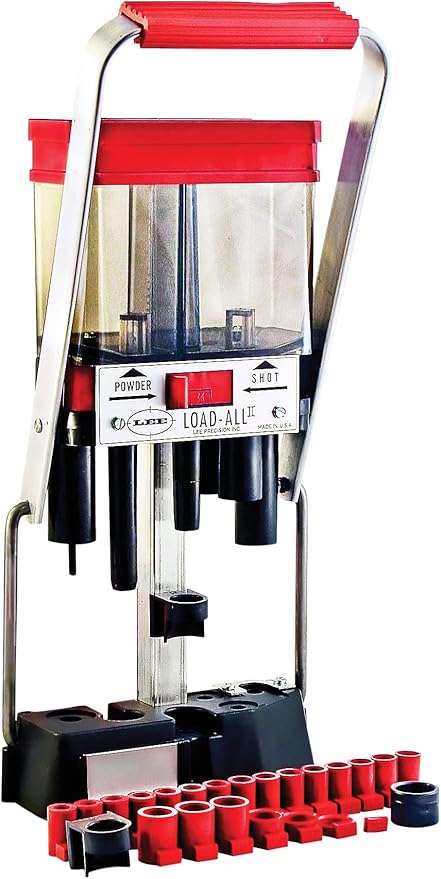
Reliable and straightforward, Lee Precision Load-All II Shotshell Reloading Press suits anyone looking to reload 16 gauge shotgun shells with durability and ease. Its biggest strength lies in accurate and consistent reloading, making it practical for hunting or sport shooting.
The setup takes a bit of attention due to its manual, one-shot loading design, but once in place, daily operation is smooth. The compact size and manageable weight let you handle it at your workbench without strain.
Adjusting parts like the case holder and powder-through prime system feels solid, making the process predictable and safe during each cycle.
Performance delivers steady results in resizing, priming, and crimping 16 gauge shells, aligned with expectations from a press like this. Built with solid materials meant for longevity, it stands up well to repeated use.
Praised for reliability, users sometimes mention the learning curve with getting settings right at first as a challenge.
Reliable accuracy and durability stand out as the product’s best qualities, though some find the initial setup and fine-tuning take patience. The reloader handles the reloading steps well, providing steady results once set up properly.
Those focused on 16 gauge shells and wanting a sturdy, no-frills press will find satisfaction here. Shooters needing multi-gauge options or faster operation might look for a different system suited to their needs.
Pros
- Accurate and consistent shell reloading
- Compact design fits small workspaces
- Durably built for long-term use
- Simple powder-through priming system
Cons
- Learning curve for initial setup and adjustments
- Limited to 16 gauge shells only
| Specification | Details |
|---|---|
| Package Weight | 2.16 kg |
| Item Weight | 1.7 kg |
| Package Dimensions L x W x H | 20.5 x 11 x 5.5 inches |
| Item Dimensions LxWxH | 5.08 x 6.77 x 1.06 inches |
| Model Name | Lee Precision 90015: 16G Load-All Ii |
5. Lee Precision Load-All 2 Shotshell Press 12 Gauge
Constructed mainly from durable materials, this Lee Precision Load-All 2 Shotshell Press caters to 12-gauge reloaders looking for a straightforward, manual press. Its straightforward multi-color design and weight make it handy for personal reloading setups, excelling at consistency during repeated shotshell crafting.
Setup involves mounting the press securely and adjusting it for 12 gauge shells. Day-to-day loading benefits from its user-friendly operation, though it cannot handle longer shells like 2 1/2 or 3 1/2. Switching to 16 or 20 gauge is possible, but you’ll lose compatibility with certain shell lengths.
Cleaning is manageable due to its size and materials, keeping maintenance fairly simple over time.
Performance matches expectations for a press in this class, delivering solid repeatability for standard 12 gauge loads. It weighs 4 pounds, lending stability without feeling cumbersome. Build quality is dependable but some find that the limited shell length options and gauge compatibility affect versatility.
Repetitive loading feels secure, though switching gauges requires careful consideration of shell sizes.
Strongest praise points to consistent and reliable 12 gauge shotshell reloading with a stable press feel. The most frequent complaint is the inability to use longer shotshells and limitations when switching gauges, which restricts versatility for some reloaders.
Reloaders focused solely on 12 gauge standard lengths will appreciate the straightforward and durable design. Those needing compatibility with longer shells or multiple gauges may look toward different press options better suited for varied shotshell sizes.
Pros
- Compact size fits most personal workspaces
- Sturdy enough for consistent reloading
- Easy to mount and adjust for 12 gauge
- Simple maintenance keeps it reliable
Cons
- Cannot load 2 1/2″ or 3 1/2″ shells
- Gauge conversion limits shell compatibility
| Specification | Details |
|---|---|
| Item Dimensions LxWxH | 19 x 9 x 4 inches |
| Item Weight | 4 pounds |
| Package Weight | 2.58 kg |
| Color | Multi |
| Material | Other |
6. MEC Loader 600 Jr Mark V .410 Shotshell Press
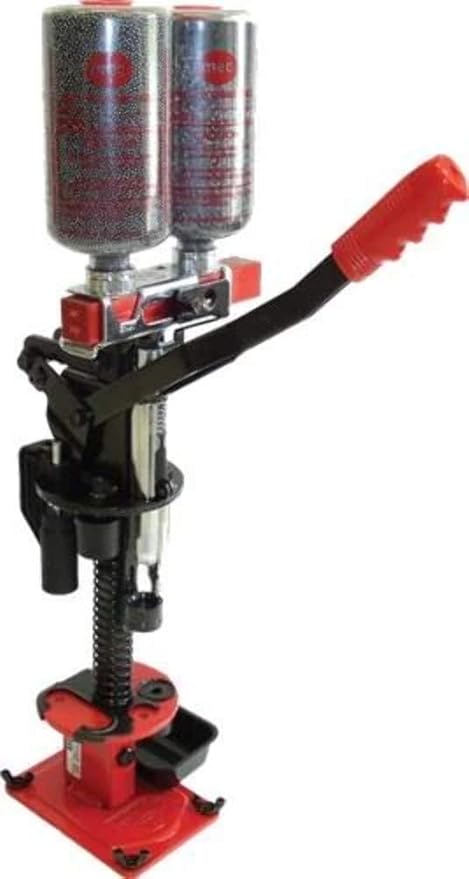
Recognized for its precise shell alignment and consistent crimp results, this press suits reloaders focused on quality and repeatability. It stands out in handling .410 bore shotshells with a cam-action crimp die that keeps shells like new.
Ideal for shooters who want reliable results without fuss.
Set up involves adjusting for 3 shells and lining up the one-piece Spindex Crimp Starter with shell creases. Loading four to six boxes per hour is manageable without upgrades, though adding the E-Z Prime 285 CA primer feed simplifies primer placement.
Daily use leans on its straightforward mechanics, keeping things moving steadily without complex steps.
Performance centers on delivering a perfect crimp every cycle, maintaining consistent shell integrity. The strong build caters to a range of gauges, including .410 bore, with an emphasis on durability. Reviews highlight the accurate shell return to original condition, but some note primer feeding can be a bit manual before upgrades.
The press consistently returns shells to their original condition, praised for delivering perfect crimps every time. Most criticize the standard primer feed method for being hands-on until upgrading to the E-Z Prime 285 CA, which eliminates that step.
Reloaders wanting dependable, high-quality crimps with modest throughput will appreciate this model. Those seeking faster or fully automated primer handling might look for alternatives with more integrated features.
Pros
- Cam-action crimp die for consistent shell conditioning
- Spindex Crimp Starter ensures correct shell crease alignment
- Supports multiple gauges including .410 bore
- Load rate of four to six boxes per hour
Cons
- Primer feed requires manual handling without upgrade
- Lacks primer feed upgrade as standard feature
| Specification | Details |
|---|---|
| Brand Name | MEC |
| Model | 84474103 |
| Unit Count | 1 Count |
| Adjustable Shell Length | 3″ |
| Gauge Availability | 10, 12, 16, 20, 28 gauge and .410 bore |
7. MEC 600 Jr Mark V 28 Gauge Shotshell Press
Ideal for serious shotgun reloaders focused on precision and durability, this shotshell press delivers steady performance without compromise. Its heavy-duty construction stands out as the main strength, ensuring consistent reloads and reliability over time.
Setup involves mounting the press securely, which feels rock-solid thanks to its sturdy frame. Daily use is straightforward with easy shell handling and smooth operation, allowing quick resizing and priming.
The included components cover essential needs without extra fuss, making it suitable for those who want a dedicated 28 gauge reloading tool that works as expected every session.
Crafted by Mayville Engineering under United Sporting Company’s brand, it handles its core function, reloading 28 gauge shells, effectively with solid mechanical feel. Build quality is dependable with materials designed to withstand frequent use.
Most users find its reliability a big plus, while some note it can feel bulky or heavy compared to lighter presses.
Strong points include solid durability and dependable performance for 28 gauge shotshells, making loading consistent and straightforward. The main drawback is the press’s weight and size, which may feel cumbersome during extended sessions or in smaller workspaces.
Those focused on long-term use and reliability for 28 gauge loads will appreciate this press, while reloaders looking for something lighter or more versatile might want to explore other models.
Pros
- Durable construction for frequent use
- Reliable and consistent shell resizing
- Specialized for 28 gauge shotshells
- Easy to operate once mounted
Cons
- Press can feel bulky and heavy
- Limited unit count, no extras included
| Specification | Details |
|---|---|
| Brand Name | MAYVILLE ENGINEERING |
| Model | 844728 |
| Type | Shot shell reloading press |
| Unit Count | 1 Count |
| Included Components | Presses |
| Manufacturer | United Sporting Company |
8. MEC 9000GN .410 Shotshell Press

Loading .410 shotshells can be tedious without the right tool, but the MEC 9000GN .410 Shotshell Press tackles that with steady, consistent power. It suits anyone wanting to reload shells efficiently, especially those who handle a decent volume, since its progressive design speeds the process up significantly.
Setting up the press involves securing it firmly due to its 26.5-pound weight, ensuring stability during use. Operating the progressive mechanism feels smooth under hand, letting you load multiple stages with each stroke.
The size is manageable enough to fit on a sturdy bench, and the included components cover all essentials for daily reloading without extra fuss.
Performance matches its solid build, handling each shell with consistent results that keep rounds reliable. The all-metal construction means it’s durable and can handle regular use without much wear. A standout point is how the grabber mechanism feeds shells smoothly, though some users find the heft of the press makes repositioning it a bit cumbersome.
The consistent shell feeding and reliable pressing action stand out as the strongest features here, making reloading smoother. The most common issue noted is the press’s weight, which can make it awkward to rearrange once set up.
Those reloading .410 shells regularly and looking for a machine that can keep up with volume will appreciate the steady work and solid build. Smaller spaces and occasional reloaders might want to consider lighter or simpler models that require less commitment on setup and movement.
Pros
- Handles .410 shotshells with consistent precision
- Progressive design speeds up reloading stages
- Durable all-metal construction
- Compact size fits most reloading benches
Cons
- Heavy at 26.5 pounds, hard to move frequently
- Setup requires a sturdy, secure mounting surface
| Specification | Details |
|---|---|
| Item Weight | 26.5 pounds |
| Package Weight | 26.5 pounds |
| Item Package Dimensions (L x W x H) | 22.7 x 17 x 9.3 inches |
| Type | Shot shell reloading press |
| Model Name | MEC progressive 9000N grabber shotshell reloader |
9. Lyman Shotshell Handbook 6th Edition

Lyman Shotshell Handbook 6th Edition provides the latest full-color shotshell reloading data, perfect for anyone serious about safe and precise reloading. It serves as a comprehensive guide with detailed technical information on wads, hulls, powders, and primers, making it invaluable for both beginners and seasoned reloaders.
Setup is simple since the handbook organizes data clearly, covering everything from case identification to non-toxic reloading options. Everyday use is straightforward thanks to the well-structured layout and the inclusion of the newest data.
It helps you quickly find the right combinations to achieve reliable, repeatable results during loading sessions.
Performance-wise, the handbook excels at delivering trustworthy reloading information and clear technical guidance. Its sturdy paper pages and solid construction can handle frequent handling over time. A common praise is its detailed, easy-to-understand reloading charts.
The most frequent complaint involves its weight at 2 pounds, making it a bit bulky to carry around in the field.
The handbook receives high praise for its detailed and easy-to-follow reloading charts, ensuring users can find accurate data quickly during loading sessions. The biggest drawback remains its weight, which some find cumbersome when transporting it outdoors. The detailed content helps you understand how to manage minor wear effectively.
Anyone looking for comprehensive and current shotshell reloading guidance will find this handbook very useful. Those wanting a lightweight, portable manual might want to consider smaller or digital alternatives for field use. It fits best on the workbench or in the reloaders’ library.
Pros
- Newest data on wads, hulls, powders, and primers
- Includes technical and non-toxic reloading information
- Clear case identification section aids quick reference
- Durable paper quality suited for regular use
Cons
- Weighs 2 pounds, a bit bulky to carry around
- Paper material can be sensitive to moisture
| Specification | Details |
|---|---|
| Item Dimensions LxWxH | 11 x 1 x 8.5 inches |
| Package Weight | 1.15 kg |
| Model Name | Shotshell Handbook 6th Edition |
| Color | Orange |
| Included Components | Book |
| Warranty Description | 1 Year Warranty |
10. MTM S25-12M-41 25 Round Shotshell Box

Shotgunners who reload and carry 3 1/2 shells regularly will appreciate a storage box that holds a good number of rounds safely and accessibly. A standout feature here is the deep design that keeps shells securely held in the down position, making loading quicker and more organized.
Setting up the box is straightforward since it holds twenty-five 10 or 12 gauge magnum shells, perfect for longer sessions. The latch is designed to open easily even when wearing gloves, which helps during cold weather or while hunting.
Its compact size means it fits comfortably in a range bag without adding much weight or bulk, making daily handling simple and practical.
Handling shotshells is smooth, thanks to the individual compartments that prevent shells from rattling or shifting. The mechanical hinge adds durability, supporting frequent opening and closing without wearing out quickly. The build is solid and feels reliable, a quality promised by its Made in USA status.
Complaints mainly center on it only fitting magnum shells up to 3 1/2 since smaller sizes need a different storage solution.
The deep compartments keep the heavy magnum shells securely in place without rattling, a feature appreciated frequently in reviews. The most common complaint is it cannot accommodate smaller or shorter shells, limiting its use to 3 1/2″ magnums only.
Anyone who primarily uses 3 1/2″ magnum 10 or 12 gauge shells will find this box very reliable and convenient. Those needing a case for smaller or non-magnum shells should consider other options designed for those sizes.
Pros
- Deep design holds 3 1/2″ shells firmly
- Easy-to-open latch works well with gloves
- Lightweight at only 5.6 ounces
- Durable mechanical hinge
Cons
- Only fits magnum shells up to 3 1/2″ length
- Not suitable for smaller shells or non-magnums
| Specification | Details |
|---|---|
| Capacity | 25 load |
| Item Dimensions L x W x H | 4.9″L x 5.38″W x 3.37″H |
| Item Weight | 5.6 ounces |
| Number of Compartments | 25 |
| Compatible Shell Length | 3 1/2″ |
| Made | USA |
11. Johnny Clip 2×4 12 Gauge Shotshell Loader

Johnny Clip 2×4 12 Gauge Shotshell Loader stands out with quick reloads designed for both beginners and experts, ensuring smooth loading with solid shell retention. Ideal for shooters seeking a reliable and easy-to-use loader that keeps shells secure during use.
Attaching the loader is straightforward thanks to integrated belt loops and MOLLE compatibility, letting you clip it onto your gear instantly with no extra parts needed. Handling is simple as it supports LOAD 2 and LOAD 4 techniques, which means consistent shell placement every time.
The compact design keeps it handy without getting in the way during shooting sessions.
Performance matches expectations with shell stops that hold rounds firmly in place until release, preventing accidental drops. Built with sturdy materials and includes two 8/32 aluminum female posts for mounting SafariLand ELS, it feels solid on the belt or vest.
Some reviews mention occasional challenges aligning older shell types, but most praise the fast, repeatable loading it delivers when everything fits right.
The loader receives strong praise for how securely it holds shotgun shells, allowing for reliable reloads under pressure. The most common drawback is minor difficulty aligning some older or non-standard shells, which can slow down loading slightly.
Experienced shooters and learners who want a fast and solid loader designed for 12 gauge shells will appreciate this product. Those using uncommon shell sizes or requiring a loader for multiple gauges might look for different options.
Pros
- Quick reloads for LOAD 2 and LOAD 4 techniques
- Shell stops ensure secure retention
- Easy MOLLE and belt attachment
- No extra hardware needed for setup
Cons
- May not align older shell types perfectly
- Limited to 12 gauge shells
| Specification | Details |
|---|---|
| Brand Name | J&L Dynamics, LLC |
| Manufacturer | J&L Dynamics, LLC |
| Included Components | Two 8/32 aluminum female posts for mounting SafariLand ELS |
| Model Number | Johnny Clip 2×4 |
| Manufacturer Part Number | Johnny Clip 2×4 |
12. Allen Company Shotgun Shell Pouch

Allen Company Shotgun Shell Pouch handles your shells with practical ease, designed mainly for clay, trap, or skeet shooting enthusiasts who want quick access and reliable carrying. Its biggest strength lies in holding a full standard box of 25 shells while keeping additional shells or choke tubes organized on the sides.
Setup involves clipping the pouch right onto your belt or waistband thanks to a metal clip at the back. While out on the range or at a competition, you’ll find the molded frame keeps everything secure and upright, making reloads more straightforward.
The extra loops for choke tubes or extra shells add convenience for longer sessions or variety in loadouts.
Performance-wise, it holds the shells snugly and lets you grab them fast under pressure. Made with rugged canvas, it stands up well against dirt, rough use, and different weather conditions.
The top praise highlights its durability and practical design. The most common complaint is that the metal clip may not fit all belt styles comfortably.
Durability and functional storage come up most favorably, making the pouch reliable on the range. Some find the metal clip less universal than expected, which could affect attachment comfort.
Ideal for shooters needing quick, organized access to shells during competitions or practice. Those using wider or specialty belts might want to check for clip fit before relying on it.
Pros
- Holds a full 25-shell standard box
- Extra loops for shells or choke tubes
- Sturdy rugged canvas construction
- Metal clip secures easily to belt
Cons
- Metal clip may not fit all belts comfortably
- No waterproof lining for wet conditions
| Specification | Details |
|---|---|
| Brand Name | AC Allen |
| Model Number | 8310 |
| Shell Capacity | Standard box of 25 shells |
| Additional Storage | Four loops per side for shells or choke tubes |
| Material | Rugged canvas |
| Attachment | Metal clip for belt or waistband |
Best Shotgun Reloaders Comparison Table
| Product | Caliber | Weight | Dimensions (LxWxH) | Manufacturer |
|---|---|---|---|---|
| Lee Precision Load-All II 12GA | 12GA | 0.17 kg | 10.08×8.23×9.09 in | Lee Precision |
| Lee Precision Load-All 2 12GA | 12GA | 1.77 kg | 19x9x4 in | Lee Precision |
| MEC 9000GN 12GA | 12GA | – | – | United Sporting Company |
| Lee Precision Load-All II 16GA | 16GA | 1.7 kg | 5.08×6.77×1.06 in | Lee Precision |
| Lee Precision Load-All 2 12 | 12GA | 4 lbs | 19x9x4 in | Lee Precision |
| MEC Loader 600 Jr .410 | .410 | – | – | MEC |
| MEC 600 Jr Mark V | .410 | – | – | United Sporting Company |
| MEC 9000GN .410 | .410 | 26.5 lbs | 22.7x17x9.3 in | United Sporting Company |
| Lyman Shotshell Handbook 6th | – | 2 lbs | 11x1x8.5 in | Lyman |
| MTM S25-12M-41 Shotshell Box | – | 5.6 oz | 4.9×5.38×3.37 in | – |
| Johnny Clip 2×4 Loader 12GA | 12GA | – | – | J&L Dynamics |
| Allen Company Shell Pouch | – | – | – | The Allen Company |
- Caliber12GA
- Weight0.17 kg
- Dimensions (LxWxH)10.08×8.23×9.09 in
- ManufacturerLee Precision
- Caliber12GA
- Weight1.77 kg
- Dimensions (LxWxH)19x9x4 in
- ManufacturerLee Precision
- Caliber12GA
- Weight–
- Dimensions (LxWxH)–
- ManufacturerUnited Sporting Company
- Caliber16GA
- Weight1.7 kg
- Dimensions (LxWxH)5.08×6.77×1.06 in
- ManufacturerLee Precision
- Caliber12GA
- Weight4 lbs
- Dimensions (LxWxH)19x9x4 in
- ManufacturerLee Precision
- Caliber.410
- Weight–
- Dimensions (LxWxH)–
- ManufacturerMEC
- Caliber.410
- Weight–
- Dimensions (LxWxH)–
- ManufacturerUnited Sporting Company
- Caliber.410
- Weight26.5 lbs
- Dimensions (LxWxH)22.7x17x9.3 in
- ManufacturerUnited Sporting Company
- Caliber–
- Weight2 lbs
- Dimensions (LxWxH)11x1x8.5 in
- ManufacturerLyman
- Caliber–
- Weight5.6 oz
- Dimensions (LxWxH)4.9×5.38×3.37 in
- Manufacturer–
- Caliber12GA
- Weight–
- Dimensions (LxWxH)–
- ManufacturerJ&L Dynamics
- Caliber–
- Weight–
- Dimensions (LxWxH)–
- ManufacturerThe Allen Company
How to Choose the Right Shotgun Reloader
Choosing the right shotgun reloader depends on factors like reliability, ease of use, and compatibility with your shells. Getting these aspects right ensures consistent performance, reduces wasted materials, and saves time, ultimately preventing costly mistakes and frustration during reloading.
Compatibility with Shell Sizes
Some reloaders struggle because their press only fits one or two shell lengths. This limits the variety of shells you can produce and forces extra work when switching gauges. A flexible set-up handles 2 ¾ inch, 3 inch, and even 3 ½ inch shells without extra parts or fuss.
Adjusting for hull thickness and wad types also matters, since mismatches cause seating issues or poor crimp quality.
Good models offer adjustable shell holders and die systems compatible with multiple gauges like 12, 20, and 16. Being able to fine-tune for different shot sizes and powder charges helps when experimenting with loads or reloading for different guns. This versatility makes daily reloading smoother and reduces downtime spent swapping or modifying parts.
Build Quality and Materials
Reloading gear takes a beating from regular use and exposure to powder residues and moisture. Spots with zinc or aluminum die components tend to scratch or corrode after some runs.
Presses built with steel frames or anodized parts last longer and remain precise because they don’t flex or pit easily. Springs and small moving parts get worn out first, so durable materials there extend overall service life.
Look for stainless steel or hard-anodized aluminum dies and powder measures, plus pressed steel or cast iron frames on heavy-duty presses. Cheap plastic parts on critical wear points usually fail or deform quickly, causing misfeeds or inconsistent loads.
Sturdy components save time and money over the long haul and make daily operation more reliable.
Ease of Operation
Clunky setups with confusing knobs and unclear markings slow down reloads and cause mistakes. Having an easy-to-read dial for powder drops and adjustable screw settings lets you dial in consistent charges without trial and error each time.
Switching between shot sizes or hull types becomes less of a hassle with quick-change parts and straightforward instructions.
Smooth, reliable powder and shot feeders prevent jamming or inconsistent drops, both of which waste shells or create unsafe loads. Simple, numbered scales or marks on the press parts reduce errors during adjustments. In practice, a press that fits how you think speeds up reloading and cuts the need to remeasure or re-crimp shells repeatedly.
Reloading Speed and Efficiency
Reloading by hand rarely matches factory rates, but some presses definitely speed the process without sacrificing quality. Being able to crank out 100 shells an hour or more depends on smooth powder feeding and quick indexing of shell trays.
Misfeeds or partial loads slow you down, so consistent dispensing is critical.
Accuracy in powder measures prevents double charges or light loads that can cause squibs. Models with fine metering adjustments and repeatable shot charges keep shells uniform, which is safer and saves time later checking or discarding imperfect rounds. Reliable speed and efficiency reduce the grind of long reloading sessions.
Safety Features
Preventing overcharging powder is essential; excess powder can cause dangerous pressure spikes. Good machines have mechanical stops or sensors to avoid double powder drops.
Holds that clamp shells firmly without damaging them minimize jams or misfeeds during the cycle.
Safety locks or visible indicators when the press is engaged keep the operator alert and avoid accidental firings or mechanical mishaps. Reloading under pressure requires confidence that nothing will slip or trip unexpectedly.
Practical safety features add a layer of protection without complicating the process or slowing operation.
Tips for Efficient and Safe Shotgun Reloading Techniques
Speed and safety go hand in hand while reloading shotgun shells. Start by organizing your components, shell hulls, powder, primer, and shot, to reduce fumbling and errors.
Always inspect each hull for cracks or deformities before use. Use a consistent method for seating primers and shot to maintain uniform shell performance. Maintain a clean workspace; powder residue and primers can build up, causing misfires and other malfunctions.
Hand tightening components can prevent damage to the shell and keep your reloads reliable.
Quick tips to consider:
- Wear safety glasses to protect eyes from accidental primer ignition.
- Measure powder carefully for each charge, using a reliable scale or powder measure.
- Test a few shells after reloading to ensure consistent performance before bulk loading.
Following these steps helps maximize efficiency while keeping safety a priority during every reloading session.
Common Mistakes to Avoid When Using a Shotgun Reloader
Underestimating the importance of primer seating depth is a frequent error in shotgun shell reloading. Primers seated too shallow or too deep can cause misfires or inconsistent ignition.
Overfilling powder or shot beyond recommended limits leads to dangerously high pressures. Skipping thorough cleaning of cases before reloading increases the risk of ammunition failure over time. Not checking hull dimensions can result in shells that do not chamber properly or damage the firearm.
Avoid these pitfalls:
- Never reuse primers; always use fresh, quality-approved primers for each reload.
- Follow manufacturer guidelines for powder types and quantities rigorously.
- Don’t rush through each step; take time to double-check measurements and seating.
Recognizing and avoiding these mistakes can save you from costly equipment damage and dangerous situations on the range.
Comparing Manual vs. Automatic Shotgun Reloaders: Pros and Cons
Manual shotgun reloaders offer direct control over each step, letting you check measurements and seating thoroughly. They tend to be simpler mechanically, usually lighter and more affordable.
However, the process can be slower, especially when producing large quantities of shells. Automatic reloaders speed up the process by automating powder and shot dispensing, primer seating, and shell crimping, cutting down on time for bulk shooting sessions.
Manual reloaders:
- Lower cost and maintenance.
- More control per shell.
- Slower for high volume.
Automatic reloaders:
- Faster production rates.
- Consistent shell quality.
- Higher initial investment and maintenance needs.
Choosing depends on your volume needs, budget, and preference for hands-on involvement during reloading.
People Also Asked
How Do I Properly Size Shotgun Shells for My Reloader?
Proper sizing starts by adjusting the reloader to match your shell length, usually between 2 3/4 and 3 inches. Use a sizing die to slightly resize shells so they fit snugly but are not too tight to chamber. Measure shells after initial loading to make sure the sizing is consistent.
What Safety Precautions Should I Follow When Using a Shotgun Reloader?
Always wear eye protection to shield against accidental primer ignition or powder spills. Keep your workspace clean and organized, especially free from loose powders or primers that can ignite unexpectedly. Follow the manufacturer’s instructions closely to avoid mechanical failures.
How Long Does a Typical Shotgun Reloader Last with Regular Use?
A shotgun reloader with metal components and regular cleaning can last several years under typical hobbyist use. Parts like springs or dies may need replacement after a few thousand cycles. Paying attention to wear and tear helps avoid damage and prolong the tool’s life.
What Are Common Problems Encountered with Shotgun Reloaders and Fixes?
Common issues include shell hang-ups, wrong powder charges, and inconsistent crimping. Check that all parts are aligned and calibrated properly before each use. Regular tightening of screws and replacing worn dies can prevent many problems.
How Do I Clean and Maintain My Shotgun Reloader Effectively?
Disassemble the main parts and wipe them down with a dry cloth after use to remove powder residue. Use small brushes to clean tight spaces and dry thoroughly before reassembly. Avoid soaking parts in solvents that could corrode metal or damage plastic components.
Conclusion
Choosing a shotgun reloader comes down to reliability, ease of use, and capacity. A reloader that jams less and is straightforward to operate will save time and frustration. Capacity matters for how many shells you plan to load at once, especially if you reload often.
Consider build quality too, as it affects durability over time.
Assess the space you have available and how often you plan to reload before buying. Smaller, simpler models suit occasional use or limited room, while larger setups fit frequent reloaders with dedicated space and budget.
Check the comparison table and the detailed reviews above to find one that fits your specific needs.