
Top 12 Best Binocular Range That Will Blow Your Mind
Watching wildlife or sports with a pair of binoculars that fog up, feel heavy, or offer a blurry view ruins the experience quickly. People hunting for the best binocular range often face these frustrations because cheap models usually sacrifice optical clarity and durability.
A clear, sharp image across varying distances is crucial, and not all binoculars deliver consistently.
Key factors that define a good best binocular range include the lens quality, magnification power, and waterproofing. Lenses with multi-coated glass reduce glare and improve light transmission for bright, clear views.
Magnification between 8x and 10x generally balances closeness with stability, while larger models can be cumbersome. Waterproof and fog-proof construction ensures reliability in damp or changeable weather, making maintenance simpler as well.
Need a Quick Check?
| Image | Product | Price |
|---|---|---|
Our Top Picks 1  | Waterproof 20×50 Binoculars | Check Price |
Our Top Picks 2  | SVBONY SV28 Spotting Scope | Check Price |
Our Top Picks 3  | Laser Rangefinder 10×42 | Check Price |
Our Selected Top 12 Binocular Range Worth Your Money
This list features a variety of binoculars suited for different uses and preferences. Each review covers performance, ideal user scenarios, and key strengths and weaknesses to help you find the best option for your needs.
1. 20×50 Waterproof Binoculars
Using these binoculars feels like bringing distant scenes right up close with a crisp clarity that’s hard to beat. They suit anyone who needs powerful zoom without sacrificing portability, perfect for bird watchers, hunters, or those attending concerts and sporting events. The standout feature is definitely the 20x magnification paired with a surprisingly wide field of view.
Setting up involves simple center focus adjustment, making it quick to lock in on your target. The binoculars have a compact, portable design that fits comfortably in hand during hikes or camping trips. Waterproofing means you don’t have to worry about bad weather or accidental splashes.
The tripod mount is handy for longer viewing sessions, and the anti-reflective coating reduces glare in bright light conditions.
Optical performance is strong, delivering vivid and detailed images up to 1000 yards away. Build quality is solid with shock-resistant housing that holds up to rough outdoor use. People often praise the clarity and reach, but some mention that the manual focus requires patience and the exit pupil size can be a bit narrow in lower light.
Eye relief is comfortable for extended use.
Users commend the binoculars for clear, detailed long-distance vision and durability during outdoor activities. A frequent drawback is the manual focus, which some find fiddly and less quick to adjust compared to autofocus models.
Those looking for strong zoom power and waterproof toughness will appreciate these binoculars, especially for daytime use. People often needing quick focus adjustments or better low-light performance might want to explore other options.
Pros
- High magnification with wide field of view
- Waterproof and shock resistant design
- Compact and portable for outdoor use
- Includes tripod mount for steady viewing
Cons
- Manual focus needs careful adjustment
- Small exit-pupil diameter limits low-light use
| Specification | Details |
|---|---|
| Magnification Maximum | 20 x |
| Objective Lens Diameter | 50 millimeters |
| Field of View | 1000 yard |
| Water Resistance Level | Waterproof |
| Focus Type | Center Focus |
2. SVBONY SV28 Spotting Scope 25-75×70
Good for beginners wanting adjustable zoom and a large lens, the SVBONY SV28 Spotting Scope stands out for its easy magnification shifts and bright views. Its wide 70mm objective lens helps capture plenty of light, making it a solid option for birdwatching or scenic spotting.
Setup involves attaching it to a tripod and focusing manually, which is straightforward once you get the hang of the zoom eyepiece. The extendable sunshade reduces glare during outdoor use, while the non-slip finish keeps a grip on the scope, even in damp conditions. Switching between 25x and 75x magnification is simple, giving flexibility for details at varying distances.
Optics deliver clear views with decent color thanks to FMC coatings. The 380mm focal length suits nature viewing well.
Build quality feels sturdy and the waterproof feature protects against sudden conditions. Common feedback appreciates ease of focus but notes some users find high zoom levels a bit tricky to steady without a solid tripod.
Many find the zoom eyepiece easy to operate and appreciate the bright, clear views thanks to the large lens and FMC coatings. However, keeping focus steady at 75x magnification challenges some users, especially without a stable mount.
Ideal for beginners and those seeking a simple zoom spotting scope for nature watching. People wanting quick autofocus or extremely high stabilization might look for alternatives with those specific features.
Pros
- Easy to zoom from 25x to 75x magnification
- Large 70mm lens captures plenty of light
- Waterproof and non-slip finish for outdoor use
- Extendable sunshade reduces glare effectively
Cons
- Manual focus may require practice for sharpness
- High zoom levels can feel unsteady without tripod
| Specification | Details |
|---|---|
| Zoom Ratio | 3:1 |
| Objective Lens Diameter | 70mm |
| Focal Length | 380 millimeters |
| Field of View | 64 feet |
| Focus Type | manual |
| Coating | FMC |
3. 10×42 Multi-Coated Laser Rangefinder Binoculars
Built around a 42 mm objective lens and roof prism design, these binoculars are designed for anyone needing reliable distance measurement alongside clear viewing, such as bird watchers. The standout feature is the integrated laser rangefinder that measures distances up to 1600 yards with a 0.5-meter accuracy, ensuring targeting is both precise and easy.
Starting with setup, the center focus ring adjusts the view quickly, and the fully multi-coated lenses keep images bright and sharp even in lower light like early mornings. A single button press engages the laser rangefinder, offering several measurement modes like Continuous Scan and Angle Measurement, which cover a variety of terrain and target situations.
The 15.1-millimeter eye relief helps maintain comfort over extended use, paired with manual focus for fine control.
Performance in both viewing and ranging is solid, delivering true colors and crisp details with a relative brightness of 18.06. The build feels water resistant, sturdy, and suitable for field conditions without being overly bulky.
Most find the main rangefinding function impressively accurate, while some mention manual handling as a bit demanding and the lack of built-in low light technology can limit use in the darkest settings.
The clear image quality combined with precise ranging makes it reliable for bird watching and outdoor activities where distance matters. Its most frequent limitation is the absence of advanced low light technology, which can affect visibility during dusk or dense shade. Handling manual focus requires some patience but offers control for sharpness.
Bird watchers and outdoor enthusiasts wanting integrated rangefinding and bright optics will appreciate these binoculars. Users needing superior low light performance or easy autofocus might consider other models better suited for those needs.
Pros
- Accurate laser rangefinder up to 1600 yards
- Bright, true-color view with FMC lenses
- Multiple measurement modes for versatile use
- Comfortable 15.1 mm eye relief
Cons
- Manual focus can be tricky for some users
- Limited performance in very low light conditions
| Specification | Details |
|---|---|
| Magnification Maximum | 10 x |
| Objective Lens Diameter | 42 millimeters |
| Eye Relief | 15.1 millimeters |
| Field of View | 6.1 degrees |
| Water Resistance Level | Water Resistant |
| Coating | Fully Multi-Coated |
4. BURRIS SignatureHD LRF Binocular

Instant precision ranging stands out with a laser that measures reflective targets up to 2,600 yards and deer up to 1,100 yards. Designed for hunters, shooters, and wildlife watchers needing quick, accurate distance info, the Burris SignatureHD LRF combines strong optics with practical rangefinder functionality.
Setting up involves adjusting the center focus and using the built-in laser rangefinder for immediate measurements. The 10x magnification and 42mm objective lens deliver clear views, while the slip-resistant grip and shock-resistant build make it reliable during outdoor activities. Eye relief at 16 millimeters ensures comfort during extended use, and the waterproof design protects it against weather conditions.
Visual clarity benefits from premium HD glass and multi-coated lenses that maintain color fidelity and brightness, even at dawn and dusk. The laser provides quick, accurate readings, making it easy to gauge distances on the move. A common note is the limited diopter adjustment range, which can affect users needing precise eye calibration.
The rugged construction handles rough terrain well without compromising optical quality.
The binoculars offer precise and fast rangefinder performance paired with bright, detailed views, praised in reviews. The main drawback is the limited diopter adjustment, which doesn’t suit everyone’s eyesight needs perfectly.
People hunting or observing wildlife needing quick distance measurements will appreciate this model. Those requiring finely tuned eye adjustments might look for binoculars with greater diopter flexibility.
Pros
- Accurate laser ranging up to 2,600 yards
- Clear images with edge-to-edge clarity
- Waterproof and shock-resistant design
- Comfortable 16mm eye relief for extended use
Cons
- Limited diopter adjustment range
- Rangefinder less effective on non-reflective targets
| Specification | Details |
|---|---|
| Built-In Rangefinder | Yes |
| Magnification Maximum | 10x |
| Objective Lens Diameter | 42 millimeters |
| Eye Relief | 16 millimeters |
| Water Resistance Level | Waterproof |
| Field of View | 70 degrees |
5. Occer 12×25 Compact Binoculars

Offering 12x magnification with a wide 25mm objective lens, these binoculars suit outdoor enthusiasts who want to see distant details clearly. Their large eyepieces and long eye relief make them particularly attractive for both glasses wearers and those without, delivering a sharp, wide view in various conditions.
Setting up involves just adjusting the center focus manually, which is straightforward on the trail or in the birdwatching hideout. Rubber eyecups can be pushed down to fit better for eyeglass wearers or pulled up for more comfort without glasses.
It’s compact and waterproof, making it easy to carry and use during hikes, travel, and low-light situations.
Image clarity is impressive thanks to fully multi-coated optics and BAK-4 prisms, offering natural colors and sharpness. The build feels solid yet portable, though some users note the small exit pupil size means less brightness in very low light. It balances power and convenience well but isn’t the best choice for twilight hours.
Images come through crisp and natural-looking thanks to high-quality lenses and coatings, making it great for daytime outdoor use. A common downside seen is the limited brightness in dimmer conditions due to the 2.5 millimeter exit pupil diameter.
Those needing solid optics for hiking, birdwatching, or travel during daylight will find this a dependable, compact choice. Users who often look during dawn or dusk might prefer binoculars with a larger exit pupil for better low-light performance.
Pros
- 12x magnification with wide field of view
- Adjustable eyecups fit glasses wearers well
- Waterproof and portable design
- Clear images with FMC Broadband coating
Cons
- Small exit pupil diameter limits low-light brightness
- Manual focus can be slow for quick shots
| Specification | Details |
|---|---|
| Magnification Maximum | 12 |
| Objective Lens Diameter | 25 millimeters |
| Field of View | 7.5 degrees |
| Eye Relief | 20 millimeters |
| Prism Type | BAK-4 |
| Focus Type | Manual Focus |
6. 4K Night Vision Binoculars

When you need to see clearly in the dark, especially for camping or wildlife watching, these night vision binoculars are a solid pick. They suit people who want a clear, true-color view at night without struggling with fuzzy images.
The standout feature is the 4-inch HD screen paired with an advanced starlight sensor, which really brightens up nighttime scenes.
Setting up takes just a moment, and you’ll appreciate the built-in 10000mAh rechargeable battery powering long overnight sessions without interruption. Zooming up to 5x helps spot animals or objects distant in the dark. Backlit buttons are handy for operating controls without fumbling in the dark.
The included memory card means you can record and playback video easily, adding to the everyday convenience.
Visibility at night is sharp and the color reproduction is surprisingly detailed, making watching nocturnal wildlife or scouting a campsite clearer than expected. The device feels sturdy and waterproof enough for rough outdoor use. One big plus is the anti-shake feature reducing blur during movement.
Common feedback points out the fixed focus isn’t perfect for quick distance adjustments, requiring some manual tweaking.
The clearest praise is about the vivid and sharp night vision creating detailed views even in total darkness. Most users find the fixed focus a little inconvenient for quick changes in distance, requiring deliberate manual setting adjustments.
Those spending long nights outdoors on camping or wildlife observation will appreciate the long battery life and recording features. People needing lightweight, quick-focus tools might want to consider lighter, simpler options instead.
Pros
- True color night vision with sharp detail
- Long battery life supports extended use
- Video recording with playback and memory card
- Backlit buttons work well in dark settings
Cons
- Fixed focus needs manual adjustment
- Bulky size may feel heavy over long periods
| Specification | Details |
|---|---|
| Objective Lens Diameter | 60 centimeters |
| Magnification Maximum | 5 x |
| Battery | 10000mAh rechargeable lithium, up to 22 hours recording |
| Water Resistance Level | Waterproof |
| Focus Type | Manual Focus |
7. Vortex Triumph HD 12×50 Binoculars

12x magnification paired with 50mm objective lenses delivers sharp, detailed views ideal for hunting and hiking. A solid fit for anyone wanting high-quality images combined with durability in outdoor conditions. Its biggest strength lies in offering clear, bright images across a wide field of view.
Setting up involves adjusting the center focus knob, which feels smooth and precise. The binoculars grip well thanks to full rubber armor and a polycarbonate frame, making them comfortable to hold during extended use. The waterproof and fog proof features let you keep them out in various weather without worry about damage or lens fogging.
Optics provide excellent resolution with vivid colors and sharpness right to the edges thanks to the HD system and multi-coated lenses. The build is tough, shock resistant, and easy to carry, with added tripod mounting for stabilization.
Most praise focuses on clear image quality; the main drawback noted is the binoculars’ weight, which can be a bit heavy for long carries.
Clear image quality across the entire field is the most appreciated feature, making the binoculars ideal for spotting details in nature. Weight is often mentioned as a downside, as these are not the lightest models to carry during long hikes or hunts.
Anyone needing solid optics and durability for outdoor adventures will find these binoculars useful. Those prioritizing ultralight gear might want to consider lighter alternatives instead.
Pros
- Clear, bright images with HD optical system
- Waterproof and fog proof for all weather use
- Comfortable grip with full rubber armor
- Tripod mountable for steady viewing
Cons
- Heavier than some comparable models
- Manual focus may require frequent adjustments
| Specification | Details |
|---|---|
| Magnification Maximum | 12 x |
| Objective Lens Diameter | 50 millimeters |
| Focus Type | Center Focus, Manual Focus |
| Water Resistance Level | Waterproof |
| Eye Relief | 16 millimeters |
| Coating | Multi-coated |
8. Vortex Crossfire HD 12×50 Binoculars
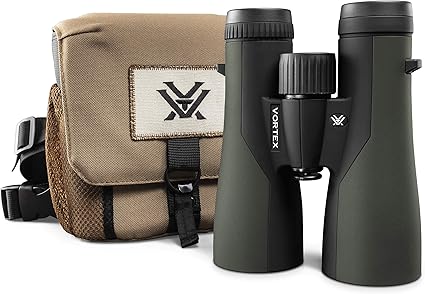
Bird watchers and hunters looking for clear, precise long-distance views will appreciate binoculars with 12x magnification and bright, sharp images. These Vortex Crossfire HD 12×50 binoculars deliver standout optical clarity, making them well suited for demanding outdoor conditions.
The biggest strength lies in their ability to provide edge-to-edge sharpness and true color rendition at high magnification.
Setup feels straightforward, with a center focus wheel controlling both barrels simultaneously, which makes adjusting between different distances quick. The twist-up eyecups ensure comfortable viewing whether or not you wear glasses.
Lightweight enough to carry all day, these binoculars also come with waterproof and fog-proof features that prove handy in unpredictable weather, keeping your view crisp without constant fuss.
Vivid resolution and low chromatic aberration make spotting animals or distant objects much easier. The roof prism design keeps them compact and durable for rugged use.
Most praise highlights the sharp, bright images, while some users mention the 15mm eye relief may feel slightly tight for eyeglass wearers after extended viewing periods.
These binoculars are widely praised for their sharp, vivid images and excellent color accuracy at 12x magnification. The most common drawback reported is the relatively short 15mm eye relief, which may cause discomfort for those wearing glasses over long viewing sessions.
Anyone who wants a rugged, clear optic for hunting or birdwatching will find these binoculars a solid match. Those needing longer eye relief or quicker autofocusing may prefer alternatives better suited for extended eyeglass use or fast-moving subjects.
Pros
- Sharp, bright images with exceptional color fidelity
- Comfortable adjustable eyecups fit users with glasses
- Fog proof and waterproof for outdoor reliability
- Compact, durable roof prism design
Cons
- Eye relief might be short for some eyeglass wearers
- Manual focus can be slow on moving subjects
| Specification | Details |
|---|---|
| Magnification Maximum | 12 x |
| Objective Lens Diameter | 50 millimeters |
| Eye Relief | 15 millimeters |
| Water Resistance Level | Waterproof |
| Prism Type | Roof Prism |
| Focus Type | Center Focus |
9. 20×70 High Powered Binoculars

Offering a powerful 20x magnification and a large 70mm objective lens, these binoculars suit outdoor explorers seeking detailed views at a distance. Their standout feature is delivering bright images even in low-light conditions, making them ideal for bird watching, hiking, or sports events.
Setup involves a simple center focus and diopter adjustment to suit your eyesight. The 26mm eyepiece provides a wider image which helps in scanning large areas easily.
While carrying them may feel noticeable due to the 2.8 lbs weight, the manual focus lets you pinpoint details quickly on any outdoor adventure.
Performance lives up to expectations with clear, bright images thanks to the anti-reflective coated lenses and large objective size. The roof prism design keeps the binoculars compact but still hefty.
A common downside is the lack of water resistance, which requires extra care in wet environments, but overall the build is solid and well suited for outdoor use.
Bright, clear images stand out as a strong point due to the large objective lens and coatings, though the binoculars lack water resistance, making them vulnerable in wet conditions. The weight can be noticeable during longer use but is balanced by the image quality.
Outdoors enthusiasts who prioritize distant detail and brightness will appreciate these binoculars. Those needing a lightweight or waterproof option should look for alternatives better suited to wet environments or extended carrying comfort.
Pros
- High 20x magnification for detailed views
- Large 70mm objective lens for brightness
- Wide 175-degree field of view
- Anti-reflective coating improves clarity
Cons
- Relatively heavy at about 2.8 lbs
- No water resistance in design
| Specification | Details |
|---|---|
| Magnification Maximum | 20 x |
| Objective Lens Diameter | 7 centimeters |
| Exit-Pupil Diameter | 3.5 millimeters |
| Focus Type | Center Focus |
| Field of View | 175 degrees |
| Water Resistance Level | Not Water Resistant |
10. Halo Optics K2000 10×42 Rangefinder Binoculars

Halo Optics K2000 10×42 Rangefinder Binoculars shines at delivering accurate distance measurement combined with clear optics, ideal for hunters and sport shooters. Its standout feature is the Angle Intelligence technology that calculates true horizontal distance regardless of elevation.
Setup is straightforward with manual focus and diopter adjustment that let you quickly zero in on your target. The compact design and ergonomic, no-slip surface help maintain grip during long usage. Scan mode aids in keeping track of moving or multiple targets without constantly resetting the device.
Performance is solid with fully multi-coated lenses offering good clarity and low-light capability. Durability comes from a magnesium chassis designed to be waterproof and fogproof, ensuring reliability in harsh weather. Top praise goes to its accurate rangefinding, while some users find the manual focus a bit slow in fast-moving situations.
Accurate distance readings with Angle Intelligence receive strong praise, helping users measure targets at any slope or elevation. The common complaint is that manual focusing occasionally feels slow, especially when tracking moving objects quickly.
Hunters and shooters valuing precise range data and rugged design will appreciate this binocular. Those needing faster focus mechanisms or wider field of view might look at alternative models better suited for rapid target acquisition.
Pros
- True horizontal distance calculation at any elevation
- Ergonomic and slip resistant grip design
- Compact and portable with durable magnesium chassis
- Waterproof and fogproof for all weather conditions
Cons
- Manual focus can be slower for fast-action targets
- Limited field of view at 6 degrees
| Specification | Details |
|---|---|
| Magnification Maximum | 10 x |
| Objective Lens Diameter | 42 millimeters |
| Water Resistance Level | IPX7 Waterproof/Fogproof |
| Focus Type | Manual Focus |
| Exit-Pupil Diameter | 4.2 millimeters |
| Field of View | 6 degrees |
11. 10-30×50 Zoom Binoculars

Zooming from 10x up to 30x brings distant details right up close, perfect for spotting wildlife or catching action at sports events. Lightweight enough to carry on long days outdoors, these binoculars are ideal for anyone wanting sharp, bright views without the bulk of heavier models.
Setting up is straightforward with the center focus wheel, and the manual focus gives precise control over what’s sharp. The waterproof design means you don’t have to worry about light rain or accidental splashes during hikes.
You can mount them on a tripod for steadier viewing when higher zoom makes handholding shaky. The eyepieces feel comfortable, and the 22-millimeter eye relief helps reduce eye strain even during extended use.
Images are clear and colorful thanks to the BAK-4 prisms and fully multi-coated lenses, offering a crisp picture with little glare. Magnification power goes up to 30x, and it remains bright with the 50mm objective lenses.
Construction feels solid, built to last outdoor use, though some mention that reaching extreme zoom levels can make the image a bit harder to hold steady without a tripod.
Bright and clear images with vibrant colors received the most praise, making distant scenes come alive. The main complaint is that at maximum zoom, the view can become shaky without a tripod to stabilize the binoculars.
Those who want detailed views of wildlife or sports from a distance will find these binoculars very rewarding. People needing quick, easy focus or lighter zoom might prefer simpler or smaller models for casual use.
Pros
- Bright, sharp images with accurate color
- Wide zoom range from 10x to 30x
- Waterproof for outdoor use
- Tripod mountable for stability
Cons
- High zoom levels require steady support
- Manual focus takes some practice to adjust
| Specification | Details |
|---|---|
| Magnification Maximum | 30 x |
| Objective Lens Diameter | 50 millimeters |
| Eye Relief | 22 millimeters |
| Water Resistance Level | Waterproof |
| Focus Type | Manual Focus |
| Mount Type | Tripod Mount |
12. SIG SAUER KILO10K-ABS Gen II Rangefinding Binocular

Ideal for serious hunters and shooters needing precise distance measurement, the SIG SAUER KILO10K-ABS Gen II combines clear optics with reliable ranging ability. Its standout feature is the high-definition glass that delivers crisp images even in challenging light, making spotting targets easier and more accurate.
Setting up is straightforward, and the ergonomic design ensures comfortable handling during long sessions. The rechargeable battery cuts down hassle and keeps the device ready for extended use.
Individual focus and ±3 diopters adjustment help fine-tune viewing to your eyesight, while the waterproof and fog-proof construction means it performs well outdoors in varying weather conditions.
Precision in ranging and spotting is enhanced by a 10x magnification with anti-reflective coating for better clarity. The rugged build holds up to rough conditions, though some users note the 42mm lens limits light intake compared to bigger objectives. It excels at both distance calculation and image quality, with the tripod mount providing stability for detailed observation.
High-definition optics and ballistic features receive the most praise for their accuracy and clarity. The common complaint centers on the modest lens size that affects brightness in low-light situations.
Hunters and shooters who prioritize precise rangefinding with sharp imagery will appreciate its capabilities. Users needing brighter images under dim light might prefer binoculars with larger objective lenses.
Pros
- Crystal-clear HD glass with vivid color fidelity
- Rechargeable battery reduces replacement cost
- Waterproof and fog-proof for tough environments
- Ballistic calculations built into the laser rangefinder
Cons
- Smaller 42mm lens limits low-light performance
- Tripod mount needed for steady long-range viewing
| Specification | Details |
|---|---|
| Magnification Maximum | 10x |
| Objective Lens Diameter | 42 millimeters |
| Field of View | 5.2 degrees |
| Eye Relief | 22 millimeters |
| Water Resistance Level | Waterproof |
Best Binocular Ranges Compared Side by Side
| Product | Magnification | Objective Lens Diameter | Built-In Rangefinder | Waterproof |
|---|---|---|---|---|
| Waterproof 20×50 Binoculars | 20x | 50 mm | No | Yes |
| SVBONY SV28 Spotting Scope | – | – | No | Yes |
| Laser Rangefinder 10×42 | 10x | 42 mm | Yes | – |
| BURRIS SignatureHD LRF Binocular | 10x | 42 mm | Yes | – |
| Occer 12×25 Compact Binoculars | 12x | 25 mm | No | – |
| 4K Night Vision Binoculars | 5x | 600 mm | No | Yes |
| Vortex Triumph HD 12×50 | 12x | 50 mm | No | – |
| Vortex Crossfire HD 12×50 | 12x | 50 mm | No | – |
| High Powered 20×70 Binoculars | 20x | 70 mm | No | No |
| Halo K2000 10×42 Rangefinder | 10x | 42 mm | Yes | – |
| Zoom 10-30×50 Binoculars | 30x | 50 mm | No | – |
| SIG SAUER KILO10K-ABS Gen II | 10x | 42 mm | Yes | Yes |
- Magnification20x
- Objective Lens Diameter50 mm
- Built-In RangefinderNo
- WaterproofYes
- Magnification–
- Objective Lens Diameter–
- Built-In RangefinderNo
- WaterproofYes
- Magnification10x
- Objective Lens Diameter42 mm
- Built-In RangefinderYes
- Waterproof–
- Magnification10x
- Objective Lens Diameter42 mm
- Built-In RangefinderYes
- Waterproof–
- Magnification12x
- Objective Lens Diameter25 mm
- Built-In RangefinderNo
- Waterproof–
- Magnification5x
- Objective Lens Diameter600 mm
- Built-In RangefinderNo
- WaterproofYes
- Magnification12x
- Objective Lens Diameter50 mm
- Built-In RangefinderNo
- Waterproof–
- Magnification12x
- Objective Lens Diameter50 mm
- Built-In RangefinderNo
- Waterproof–
- Magnification20x
- Objective Lens Diameter70 mm
- Built-In RangefinderNo
- WaterproofNo
- Magnification10x
- Objective Lens Diameter42 mm
- Built-In RangefinderYes
- Waterproof–
- Magnification30x
- Objective Lens Diameter50 mm
- Built-In RangefinderNo
- Waterproof–
- Magnification10x
- Objective Lens Diameter42 mm
- Built-In RangefinderYes
- WaterproofYes
How to Choose the Right Binocular Range
Choosing the right binocular range depends on factors like magnification, lens size, and durability, as these affect image clarity and ease of use. Picking the right features ensures better viewing experiences and prevents spending extra on replacements or upgrades later.
Optical Quality and Coatings
Looking through binoculars that lack quality coatings often means dealing with annoying glare and washed-out colors. Multicoated lenses significantly cut down on reflections, which improves contrast and color accuracy in bright or backlit situations. Prism type also affects the image; roof prisms tend to be more compact, but often require better coatings and glass quality to match the sharpness of Porro prisms.
For sharp detail, pay attention to edge-to-edge clarity, which prevents the view from becoming blurry or distorted at the edges. Optical resolution is key for birdwatching or spotting small objects at a distance.
Choosing models with fully multicoated optics and quality roof prisms or Porro prisms with good phase correction coatings often delivers clearer images. Spotting binoculars with objective lenses in the 32 to 42 mm range usually balance brightness and portability well in daylight.
Build Quality and Durability
Binoculars can take a lot of abuse in outdoor use. Those built from plastic may feel lightweight but often lack the durability to survive rough handling or drops. Models with a metal chassis or reinforced composite frames resist bending and cracking better.
Weather resistance is vital; waterproof seals and nitrogen or argon filling prevent moisture from entering and fogging the lenses in humid or cold conditions.
Look for gear marked as waterproof and fogproof, especially if using it in rain, snow, or near water. Impact resistance rating or rubber armor coatings add extra protection against shocks and improve grip. Without these features, internal components may degrade faster and optics might misalign after repeated knocks.
Ergonomics and Comfort
Carrying heavy binoculars around your neck for hours becomes tiring fast if they are bulky and without ergonomic design. Lightweight options between 500 and 700 grams offer a good balance between durability and comfort. Eyecups that twist or fold allow for easy adjustment, especially for glasses wearers.
Being able to adjust the interpupillary distance ensures the two barrels align correctly with your eyes, which is essential for a single, comfortable image.
The external texture matters too. Rubberized grips help keep hold of the binoculars, even when your hands get sweaty or wet.
Poor grip design leads to more accidental drops, which is a common issue during active outdoor use.
Focus Mechanism and Ease of Use
The central focusing wheel should turn smoothly without feeling loose or too stiff. A jerky or rough mechanism makes it hard to get a precise focus quickly, which is frustrating when spotting moving wildlife or shifting between objects at different distances.
Diopter adjustment on one eyepiece allows fine tuning to individual eyesight differences, improving sharpness for both eyes.
A straightforward focus system speeds up changing focus points, especially during fast-paced scenarios like sports events or hikes. Quick-focus wheels combined with clear diopter markings make the binoculars easier to use without fiddling excessively, which can disturb the view or cause eye strain.
Maximizing Accuracy: Tips for Using Binoculars at Long Range
Holding binoculars steady can drastically improve accuracy when viewing distant objects. Even slight hand movements blur the image, making it harder to gauge distances precisely. Using a tripod or resting your elbows on a solid surface helps keep the view stable.
Focusing is equally important. Adjust the focus on each eyepiece until the image is sharp, then fine-tune the center wheel for clarity. A clear image makes it easier to detect subtle details that indicate distance, like the size of familiar objects or terrain features.
- Measure angles between objects using the binocular’s field of view markings if available.
- Use known-size targets as reference points to estimate distance more reliably.
- Practice estimating distances at various ranges to improve judgment over time.
Consistent technique combined with practice results in better accuracy when using binoculars for long-range observation.
Common Mistakes to Avoid When Estimating Distance with Binoculars
One common mistake is relying too heavily on estimation without reference points. Without objects of known size or distance, judgment becomes guesswork rather than measurement. This leads to large errors, especially over long distances.
Another issue occurs when users assume all binoculars have the same field of view. Differences in optics mean that angular measurements can vary, so using your binocular’s specifications is necessary before making distance calculations.
- Failing to stabilize the binoculars causes shaky images, reducing the ability to distinguish details accurately.
- Ignoring environmental factors such as heat haze or lighting conditions can skew perception.
- Not practicing distance estimation regularly results in inconsistent and unreliable judgments.
Paying attention to these points helps avoid common pitfalls and improves estimation when using binoculars.
Comparing Binoculars with Laser Rangefinders: Pros and Cons
Binoculars and laser rangefinders serve different roles when measuring distance. Binoculars let you scan wide areas and observe details at varying magnifications but rely on visual estimation for range. This requires skill and practice to approximate distances accurately.
Laser rangefinders deliver precise measurements quickly by bouncing a laser off the target. They work well for golf, hunting, or surveying where exact distance is crucial.
However, rangefinders do not provide magnified viewing, just numeric distance data.
- Binoculars are useful for general observation and identifying objects beyond immediate reach.
- Rangefinders are limited by target reflectivity and environmental conditions like fog.
- Combination devices exist but tend to be bulkier and more expensive.
Choosing between them depends on whether you prioritize visual detail or precise distance measurement.
People Also Asked
How Do I Clean and Maintain My Binoculars Properly?
Use a soft brush or compressed air to remove dust, then gently wipe lenses with a microfiber cloth. Avoid household cleaners, as they can damage coatings. Store binoculars in a case to keep moisture and dirt away when not in use.
What Size Binoculars Are Best for Bird Watching?
Binoculars with 8x to 10x magnification and a 32-42mm objective lens size work well for bird watching. They offer good balance between image clarity and field of view. Holding them steady will help you track birds more easily over time.
Are Binoculars Safe to Use for Children?
Binoculars can be safe for children, but choose models with durable build and lower magnification, like 6x or 8x. Make sure the child understands not to look at the sun through them or to handle them roughly. Supervision is recommended for younger kids.
How Long Do Typical Binocular Lenses Last with Regular Use?
Binocular lenses typically last many years if handled carefully and kept clean. Lens coatings might wear off after extended heavy use or exposure to harsh environments. Regular cleaning and storing in a dry place will extend their life.
What Common Problems Should I Watch for in Binoculars?
Common problems include blurry or misaligned images, loose eyepieces, and moisture inside the binoculars. Check for fogging after use in humid conditions, and tighten screws if parts feel wobbly. Having binoculars serviced can fix alignment and sealing issues.
Conclusion
Choosing the best binocular range comes down to a few key factors: clarity of the image, field of view, and how comfortable the binoculars feel during use. Durability and ease of focus also play important roles, especially if you’ll be using them outdoors or for extended periods. Balancing these aspects will help you get the most reliable performance for what you need.
Consider how often and where you’ll be using the binoculars, as well as your budget, before making a decision. Smaller, lighter models might suit casual use, while heavier, sturdier designs can handle more rugged conditions. Review the comparison table and product details above to find the best match for your needs and space.