
Top 12 Best Case Foam Options That Will Blow Your Mind!
Dropping your tools or equipment into a case without the right padding often ends in dents, scratches, or broken parts. A best case foam solves that by cushioning items securely, preventing movement during transport.
Without proper foam, contents shift around, causing damage that might not be noticeable until later, especially with delicate electronics or sharp tools.
The quality of the best case foam largely depends on its density and cut accuracy. Foam density between 1.8 and 2.5 lb/ft³ typically offers good shock absorption without being too firm or too soft. Precision cutting to fit each item snugly prevents rattling and uneven wear.
Closed-cell foam resists water and oil, making it easier to clean and more durable over time. These factors ensure the foam protects well and lasts through repeated use in tough conditions.
Need a Quick Check?
| Image | Product | Price |
|---|---|---|
Our Top Picks 1  | Pick Apart Foam Inserts | Check Price |
Our Top Picks 2 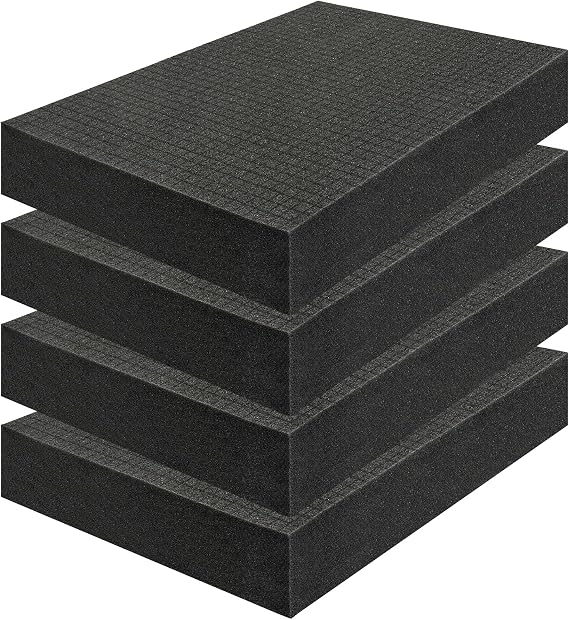 | Cases Foam 4-Pack Inserts | Check Price |
Our Top Picks 3  | Dual-Thickness Foam Kit | Check Price |
Our Selected Top 12 Case Foam Worth Your Money
This collection features carefully chosen case foam options designed to protect and organize various items. Each review explains how well the foam performs, highlights its ideal users, and outlines key advantages and disadvantages to help you find the best fit for your needs.
1. Pick Apart Foam Insert Set
Pick Apart Foam Insert Set offers customizable protection for your delicate items with its removable grid design. Ideal for those who need versatile storage options, it stands out for letting you tailor foam compartments to fit almost any shape or size, keeping valuables safe from damage.
Setting up involves simply pulling apart the small 0.4 x 0.4 inch foam grids to create custom compartments. The set includes both thick and thin foam sheets, allowing you to cushion items and store them securely. The 12 x 12 inch size fits many toolboxes or storage containers, and rearranging the foam as your needs change is straightforward.
It performs well in safeguarding fragile items thanks to dense, protective foam layers. The build quality is solid, with sufficiently thick foam to absorb shocks. Most praise revolves around easy customization, while some find the cutting process of the grids a bit time-consuming or messy.
The foam is widely appreciated for its customizable grid system that adapts to various items, providing reliable protection. The biggest downside mentioned is the time and effort needed to carefully separate or cut the foam pieces to get the desired layout.
People who need flexible, reusable foam inserts will find it very useful. Those looking for pre-cut compartments or a simpler setup might want to consider alternatives that offer ready-made sections without modification.
Pros
- Customizable pull-apart foam grids
- Comes in two thicknesses for varied protection
- Suitable 12 x 12 inch size for many containers
- Soft enough to cushion, firm enough to protect
Cons
- Cutting grids can be messy and slow
- Only one compartment supplied per unit
| Specification | Details |
|---|---|
| Package Quantity | 1 |
| Unit Count | 4 Count |
| Item Dimensions (L x W x H) | 12″L x 12″W x 2″H |
| Capacity | 288 cubic inches |
| Number of Compartments | 1 |
2. Cases Foam 4-Pack Pick & Pluck Inserts
Lightweight and easy to shape, Cases Foam 4-Pack Pick & Pluck Inserts make organizing delicate items feel worry-free. Perfect for those who need tailored compartments without the fuss of cutting foam manually, these inserts stand out for their shock-absorbing qualities that keep gear protected during transport and storage.
Setting up involves simply plucking out the pre-cut foam squares to match the shape of your items. Since each sheet comes with neat, pre-cut sections, carving out space is straightforward and time-saving. The foam fits snugly inside storage boxes, so your belongings won’t shift much, even with the wrap handle for easy carrying.
The cushioning effect is solid thanks to the soft yet durable polyurethane material, which absorbs bumps and resists damage from tight packing. Build quality is good for the price, balancing flexibility and sturdiness well. A common note is that the foam isn’t very thick, which may limit protection for heavier or very fragile items.
The foam’s cushioning reliably protects against bumps during transport, giving you confidence in everyday use. Most users appreciate the convenience of the pre-cut sections, though some find the foam not thick enough for heavy or extremely delicate items requiring extra padding.
Those looking for quick, customizable foam inserts for medium protection will find these a practical choice. Anyone needing deeper cushioning or a complete case with closures might want to explore more specialized or thicker foam options.
Pros
- Pre-cut squares save time on customizing compartments
- Lightweight yet durable with good shock absorption
- Fits storage boxes snugly to prevent shifting
- Flexible foam adapts to various item shapes
Cons
- No closure type included in design
- Foam thickness may be insufficient for very fragile items
| Specification | Details |
|---|---|
| Closure Type | no |
| Handle Type | Wrap Handle |
| Number of Compartments | 4 |
| Material | Lightweight polyurethane foam |
3. Dual-Thickness Case Foam Insert Kit
Great for anyone needing customizable protection, this foam insert kit suits tool drawers, cases, or displays. Its standout feature is easy, tool-free customization using pre-scored grids that let you tear foam to fit nearly any item perfectly.
Setup is quick thanks to the vacuum-sealed foam sheets and ultra-thin layers that stack nicely for organizing. Daily use involves simply tearing along the 0.6 grid lines to make custom cavities. No cutting tools are needed, which keeps the process clean and straightforward.
The kit adapts well to different items like cameras or jewelry, keeping everything neatly protected.
It absorbs shock impressively, protecting delicate tools and models without scratching. The polyurethane foam core with 40kg/m³ density offers reliable impact resistance, meaning fragile items stay safe through bumps.
Many appreciate this high shock absorption, though some find the foam thickness limited for very bulky items, requiring extra layering or alternative padding in those cases.
The foam insert kit is praised for absorbing 90% more shock than standard foam, effectively protecting precise tools and delicate collectibles from damage. Users typically note the convenience of hand-tearing along pre-scored grids, although some mention the thickness isn’t always ideal for larger or heavier objects.
Anyone needing custom-fit protection in organized drawers or display cases will find this kit useful. Those storing very large or heavy items might want thicker foam options instead or use it as a base layer with added padding for extra clearance.
Pros
- Easy, tool-free foam customization
- High shock absorption core
- Multiple thickness layers for versatile use
- Vacuum-sealed packaging preserves freshness
Cons
- Foam thickness may be too thin for bulky items
- Manual tearing occasionally uneven without care
| Specification | Details |
|---|---|
| Brand Name | FoamJoy |
| Unit Count | 4 Count |
| Included Components | Bag |
| Model Number | FYTBF2P02B |
| Foam Sheets Size | 16″x12″x2″ plus 16″x12″x0.4″ |
| Foam Density | 40kg/m³ polyurethane |
4. Tool Box Foam Organizer 4-Pack

Made from durable polyethylene foam, this set is ideal for anyone looking to organize tools while protecting them from scratches and impact. Its custom tool shadow design enables precise layout, making it perfect for professionals or hobbyists wanting clean, clear storage for up to 10 pounds of equipment.
Setting up involves tracing each tool onto the foam, then cutting and peeling layers until the perfect depth fits each piece snugly. The foam’s layered design helps control thickness, which means tools stay put and easy to spot.
Fits well inside standard drawers or cases sized around 16 by 12 inches, turning clutter into an orderly workspace.
The high-density foam holds tools firmly without wear or movement during transport. The cleaning process is straightforward since the foam resists dirt and damage.
The top praise is the precise fit it offers. Some users mention the cutting step takes patience and time, which might not suit someone wanting a very quick setup.
The foam liner stands out by holding each tool firmly in place and preventing damage during movement, although shaping the foam to fit tools perfectly takes time and care. This setup works well when neat organization is worth the extra effort in cutting and fitting.
Anyone needing well-protected, well-organized tools under moderate weight loads will find this foam set suitable. Those seeking quick installation or handling heavier tool collections should consider alternatives designed for faster setup or higher capacity.
Pros
- Customizable tool shadows for neat storage
- High-density foam offers strong protection
- Layers allow precise depth adjustments
- Compact size fits standard drawers
Cons
- Cutting and shaping requires patience
- Limited to holding tools under 10 pounds
| Specification | Details |
|---|---|
| Item Dimensions L x W x H | 16″L x 12″W x 1″H |
| Number of Items | 4 |
| Number of Compartments | 4 |
| Unit Count | 4 Count |
| Maximum Weight Recommendation | 10 pounds |
5. Black Polyurethane Foam Inserts 2-Pack

Softness and adaptability stand out right away with these black polyurethane foam inserts. Ideal for anyone needing a protective, customizable foam solution, they fit a broad range of items and offer flexibility as their main strength.
Setup requires a bit of patience since the foam comes compressed. To speed things up, soaking and drying help the foam regain its original thickness faster.
Cutting or tearing to fit your items is straightforward, and the suggestion to outline your belongings beforehand makes it easier to get a snug fit.
Functionally, the foam does a solid job of cushioning and protecting whatever is nestled inside. Made from lightweight polyurethane, it stays soft and durable but can lose shape in tight spaces if not cut carefully. A common drawback is that it needs time to expand after unpacking, which requires some planning.
The foam’s softness and customizability receive consistent praise, making it reliable for protecting delicate items. However, the need to wait for it to fully expand after unpacking stands out as the most frequent inconvenience.
Those looking for foam that molds easily and cushions well will appreciate these inserts. People wanting instant use or precise cuts without preparation might want to consider other options that don’t require expansion time or extra trimming.
Pros
- Soft, durable, and flexible material
- Easy to customize by cutting or tearing
- Lightweight and easy to handle
- Comes as two large sheets for multiple uses
Cons
- Foam requires time to regain thickness after unpacking
- Needs care when cutting for exact fits
| Specification | Details |
|---|---|
| Brand Name | YIENFBEV |
| Number of Items | 2 |
| Unit Count | 384 Count |
| Model Number | polyethylene foam |
| Part Number | YI2403 |
6. Pelican Vault Multi-Pistol Foam Case
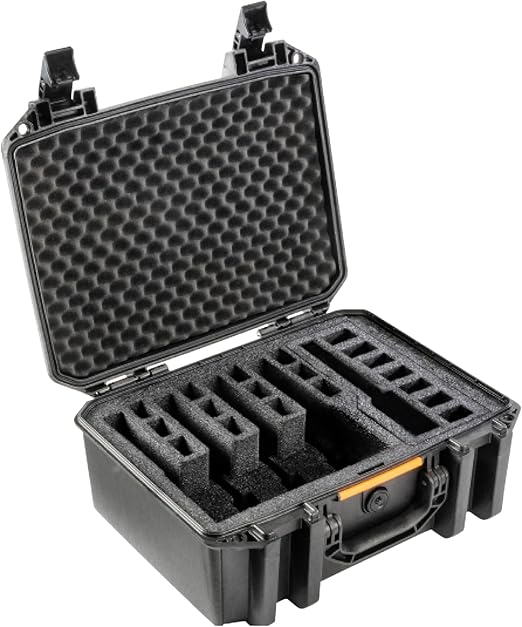
Perfect for securely storing multiple pistols, this case offers plenty of custom foam space to protect delicate firearms from damage. Those needing versatility and reliable water resistance will appreciate its thoughtful design and sturdy build.
Its strong latch system provides confidence that the case won’t accidentally open during transport.
Setup involves removing the foam layers to create personalized compartments since the foam is multi-layered and easily customized. Daily handling is comfortable thanks to the carry handle and removable strap options, letting you choose your preferred way to carry it. The latch closure is straightforward to operate, locking the case firmly when closed but still easy enough to open when needed.
Materials feel tough and protective, delivering excellent impact absorption and water resistance during everyday use. Five compartments inside keep pistols well-separated, adding security and preventing scratches.
Most praise centers around the foam’s ability to securely hold firearms in place without shifting, while some note the case is a bit heavier compared to simpler models.
The foam holds pistols snugly, preventing movement during transport, while the case’s weight can feel cumbersome for extended carrying. Most users find the water resistance crucial for protecting valuables, though customizing foam takes some time.
Anyone needing a strong, versatile case for several pistols will value the protection and layout this provides. Those prioritizing a lightweight or ready-to-use option might prefer a simpler case without customizable foam.
Pros
- Customizable foam fits multiple pistols securely
- Water resistant to protect contents from moisture
- Strong latch keeps case firmly closed
- Multiple carrying options with handle and strap
Cons
- Heavier than simpler foam cases
- Foam layers require manual customization
| Specification | Details |
|---|---|
| Closure Type | Latch |
| Strap Type | Removable |
| Capacity | 1132 cubic inches |
| Handle Type | Carry handle |
| Number of Compartments | 5 |
| Water Resistance Level | Water Resistant |
7. Ramede Polyethylene Foam Sheet

A tough foam sheet that handles packaging, storage, or DIY projects well, especially for people needing moisture resistance. It suits anyone with guns or craftsmen seeking a customizable foam that won’t absorb oils or water.
Cutting the sheet to the right size with a razor blade or carving knife is straightforward, making it practical for crafting or secure packing. The sheet is large enough to work with, about 54 by 16 inches, giving plenty of room to arrange or protect items like rifles or tools without extra fuss.
The closed cell foam design ensures it won’t absorb moisture or oils, protecting guns from rust and keeping packed items safe during transport. It’s solid at 20 kg/m³ density, offering good cushioning.
Users notice the foam holds up well, although it can be a bit stiff to cut through neatly without the right tools.
The foam is praised for protecting guns from rust and for its sturdy, moisture-resistant build. Common complaints focus on the stiffness that makes cutting a bit challenging without sharp or specialized tools.
People needing a durable, customizable foam for packaging or craft projects will find this fits well. Those looking for softer or pre-cut foam inserts might prefer alternatives that are easier to shape or come ready-sized.
Pros
- Does not absorb moisture or oils
- Large enough for multiple uses
- Can be cut to custom size easily
- Thick cushioning at 2 inches
Cons
- Stiff texture requires careful cutting
- Cutting tools not included
| Specification | Details |
|---|---|
| Dimensions | 54 x 16 x 2 inches / 137 x 41 x 5 cm |
| Density | About 20 kg/m³ |
| Material Type | Polyethylene (closed cell foam) |
| Color | Black |
| Quantity | 1 piece |
8. Gun Case Foam Inserts 4-Pack

Pre-cut foam inserts with 0.4″×0.4″ grids make customizing compartments quick and simple for protecting firearms, tools, and more. Perfect for anyone needing tailored padding without complicated cutting, the standout feature is the easy pluck design that saves time while creating precise fits.
Setting up involves just removing sections of the foam by hand along the scored grids. No knives or special tools are required. Daily use involves placing the foam inside a 16″×12″×2″ case and fitting gear snugly into the cutouts.
The vacuum-compressed packaging keeps the foam compact until ready to expand.
The high-density polyurethane foam provides strong shock absorption and cushioning that shields items from impacts, crushing, and scratches. It holds its shape well after repeated use, though some note the foam can be a bit firm at first.
Most praise its easy customization and secure fit for delicate equipment.
Many appreciate how easily the foam sections come apart to create custom slots, protecting valuables securely. Some find the foam a bit stiff at first but it softens with use. The balance between firmness and cushioning keeps tools and firearms safe from scratching and impacts.
Anyone needing simple, adjustable foam protection for firearms, tools, or cameras will find these inserts handy. People wanting softer, more flexible padding or larger quantities per purchase might look elsewhere for alternatives.
Pros
- Precise 0.4″ grids for easy plucking
- Strong cushioning for shock protection
- Vacuum-compressed for compact shipping
- Fits multiple case sizes and uses
Cons
- Foam can feel firm initially
- Only four inserts per pack
| Specification | Details |
|---|---|
| Brand Name | Guntechkit |
| Pack Count | 4 |
| Foam Size per Insert | 16″×12″×2″ |
| Grid Size | 0.4″×0.4″ |
| Material | High-density polyurethane |
| Model Number | Gtk062525 |
9. True Position Tools Universal Hard Case with Foam

People needing a tough, impact-resistant case that holds tools or electronics will appreciate this hard case with foam. It suits those who want to protect devices like cameras, GoPros, or tools while customizing the foam to fit irregular shapes. Its biggest strength lies in the customizable foam that offers solid protection tailored to specific gear.
Setting up the case starts with plucking the foam only where needed, thanks to the 3/4 increments that let you shape compartments without hassle. Daily use is straightforward because the handle feels sturdy, and the stainless steel latches keep the case securely closed. It’s easy to rearrange as gear changes, making it versatile for various needs in storage and transport.
The hard plastic shell is crush-proof and low profile, meaning it resists impacts and fits in tight spaces easily. The high-density foam inside absorbs shocks effectively, guarding equipment from vibration and harsh knocks. Most find it impressively durable under rough handling, though some note the inner space can feel a bit shallow for bulkier items.
Many find the foam customization the best feature, allowing a snug fit for delicate equipment, while the most frequent drawback mentions the inner space feeling tight for larger gear. The case holds up well under physical stress and everyday handling, preserving contents reliably.
Those needing tailored protection for compact tools and electronics will be satisfied by this case. People with larger or multiple pieces that require complex organization should consider a case with deeper or sectioned compartments instead.
Pros
- Highly customizable foam inserts in easy-to-pluck sections
- Crush proof, impact-resistant hard plastic shell
- Sturdy handle and stainless steel latches for secure carrying
- Compact low profile design fits tight storage spaces
Cons
- Internal depth may be too shallow for large bulkier items
- Limited to a single compartment without dividers
| Specification | Details |
|---|---|
| Brand Name | True Position Tools |
| Outer Dimensions | 17″ x 12″ x 3″ |
| Inner Dimensions | 16″ x 9-3/4″ x 2″ |
| Customizable Foam | Kaizen Pick n’Pluck foam in 3/4” increments |
| Number of Items | 1 |
10. STEFORD Tool Box Foam 4-Pack

STEFORD Tool Box Foam 4-Pack stands out by offering a set of sturdy polyethylene foam sheets tailored for tool organization. Perfect for anyone wanting to keep their tools neat and in place, it fits most standard toolboxes and helps avoid the usual clutter and disarray commonly found in tool storage.
Setting up these foam inserts is straightforward. Each sheet measures roughly 16×12×1 inch, providing enough surface to customize the arrangement according to tool sizes. Layering or trimming the sheets is easy, allowing you to fit a variety of tools and socket organizers without constant shifting.
The foam makes finding and accessing tools quicker than traditional loose storage.
Performance-wise, these foam sheets hold tools firmly preventing movement inside the toolbox. The polyethylene foam feels durable and holds up well against daily wear and tear.
The most frequent highlight from users praises its ability to keep tools in place, while some mention the foam could be a bit thicker for heavier tools.
The foam reliably holds tools in place, greatly reducing clutter during daily use, though some users wish it were thicker for heavier items. Adjustments like trimming are needed to fully customize the fit, which adds a bit of effort during setup.
Anyone aiming for better tool organization in a standard toolbox will appreciate this foam. On the other hand, people handling very heavy or oddly shaped tools might want to consider thicker or pre-cut foam inserts for a more tailored fit.
Pros
- Fits most standard toolboxes with ease
- Sturdy polyethylene foam material
- Helps organize tools and sockets neatly
- Provides ample surface area for storage
Cons
- Foam thickness may be insufficient for very heavy tools
- Not pre-cut for specific tool shapes
| Specification | Details |
|---|---|
| Product Dimensions | 15.7 x 11.8 x 0.9 inches |
| Material | Polyethylene Foam |
| Item Weight | 6.7 ounces |
| Sheet Count | 4 sheets |
| Color | Black with Red |
11. Tool Box Foam Organizer 3-Pack

Tool Box Foam Organizer 3-Pack offers a smart solution for keeping tools organized and protected. Ideal for anyone aiming to improve their workspace, it shines by allowing you to create custom layouts that keep every tool in its place. Its main strength lies in transforming messy boxes into clearly arranged sets for quick access.
Setting up involves tracing the tool outlines on the foam sheets, carving out precise spaces, and fitting the tools snugly into their shadows. Day-to-day use feels more efficient because you can find what you need without rifling through clutter.
The layered kaizen foam lets you control the depth to accommodate different tool shapes, making it very flexible for various tool sizes.
Performance is solid thanks to the high-density polyethylene material, which cushions tools against impact and stops them from sliding around. The protective nature extends the life of tools by preventing scratches and wear. Most people appreciate the clean and professional look it creates.
Some users note that cutting the foam can be tricky and time-consuming initially.
Many find the tool shadow design excellent for keeping tools easily accessible and visually organized. The main drawback is how time-consuming and delicate the cutting and shaping process can be when customizing the foam for different tools. This trade-off affects the overall setup experience.
People who enjoy taking time to craft a personalized layout and want to protect their tools will appreciate this organizer. Those looking for a quicker or simpler setup may want to explore foam options that come pre-cut or with different thickness choices to handle larger, heavier tools.
Pros
- Custom tool shadow design for perfect organization
- High-density foam protects from impact and scratches
- Layered sheets allow precise depth control
- Improves tool visibility and workflow efficiency
Cons
- Cutting foam requires patience and precision
- Limited thickness may not suit very bulky tools
| Specification | Details |
|---|---|
| Item Dimensions L x W x H | 48″L x 24″W x 1″H |
| Number of Items | 3 |
| Number of Compartments | 3 |
| Unit Count | 3 Count |
| Maximum Weight Recommendation | 10 kg |
12. ONREVA Tool Box Foam Organizer 4-Pack
Easy to shape and cushioned well, ONREVA Tool Box Foam Organizer 4-Pack suits anyone looking to keep tools neatly arranged and protected inside a toolbox. Its biggest strength lies in how it cushions tools to prevent damage while making them easy to spot and grab when needed.
Setting it up involves tracing your tools on the foam and cutting out shapes to fit perfectly. This customization makes daily use simple because every tool has a dedicated spot, stopping them from banging against each other when you carry or store the box.
It saves time searching and keeps everything orderly.
It performs well by offering solid protection against impacts and scratches. The foam is sturdy enough to hold shape but soft enough to cushion tools safely. Most users praise how easy it is to customize, while a few mention the foam thickness might not suit very heavy tools or deep protection needs.
Cushioning and customization options stand out as the main benefits, while the common drawback is the foam thickness not being ideal for heavier tools. It handles average tool protection and organization well but might not fully satisfy those needing extra padding.
The foam organizer works great for anyone wanting tidy, protected tool storage with some flexibility in sizing. Those who need thicker padding or prefer ready-made foam shapes might want to look at other alternatives.
Pros
- Provides cushioning that protects tools during transport
- Customizable to fit each tool’s unique shape
- Keeps tools organized and easy to access
- Comes in a convenient 4-pack for multiple trays
Cons
- Foam thickness may be insufficient for very heavy tools
- Requires manual cutting which might take some effort
| Specification | Details |
|---|---|
| Brand Name | ONREVA |
| Model Number | R22X18X1-4PK |
| Unit Count | 4 Count |
| Manufacturer | ONREVA & L.J.R.P.CO. |
Best Case Foam Products Comparison Table
| Product | Size | Number of Compartments | Unit Count | Material |
|---|---|---|---|---|
| Pick Apart Foam Inserts | 12″L x 12″W x 2″H | 1 | 4 Count | – |
| Cases Foam 4-Pack Inserts | – | 4 | – | – |
| Dual-Thickness Foam Kit | – | – | 4 Count | Pluck foam |
| Tool Box Foam Organizer | 16″L x 12″W x 1″H | 4 | 4 Count | – |
| Black Polyurethane Foam 2-Pack | – | – | 384 Count | Polyethylene foam |
| Pelican Vault Pistol Foam | – | 5 | – | – |
| Ramede Polyethylene Foam | – | – | 1 Count | Polyethylene foam |
| Gun Case Foam Inserts | – | – | 4 Count | High-Density foam |
| True Position Hard Case Foam | – | – | 1 Count | – |
| STEFORD Tool Box Foam | 15.7 x 11.8 x 0.9 in | – | – | – |
| Tool Box Foam Organizer 3-Pack | 48″L x 24″W x 1″H | 3 | 3 Count | – |
| ONREVA Foam Organizer 4-Pack | – | – | 4 Count | – |
- Size12″L x 12″W x 2″H
- Number of Compartments1
- Unit Count4 Count
- Material–
- Size–
- Number of Compartments4
- Unit Count–
- Material–
- Size–
- Number of Compartments–
- Unit Count4 Count
- MaterialPluck foam
- Size16″L x 12″W x 1″H
- Number of Compartments4
- Unit Count4 Count
- Material–
- Size–
- Number of Compartments–
- Unit Count384 Count
- MaterialPolyethylene foam
- Size–
- Number of Compartments5
- Unit Count–
- Material–
- Size–
- Number of Compartments–
- Unit Count1 Count
- MaterialPolyethylene foam
- Size–
- Number of Compartments–
- Unit Count4 Count
- MaterialHigh-Density foam
- Size–
- Number of Compartments–
- Unit Count1 Count
- Material–
- Size15.7 x 11.8 x 0.9 in
- Number of Compartments–
- Unit Count–
- Material–
- Size48″L x 24″W x 1″H
- Number of Compartments3
- Unit Count3 Count
- Material–
- Size–
- Number of Compartments–
- Unit Count4 Count
- Material–
How to Choose the Right Case Foam
The most important factors when selecting case foam are density, thickness, and durability, as these determine how well your items are protected from impact and movement. Choosing the right foam ensures long-lasting protection, preventing damage and costly replacements, ultimately saving time and money.
Foam Density and Protection
Using foam that is too soft means your gear shifts around inside the case, leading to scuffs or even breakage during transport. Foam with the right firmness keeps items snug and absorbs shocks effectively, protecting delicate parts from impact damage.
A mid to high density foam, typically between 1.8 to 3.0 pounds per cubic foot, strikes a good balance by holding items steady without being too rigid.
Harder foam often suits heavier equipment that needs firm support, while softer foam cushions fragile electronics better but may compress too much under weight. Foam that is too firm can damage sensitive edges or cause pressure points.
Matching the foam’s firmness to what you carry every day helps prevent costly damage and makes packing less of a guessing game.
Customization and Fit
Ready-made foam with precut shapes can save time but rarely fits non-standard items perfectly. Customizable foam that you can cut or pick, like pluck foam, adjusts to the exact contours of your belongings for a tight, secure fit.
This snug fit prevents items from shifting and absorbing shocks better during transport.
Modifying foam by hand is tricky without the right tools; a sharp blade and a steady hand improve results. Foam that allows layers or sections to be added or removed simplifies adjusting as your gear changes.
Precise cuts matter most for delicate cameras, lenses, or electronics where gaps mean unsafe movement.
Material Quality and Durability
Cheap foam breaks down fast, compresses unevenly, or tears after repeated use, which weakens its protective qualities. Look for high-quality polyethylene or polyurethane foam that stands up to long-term pressure without losing shape.
Good foam feels firm, resists crumbling, and doesn’t develop permanent dents.
Safety is important if you carry sensitive equipment like medical tools or food supplies. Materials should be nontoxic and odorless. Foam that repels moisture and doesn’t absorb chemicals keeps gear dry and uncontaminated, even when cases face humidity or spills.
Features like closed-cell construction often add durability against environmental wear.
Ease of Maintenance
Foam that absorbs dirt or oils quickly becomes stained and harder to clean, affecting its appearance and potentially its protective function. Foam treated to resist dust and stains saves hassle over time. Wiping foam with a damp cloth usually works, but harsh cleaners can weaken its structure or cause it to fall apart.
Some cases allow you to remove the foam entirely for cleaning or replacement, extending the life of the case even when the foam wears out. Being able to swap out just the insert is practical for heavy daily use where the foam sees a lot of wear from gear loading and unloading.
Compatibility with Case Dimensions
Foam that is too thick reduces usable space inside the case, cutting into room you might need for additional tools or cables. Foam that is too thin may not provide enough cushioning, especially in deeper or larger cases. Matching foam thickness so it fills the case without crowding uses every inch wisely and adds protection.
Cases come in all shapes and depths, so foam that comes in customizable layers or adjustable blocks works better for irregularly shaped gear. Segmenting foam into layers lets you get the height just right and can accommodate diverse collections of items without wasting internal space.
Tips for Proper Application and Usage of Best Case Foam
Case foam needs to match the dimensions of your equipment snugly to provide reliable protection. Before cutting the foam, measure your items carefully, noting any protrusions or delicate sections.
It’s helpful to mark outlines directly on the foam with a pencil or a removable marker to ensure precision.
Use a sharp utility knife or an electric foam cutter to make clean, straight cuts. Avoid tearing or compressing the foam, as this reduces its shock-absorption capability. Layering foam sheets can add extra cushioning around fragile parts but keep thickness manageable to maintain case closure.
- Insert cut pieces gently, ensuring no gaps where objects could shift during transport.
- Use adhesive sprays designed for foam if pieces need to stay in place permanently.
- Check fit after placing each item, adjusting as needed to prevent movement.
Keeping the foam clean and dry before installation helps it retain its shape and durability.
How to Clean and Maintain Your Best Case Foam for Longevity
Regular cleaning can prevent dust and debris from degrading case foam. Start by removing loose dirt with a soft brush or vacuum cleaner set on low suction.
For stains or spills, use a mild detergent diluted in water applied sparingly with a cloth; avoid soaking the foam.
Dry foam thoroughly before reusing to prevent mold or mildew development. Air drying in a well-ventilated, shaded area works best.
Avoid heat sources like direct sunlight or heaters which can cause foam to warp or harden.
- Periodic inspection for cracks or tears helps catch damage early.
- Replace sections showing permanent compression or crumbling to maintain effective protection.
- Store cases in a cool, dry place when not in use to slow foam degradation.
Routine care prolongs foam performance, ensuring the case provides consistent shock absorption over time.
Comparing Best Case Foam Alternatives for Different Protection Needs
Different types of foam offer various benefits depending on protection needs. Polyethylene foam is dense and resistant to compression, suitable for heavy-duty equipment requiring firm support. Polyurethane foam is softer and better at cushioning delicate items but may wear faster under heavy use.
Closed-cell foam prevents water absorption, making it ideal for outdoor or marine cases. Open-cell foam breathes better, reducing moisture buildup but can trap dust and dirt more easily.
- Egg crate foam shapes conform well to irregular surfaces, providing more surface contact.
- Pick and pluck foam allows easy customization by removing pre-scored cubes.
- High-density foam typically offers longer-lasting protection but may be heavier.
Selection depends on balancing weight, durability, and the fragility of the items being protected.
People Also Asked
How Do I Clean and Maintain My Case Foam Properly?
Gently vacuum or brush the foam to remove dust and debris; avoid soaking it in water which can degrade the material. Keeping the case foam dry and away from harsh chemicals will help maintain its shape and protective qualities.
What Size Case Foam Fits Standard Phone Cases?
Standard phone cases usually fit inside foam inserts that are about 1 to 2 inches thick, with cutouts matching phone dimensions. Measuring your phone first and choosing foam that can be trimmed or adjusted ensures a snug fit.
Is Case Foam Safe for Sensitive Electronic Devices?
Case foam designed for electronics is generally safe as it provides cushioning and reduces impact; look for anti-static foam specifically made to prevent damage from static electricity. Avoid regular household foam that may have chemicals harmful to sensitive parts.
How Long Does Case Foam Typically Last with Daily Use?
With daily use, quality case foam can last one to two years before it begins to compress or crumble. Regular cleaning and avoiding exposure to moisture extend its life significantly by maintaining its structural integrity.
What Are Common Issues with Case Foam and How to Fix?
Common problems include foam crumbling and losing shape, often caused by age or exposure to moisture and oils. Replace worn foam promptly, and for minor shape loss, cutting new inserts from a foam sheet can restore protection.
Conclusion
Choosing the right case foam depends mainly on the level of protection needed, the size and shape of your equipment, and how durable the foam is over time. The foam should fit snugly to prevent movement without being too dense to cause damage.
Also, consider how easy it is to customize or replace parts of the foam to keep your gear safe as it changes.
Think about where and how often you’ll use the foam to decide on the best balance between cost and quality. Smaller spaces or travel cases might need different thickness or density than a storage case.
Revisit the comparison table and the detailed descriptions above to find the option that best lines up with your needs and budget.