
Top 12 Best Handheld Spotting Scope You Must Own Today
Trying to get a clear view through a cheap or bulky spotting scope often leads to frustration. Many struggle with shaky images, fogging lenses, or awkward handling that takes away from the experience.
The best handheld spotting scope provides a compact and steady view, making it easier to focus on distant objects without constantly readjusting or carrying extra support gear.
Durability and optical clarity are key factors that separate a good handheld spotting scope from a poor one. A sturdy body made from metal or high-quality polymer withstands everyday bumps and weather exposure.
Magnification between 10x and 20x balances detail with stability, while lens coatings reduce glare and improve light transmission. A well-designed grip and rubber armor help with comfort and prevent drops. These practical features matter most during outdoor use, where reliability matters as much as image quality.
Need a Quick Check?
| Image | Product | Price |
|---|---|---|
Our Top Picks 1 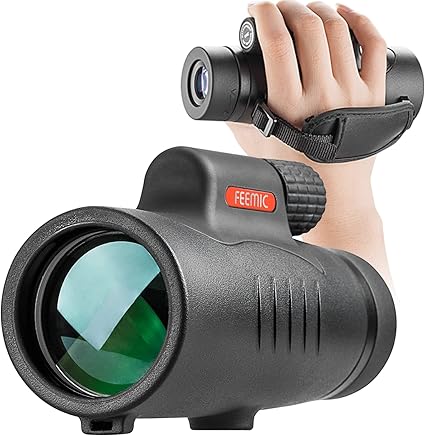 | Generic 8×42 Monocular | Check Price |
Our Top Picks 2  | Bushnell Prime 16-48×50 | Check Price |
Our Top Picks 3  | Bushnell Elite LMSS2 | Check Price |
Our Selected Top 12 Handheld Spotting Scope You Can Trust
This list features carefully chosen handheld spotting scopes designed for various outdoor activities. Each review covers performance details, ideal users, and highlights strengths and weaknesses to help you find the right scope that meets your specific needs.
1. Monocular Telescope 8×42
Offering 8X magnification with a 42mm objective lens, this monocular telescope suits those who want a wide, clear view outdoors. Its ability to cover 360ft at 1000 yards stands out, making it easy to see distant objects in great detail during hikes or wildlife spotting.
Setup is straightforward since it uses manual focus, allowing quick adjustments without fuss. The rubber finish feels durable and shock-resistant, which helps during active use. It’s waterproof, fogproof, and dustproof thanks to nitrogen filling and a built-in lens dust cover, so it holds up well against weather and dirt on any adventure.
Performance delivers a sharp, high-definition picture due to its fully multi-coated optics and superior BAK-4 green film prism. The build is solid with weatherproof features that protect it from moisture and dust.
Many appreciate how sturdy and reliable it feels, though some mention that focusing takes a bit more care than on automatic models.
The optical clarity and tough weather-resistant build receive a lot of praise for delivering clear views under various outdoor conditions. On the downside, manual focus can feel a bit slow and require extra effort, especially when tracking moving targets.
Outdoor adventurers who want a rugged, clear scope without needing motorized features will be pleased. Those seeking quick autofocus or zoom might prefer alternative models with powered mechanisms.
Pros
- Wide 360ft field of view at 1000 yards
- Durable rubber finish resists shocks
- Waterproof, fogproof, and dustproof design
- High-quality FMC BAK-4 green film prism optics
Cons
- Manual focus requires extra adjustment care
- No automatic or powered zoom function
| Specification | Details |
|---|---|
| Magnification | 8X |
| Objective Diameter | 42mm |
| Field Of View | 360 degrees |
| Focus Type | Manual Focus |
| Coating | Fully Multi-Coated |
| Waterproof | Yes, Nitrogen-filled |
2. Bushnell Prime Spotting Scope 16-48×50
Hunters and sports enthusiasts looking for a lightweight, portable scope will appreciate this model most. Its biggest strength is clear, bright optics that deliver sharp images even in dim light.
The Bushnell Prime Spotting Scope 16-48×50 is built to handle outdoor challenges without adding bulk to your gear.
Day-to-day use is simple thanks to the manual focus and included tabletop tripod, making it easier to steady the view. Its compact size and lightweight build mean carrying it around for long periods won’t wear you down.
The soft field cover and premium EVA foam case make storage and transport straightforward and protective.
Optical performance stands out with fully multi-coated lenses and low dispersion glass improving color and contrast. The waterproof and fog-proof construction makes it durable for all weather conditions.
Common feedback praises clarity and build quality, while some mention manual focus can sometimes need extra precision during quick adjustments.
The clear optics and sturdy build make it reliable outdoors, though manual focus means you have to take your time when adjusting. Many appreciate the brightness and portability, but some find the focus control less convenient for quick spotting.
People who value compactness and sharp images in varying light will find this a solid choice. Those needing faster focus or higher magnification might want to explore other options.
Pros
- Bright, sharp image even in low-light conditions
- Lightweight and easy to carry all day
- Waterproof and fog-proof for tough weather
- Comes with tripod and protective case
Cons
- Manual focus requires careful adjustment
- Zoom ratio might feel limited for some users
| Specification | Details |
|---|---|
| Magnification Maximum | 16 |
| Objective Lens Diameter | 50 millimeters |
| Water Resistance Level | Waterproof |
| Focus Type | Manual |
| Coating | Fully Multi-Coated |
| Exit-Pupil Diameter | 3.13 millimeters |
3. Bushnell Elite Tactical LMSS2 Spotting Scope
Bushnell Elite Tactical LMSS2 Spotting Scope stands out with its high 40x zoom ratio, making it ideal for hunters needing detailed views over long distances. Its manual focus and durable build cater to outdoor enthusiasts who value precision and reliability in a handheld monocular setup.
Setting up this spotting scope is straightforward thanks to the altazimuth mount compatible with tripods and smartphone adapters. The manual focus lets you quickly adjust clarity without fumbling with complex controls. Coatings on the ultrawideband eyepiece lens help reduce glare, making it easier to use throughout varying light conditions during field use.
Performance-wise, it delivers sharp images within its 5.76-degree field of view, useful for spotting game or distant objects. The build feels solid and dependable, though some users mention that the small 1.5 mm exit pupil can limit brightness in low-light settings. The manual operation means no batteries are needed, which is a plus for long outdoor excursions.
The spotting scope’s detailed view with a 40x zoom receives strong praise, especially for hunting and tactical uses. Low-light visibility can be an issue due to the small exit pupil size, which some find limiting during dawn or dusk. The manual focus demands care but offers precision when adjusted properly.
Users looking for a powerful, rugged monocular with clear optics will find it satisfying. Those needing brighter images in low light or faster autofocus might want to explore other options better suited to those conditions.
Pros
- High 40x zoom for close inspection
- Manual focus allows quick adjustments
- Compatible with tripod and smartphone adapters
- Durable ultrawideband EXO coated lenses
Cons
- Small 1.5 mm exit pupil limits low-light use
- Manual operation requires user attention to focus
| Specification | Details |
|---|---|
| Zoom Ratio | 40 |
| Exit Pupil Diameter | 1.5 millimeters |
| Field Of View | 5.76 degrees |
| Focus Type | Manual Focus |
| Coating | Ultrawideband, EXO |
| Mount | Altazimuth Mount |
4. ZEISS Dialyt 18-45×65 Field Spotter

ZEISS Dialyt 18-45×65 Field Spotter is designed for outdoor enthusiasts who need a powerful, compact spotting scope. It suits hikers, hunters, and amateur astronomers looking for high magnification in a lightweight, portable package. Its biggest strength lies in combining strong optical performance with easy, quick operation.
Setting it up takes just a moment, thanks to its simple, user-friendly controls. The compact monobloc design makes it easy to carry around, whether you’re on a long walk or out hunting. Switching magnifications is smooth, ensuring fast adjustment when you need to zoom in.
The field spotter stays ready at all times, so no fiddling when moments matter.
The optics deliver sharp images throughout the 18x to 45x zoom range, supporting detailed observation at long distances. With a 6.5 cm objective lens, it gathers plenty of light, although the exit pupil narrows at higher magnifications.
The build feels sturdy yet remains lightweight, ideal for carrying all day. Praise highlights its compact form and clear optics, while the most common gripe mentions limited brightness on higher zoom settings.
The ZEISS Dialyt 18-45×65 is praised for its lightweight and compact design, making it easy to carry during long outdoor sessions. Users note it delivers clear, sharp images but point out brightness and clarity reduce at the highest magnifications due to the small exit pupil.
People who spend extended time outdoors and need a reliable, portable spotting scope will appreciate this model. Those looking primarily for bright views in low light or maximum zoom brightness might prefer a different scope with larger objective lenses or wider exit pupils.
Pros
- Compact and lightweight for easy portability
- Wide magnification range from 18x to 45x
- Simple, fast operation when speed matters
- Sturdy monobloc construction
Cons
- Image brightness drops noticeably at maximum zoom
- Exit pupil size less ideal for low-light conditions
| Specification | Details |
|---|---|
| Objective Lens Diameter | 6.5 centimeters |
| Magnification Maximum | 45 x |
| Lowest Useful Magnification | 18 x |
| Exit Pupil Diameter | 1.4 millimeters |
5. Vortex Solo Monocular 10×36

Handling it feels easy and natural, thanks to its small size and light weight. The Vortex Solo Monocular 10×36 works well for people who want a straightforward, reliable handheld spotting scope for outdoor activities.
Its biggest strength lies in delivering clear and crisp images with 10x magnification.
Setting it up takes seconds since it comes with manual focus and an adjustable eyecup that makes viewing comfortable, even with glasses. The rubber armor gives a secure grip and helps when carrying it clipped onto clothing or equipment. It stays ready to use in wet or foggy weather because it’s waterproof and fogproof.
View quality stands out with multi-coated lenses that boost light transmission for sharp images. The build reflects durability with nitrogen purging and o-ring seals that keep moisture out. Many appreciate its tough design and image clarity, but some mention the manual focus can be a bit slow or fussy.
The multi-coated lenses and durable, moisture-protective design deliver sharp views even in wet environments, making it practical for outdoor use. Some users find the manual focusing mechanism a bit slow to adjust, which may require patience during quick observations.
People wanting a compact, tough optic with good image clarity will appreciate it, especially if they don’t mind manual focusing. Those needing faster focus or a larger lens for low-light conditions might prefer a different model.
Pros
- Clear, crisp images with 10x magnification
- Rubber armored for non-slip grip and durability
- Waterproof and fogproof for all weather use
- Adjustable eyecup comfortable with or without glasses
Cons
- Manual focus can feel slow or tricky
- Only 36mm lens might limit low light use
| Specification | Details |
|---|---|
| Magnification | 10x |
| Objective Lens Diameter | 36mm |
| Field Of View | 6.2 |
| Focus Type | Manual Focus |
| Coating | Multiple anti-reflective coatings on all air-to-glass surfaces |
| Waterproof and Fogproof | Yes, nitrogen purged and o-ring sealed |
6. High Powered Monocular 80×100 with Smartphone Adapter

High Powered Monocular 80×100 with Smartphone Adapter suits anyone who wants detailed distant views with an easy way to capture and share images. Its strongest point is the high adjustable magnification, making it great for bird watching or hunting where zoom is key.
Setting up involves attaching the quick positioning smartphone bracket, which works with most phones. The included tripod adds stability, and manual focus lets you fine-tune the view precisely.
Operating it remotely through your phone makes sharing what you see straightforward and convenient during outdoor activities.
It performs well with sharp clarity thanks to BAK4 prism and FMC lens, delivering clear images at 80x zoom. The build feels solid but handholding at max zoom can be tricky.
Strongest praise is about its powerful zoom and versatility, while common critiques mention the need for a steady tripod to avoid shaking.
The zoom capability is its standout feature, delivering detailed views that many appreciate, while the need for steady support is repeatedly mentioned to avoid image shake. The included tripod helps significantly but holding it by hand won’t provide the best experience at full zoom.
Those focused on getting close-up views for nature or target observation will find it useful, especially with the smartphone adapter for sharing. Casual users or those wanting quick, easy use without setting up a tripod might want to consider simpler options.
Pros
- Adjustable zoom up to 80x magnification
- Works with a wide range of smartphones
- Includes tripod for stable viewing
- Manual focus for precise adjustments
Cons
- Requires tripod for steady images at high zoom
- Manual focus can be challenging without practice
| Specification | Details |
|---|---|
| Zoom Ratio | 80 |
| Focus Type | Manual Focus |
| Compatible Devices | Smartphone |
| Eye Piece Lens Description | Brandon |
| Additional Features | BAK4 Prism & FMC Lens |
| Finderscope | Straight-Through |
7. TOPDON TS004 Thermal Imaging Monocular

Built solidly around a monocentric lens and manual focus, this thermal imaging monocular suits outdoor enthusiasts needing clear thermal views in varying conditions. Its biggest strength lies in delivering sharply detailed thermal images, thanks to its 256×192 IR resolution and quick 50Hz refresh rate.
Daily use involves straightforward manual focusing and connecting wirelessly to a phone through the dedicated TopInfrared app. The 5000mAh battery supports extended sessions spanning up to 11 hours, letting you rely on it all day without interruptions. Its compatibility with smartphones makes monitoring and sharing live images simple, making it practical for wilderness spotting or surveillance.
Performance-wise, it delivers crisp and vivid thermal images that capture subtle details well. The build is compact and thoughtfully designed with an equatorial mount and reflex finderscope. Reviews highlight the impressive clarity and long battery life as strengths, but some mention the manual focus as slower than expected and a minor learning curve with the app.
The clarity of the thermal imaging stands out strongly, showing detailed surroundings in real time thanks to the 50Hz refresh rate. Battery life is reliable for extended use, though the manual focusing requires patience and the app may take a moment to get used to.
Those who want long sessions spotting at night or in the dark with vivid thermal detail will be pleased. Less technically inclined users or those needing quicker focus adjustments might consider other models with automated focusing or simpler apps.
Pros
- Vivid thermal images with 256×192 IR resolution
- Long battery life up to 11 hours
- Wireless live monitoring via smartphone app
- Compact design with equatorial mount
Cons
- Manual focus can be slow in some situations
- Learning curve with app connection and controls
| Specification | Details |
|---|---|
| Eye Piece Lens Description | Monocentric |
| Mount | Equatorial Mount |
| Focus Type | Manual Focus |
| Power Source | Battery Powered |
| Compatible Devices | Smartphone |
| Zoom Ratio | 8x |
8. SVBONY SV28 Angled Spotting Scope 25-75×70

Zoom capabilities stand out right away with a 25-75x range, making it a solid choice for beginners wanting to get a closer look at birds or landscapes. Its large 70mm lens brings in plenty of light, so the image quality stays clear even in different lighting conditions.
Setting it up is straightforward thanks to its manual focus and zoom eyepiece. The extendable sunshade helps keep glare down, which comes in handy on bright days. Having a non-slip finish means it feels secure in your hands, especially during damp weather.
It’s compatible with tripods and cameras, which adds versatility when tracking moving subjects or photographing what you see.
Looking through it reveals sharp images with a decent field of view at 64 feet, making spotting easier without constant readjustment. The waterproof build offers comfort against sudden weather changes, so it’s reliable outdoors. Most praise goes to how the zoom and clarity work well together, although some find manual focusing a bit slow or tricky at high magnifications.
Most appreciate the clear image and impressive zoom from 25x up to 75x, which helps bring distant birds and scenes into view. The main drawback lies in the manual focus; it requires patience and can feel cumbersome when adjusting at full magnification.
People eager to explore birdwatching or scenery viewing with some zoom flexibility will find this works well. Those needing quick focus adjustments or preferring standard tripod mounts might want to consider other options that better fit these needs.
Pros
- Good zoom range for detailed close-ups
- Large 70mm lens gathers ample light
- Waterproof for outdoor use
- Non-slip finish improves grip
Cons
- Manual focus can be slow at higher zoom
- Equatorial mount less common than tripod mounts
| Specification | Details |
|---|---|
| Zoom Ratio | 3:1 |
| Focal Length Description | 380 millimeters |
| Field Of View | 64 feet |
| Mount | Equatorial Mount |
| Coating | FMC |
| Eye Piece Lens Description | Zoom eyepiece |
9. High Power Monocular 80×100 with Smartphone Adapter

High Power Monocular 80×100 with Smartphone Adapter suits those who need strong zoom capabilities in a compact form for outdoor activities. Its standout feature is the 80X magnification paired with a large 100mm objective lens, which delivers bright and detailed views that make distant objects come closer without losing clarity.
Setting up this monocular involves adjusting the manual focus to sharpen the image, which feels natural once you get used to it. Day-to-day use benefits from its ergonomic design allowing comfortable one-handed operation, ideal when you’re on the move hiking, bird watching, or at a concert. Attaching your smartphone with the included adapter makes snapping photos of what you see easy and convenient.
Performance-wise, the FMC multi-coated lens and BAK4 prism work together to produce bright, high-contrast images with true colors, making viewing enjoyable. The monocular’s build supports outdoor use without feeling bulky.
The most common complaint involves minor difficulty in manual focusing due to the high zoom level, but the clarity and brightness receive high praise consistently.
Bright and crisp images come from its specialized optics, but manual focusing at 80X requires patience and steadiness. The smartphone adapter is a handy addition, making it easier to capture what you see without extra equipment.
Great for outdoor enthusiasts wanting detailed views and photo options on the go. Someone looking for easier focusing might prefer a monocular with lower magnification or automatic focus.
Pros
- 80X magnification with 100mm objective lens
- Bright, high-definition images from FMC lens
- Ergonomic design for comfortable one-handed use
- Includes smartphone adapter for easy photography
Cons
- Manual focus can be challenging at high magnification
- May require steady hands to maintain clear view
| Specification | Details |
|---|---|
| Focus Type | Manual Focus |
| Finderscope | Straight-Through |
| Compatible Devices | Smartphone |
| Zoom Ratio | 80 |
| Additional Features | Smartphone Adapter |
10. High Power Monocular 40×60 with Phone Adapter

Spotting objects far away during hikes or bird watching gets a lot easier with a handheld monocular that offers strong zoom without being bulky. A good fit for nature lovers and outdoor event goers, it shines in bringing distant scenes into clear view thanks to its bright images and steady focus.
Setting it up involves adjusting the manual focus to sharpen the view, which feels straightforward. The monocular’s compatibility with smartphones adds value by letting you capture scenes, while the included tripod can be tailored to several lengths and angles to reduce hand shake. The sturdy body is compact enough to carry on long walks without feeling heavy or awkward.
Images come out bright and sharp because of the BAK 4 prism and fully multi-coated lens, helping deliver detailed views with minimal distortion or dark edges. The watertight and fog-resistant design means a clear picture even in rough weather.
Most praise centers on its image clarity, while the most common drawback noticed is the limited 12x zoom, which might not satisfy those wanting even higher magnification.
The monocular is praised for delivering very clear and bright images due to its quality glass and coatings, supporting long viewing sessions with minimal eye strain. Most users find the 12X magnification adequate but sometimes wish for stronger zoom for distant spotting.
Ideal for hikers, bird watchers, and concert-goers who want a compact and durable optical device, especially in outdoor and varying weather conditions. Those seeking higher zoom levels or automatic focus may find other models better suited to their needs.
Pros
- Bright, sharp images with BAK 4 prism
- Waterproof and fog proof for bad weather
- Includes adjustable tripod mount
- Compatible with smartphones for photos
Cons
- Magnification limited to 12X zoom
- Manual focusing requires steady hand
| Specification | Details |
|---|---|
| Power Source | No need |
| Magnification | 12X |
| Objective Lens Diameter | 60 millimeters |
| Focus Type | Manual Focus |
| Mount | Sturdy tripod with adjustable angles and lengths |
| Coating | Fully Multi-Coated |
11. High Power Monocular 40×60 with Phone Adapter

Powerful 40x to 60x zoom makes it an ideal handheld spotting scope for outdoor enthusiasts, suitable for both adults and kids. Its standout feature is the ability to deliver bright and sharp images thanks to a wide 60mm objective lens combined with a quality B A K 4 prism.
Setting it up daily is straightforward since it includes a tripod and hand strap, keeping it steady for clearer viewing. The manual focus lets you fine-tune details as you move around, while the smartphone adapter allows snapping photos of what you see without any fuss.
Compact design and waterproof build mean it’s easy to carry on hikes or trips without worrying about weather conditions.
Performance holds up well under various conditions thanks to the fully multi-coated lens and high-purity nitrogen fill, which keeps the view clear with no fogging. The body feels sturdy and withstands rough outdoor use, though manual focusing can be tricky at times.
Clear images with high contrast are common praise, while some mention that holding steady at higher zoom needs patience.
Bright, sharp views with no fogging impress most, making it reliable in tough weather. Steady holding at higher zooms requires care and patience due to manual focus and strong magnification.
Perfect for hikers, bird watchers, and travelers who want quality optics and smartphone compatibility. Less suited for those needing quick autofocus or a variety of mounting choices.
Pros
- Bright, sharp image with high contrast
- Waterproof and antifog for all weather
- Includes smartphone adapter and tripod
- Compact and sturdy for outdoor use
Cons
- Manual focus can be difficult at max zoom
- Fixed tripod mount limits mounting options
| Specification | Details |
|---|---|
| Zoom Ratio | 40x-60x |
| Eye Piece Lens Description | Convex |
| Field Of View | 2400 yard |
| Mount | Fixed Mount |
| Additional Features | Includes Smartphone Adapter, Tripod, and Hand Strap |
| Focus Type | manual |
12. Pentax PF-80ED-A 80mm Angled Spotting Scope

Bird watchers and outdoor enthusiasts who want a compact yet powerful spotting scope will appreciate the 45° angled viewing on this one. Its standout feature is compatibility with all 1.25 telescope eyepieces, letting you customize your viewing experience easily.
Setting it up involves attaching your preferred eyepiece before heading out. The manual focus keeps it straightforward, and the altazimuth mount allows smooth panning and tilting.
Battery power supports the finderscope’s reflex feature, making target spotting quicker. Features like waterproofing, fogproofing, and UV protection make it ready for all weather conditions during daily use.
It delivers crisp views thanks to the BAK4 Porro prism setup and an 80mm focal length. The build feels solid and designed for outdoor durability, thanks to weather protections. Most users praise the sharp, clear images while some mention needing to manage the zoom carefully since it has a 3x ratio only.
The sharp image quality and weather-resistant body stand out as key positives in daily use. On the downside, the fixed 3x zoom can feel limiting during varied viewing scenarios.
Anyone wanting a weather-ready scope with interchangeable eyepieces will find this a solid choice. Those needing higher zoom levels or automatic focusing might want to look elsewhere.
Pros
- Accepts all 1.25″ telescope eyepieces
- Waterproof, fogproof, and UV-protected
- 45° angled viewing for comfortable use
- Reflex finderscope for easier target spotting
Cons
- Manual focus requires precise adjustment
- Limited zoom ratio of 3x only
| Specification | Details |
|---|---|
| Eye Piece Lens Description | BaK4 |
| Mount | Altazimuth Mount |
| Focus Type | Manual Focus |
| Power Source | Battery Powered |
| Field Of View | 1.14 degrees |
| Zoom Ratio | 3x |
Best Handheld Spotting Scopes Comparison Table
| Product | Magnification | Objective Lens Diameter | Focus Type | Compatible Devices |
|---|---|---|---|---|
| Generic 8×42 Monocular | 8x | 42mm | Manual Focus | Camera, Headphone, Smartphone |
| Bushnell Prime 16-48×50 | 16x | 50mm | Manual Focus | – |
| Bushnell Elite LMSS2 | 40x | – | Manual Focus | Tripod, Camera, Smartphone |
| ZEISS Dialyt 18-45×65 | 45x | 65mm | – | – |
| Vortex Solo 10×36 | 10x | 36mm | Manual Focus | Clothing, Equipment |
| High Power 80×100 Monocular | 80x | 100mm | Manual Focus | Smartphone |
| TOPDON TS004 Thermal | – | – | Manual Focus | Smartphone |
| SVBONY SV28 Angled | – | – | Manual | Camera, tripod |
| High Power 80×100 Zoom | 80x | – | Manual Focus | Smartphone |
| High Power 40×60 Adapter | 40-60x | – | Manual Focus | Smartphone |
| High Power 40×60 Phone | 40-60x | – | Manual | Smartphone |
| Pentax PF-80ED-A Spotter | 3x | 80mm | Manual Focus | Eyepiece (1.25″) |
- Magnification8x
- Objective Lens Diameter42mm
- Focus TypeManual Focus
- Compatible DevicesCamera, Headphone, Smartphone
- Magnification16x
- Objective Lens Diameter50mm
- Focus TypeManual Focus
- Compatible Devices–
- Magnification40x
- Objective Lens Diameter–
- Focus TypeManual Focus
- Compatible DevicesTripod, Camera, Smartphone
- Magnification45x
- Objective Lens Diameter65mm
- Focus Type–
- Compatible Devices–
- Magnification10x
- Objective Lens Diameter36mm
- Focus TypeManual Focus
- Compatible DevicesClothing, Equipment
- Magnification80x
- Objective Lens Diameter100mm
- Focus TypeManual Focus
- Compatible DevicesSmartphone
- Magnification–
- Objective Lens Diameter–
- Focus TypeManual Focus
- Compatible DevicesSmartphone
- Magnification–
- Objective Lens Diameter–
- Focus TypeManual
- Compatible DevicesCamera, tripod
- Magnification80x
- Objective Lens Diameter–
- Focus TypeManual Focus
- Compatible DevicesSmartphone
- Magnification40-60x
- Objective Lens Diameter–
- Focus TypeManual Focus
- Compatible DevicesSmartphone
- Magnification40-60x
- Objective Lens Diameter–
- Focus TypeManual
- Compatible DevicesSmartphone
- Magnification3x
- Objective Lens Diameter80mm
- Focus TypeManual Focus
- Compatible DevicesEyepiece (1.25″)
How to Choose the Best Handheld Spotting Scope
Choosing the right handheld spotting scope depends on factors like magnification, lens quality, size, and weight, as these affect clarity and ease of use. Prioritizing these features helps avoid frustration and unnecessary expenses by ensuring the scope meets your specific viewing needs.
Optical Quality
Trying to spot fine details on a distant bird or scene through a low-quality optic often leads to frustration. Magnification strength needs balance: around 15x offers enough detail without too much shake or loss of brightness. Glass type matters as well; fully multi-coated lenses deliver crisper images and truer colors by reducing glare and enhancing light transmission.
Cheaper models with basic coatings result in dim or washed-out views, especially in low light.
The field of view is another practical concern. A wider field (around 300-400 feet at 1000 yards) makes target acquisition easier, especially when scanning open areas. Focus range should be adjustable from close to infinity for varied spotting tasks.
Spotting scopes that only focus well at long distances can be frustrating for viewing closer subjects like birds in trees.
Portability and Size
Holding a heavy or bulky optic steady for long periods causes hand fatigue and reduces enjoyment. Keeping the weight below 2 pounds makes a big difference during hikes or all-day birdwatching. Compact dimensions that fit in one hand or a small pack pocket improve portability dramatically, around 7-9 inches long and 2-3 inches wide tends to work well.
Design also plays a role in comfort. Ergonomic shapes with textured rubber grips prevent slipping and reduce strain.
Straight or angled eyepieces vary per personal preference, but a good grip and balance help regardless of choice. Poorly designed shapes become awkward, forcing frequent breaks from holding the device.
Durability and Build
Outdoors gear inevitably faces wet or rough conditions. Optical devices with reliable weather sealing or waterproofing prevent damage from rain or dew.
Spotting scopes rated at least IPX4 withstand splashing water, while higher ratings provide more confidence in heavy rain or snow.
Material durability affects how well the scope handles accidental drops or knocks. Aluminum or magnesium alloy bodies are both light and tough.
Models with rubber armor coating absorb impacts and protect against scratches. Thin plastic shells feel cheap and break more easily. Investing in build quality means fewer repairs and longer lasting performance.
Ease of Use and Handling
Precision in focus and zoom controls significantly impacts usability. Focus knobs and zoom rings should turn smoothly without sticking or excessive looseness.
Jumpy or overly tight controls cause annoyance and slow down target acquisition.
Adequate eye relief of around 15-20 mm allows comfortable viewing even for those who wear glasses. Eyecups that twist up or fold down help block stray light and improve comfort during extended use.
Spotting devices that set up quickly with minimal adjustment save time and frustration at the field.
Additional Features and Accessories
Compatibility with accessories extends functionality. Tripod mounts provide stability for long viewing sessions, while smartphone adapter support allows photo or video capture through the lens.
These features add convenience without forcing extra purchases later.
Carrying cases protect optics in transit and make storage easier, and lens covers keep elements off the glass. Some models even include basic cleaning kits. Warranty terms and accessible customer service reduce worries about defects or damage, giving confidence in the investment.
Tips for Maximizing Image Clarity with a Handheld Spotting Scope
Stability plays a critical role in getting clear images from a handheld spotting scope. Holding the scope steady, ideally by bracing your arms against your body, reduces the shake that blurs the view.
Using a small tripod or a support surface like a fence or backpack can also improve stability significantly. Paying attention to proper focusing is essential; slowly adjust the focus ring until the image sharpens, avoiding over-rotating which can cause eye strain. Good lighting conditions affect clarity too, a scope performs best with enough natural light, so it’s practical to avoid heavily shaded or very low-light situations.
Cleaning the lens regularly, but carefully, maintains optimum clarity by removing dust and smudges that degrade image quality.
- Hold scope with both hands and keep arms close to the body
- Use a small tripod or steady surface when possible
- Adjust focus gradually and avoid forcing the focus ring
- Choose well-lit environments for use
- Keep lenses clean using proper cleaning tools
Proper Cleaning and Maintenance to Extend the Life of Your Spotting Scope
Regular cleaning and careful handling extend the life of a spotting scope. Use a soft air blower or brush first to remove loose dust from the lenses, avoiding harsh rubbing that can scratch the surface.
Afterward, a microfiber cloth slightly dampened with lens cleaner cleans smudges effectively without damage. Avoid household cleaners or rough materials. Protect the scope by storing it in its padded case when not in use, especially in dusty or wet conditions.
Check the external parts such as eyepieces and adjustable knobs regularly to ensure they move smoothly without forcing them. Inspect the scope’s waterproof seals periodically to prevent moisture from getting inside, which can fog lenses and cause internal damage.
Total care prevents costly repairs and keeps the viewing experience consistent over time.
Comparing Handheld Spotting Scopes with Binoculars and Monoculars for Different Activities
Handheld spotting scopes offer higher magnification than binoculars and monoculars, making them ideal for observing distant objects like wildlife or landscapes in detail. Binoculars provide a wider field of view and better depth perception because of their two lenses, which is useful for moving subjects or scanning large areas. Monoculars are more compact and lightweight than spotting scopes, fitting easily into pockets for quick use but generally have lower magnification.
Spotting scopes tend to be bulkier and require a steadier hold or tripod for a steady view, which may limit mobility. Choosing between these depends on the activity: spotting scopes suit stationary observation like birdwatching or target shooting, binoculars are good for hiking or sports events, and monoculars work for casual spotting where size and ease are priorities.
People Also Asked
How Do I Properly Clean and Care for a Handheld Spotting Scope?
Use a soft brush or air blower to remove dust before wiping lenses gently with a microfiber cloth. Avoid harsh cleaners and always store the scope in a protective case after use to prevent scratches and moisture buildup.
What Size Handheld Spotting Scope Is Ideal for Hiking and Travel?
A compact scope around 30-40mm objective lens size balances weight and light gathering, making it easier to carry on long hikes. Smaller scopes weigh less but might struggle in low light, so consider your typical conditions.
Are Handheld Spotting Scopes Safe to Use for Extended Periods?
Handheld spotting scopes are safe for long use but can cause eye strain if you don’t take breaks. Using adjustable eye relief and keeping good posture helps reduce fatigue during extended viewing sessions.
How Do I Mount a Handheld Spotting Scope to a Tripod?
Most scopes have a standard tripod thread on the body or eyepiece. Align the tripod screw with this hole and tighten securely, ensuring the scope sits steady and won’t slip when adjusted.
What Common Problems Should I Watch Out for with Handheld Spotting Scopes?
Watch for fogging inside the lens, loose focus mechanisms, and dirt accumulation. Regular cleaning and checking seals for damage can prevent these issues and keep your scope performance consistent.
Conclusion
Choosing a handheld spotting scope comes down to a few key things: clear image quality, how easy it is to carry around, and how well it holds up in different conditions. Zoom range matters too, but it shouldn’t come at the cost of a steady view or bulky size.
Think about where and how often you’ll use the scope. Being mostly outdoors means waterproof and durable models could be your best choice. For casual use, a smaller, more affordable option could do the job.
Check the comparison table and details above to find the one that fits your needs and budget.