
Top 12 Best Priming Tool Reloading Hacks You Can’t Miss
Pressing primers into brass cases can turn frustrating quickly with a low-quality tool. The best priming tool reloading options help avoid common issues such as inconsistent seating depth or damaged primers that cause misfires.
A cheap tool often makes the process longer and less reliable, leading to more wasted materials and time spent troubleshooting.
The key factors that separate a solid priming tool include a precise fit for the specific primer size, whether small or large, and sturdy materials like hardened steel to prevent bending or wear. A tool that consistently seats to a depth of about 0.015 to 0.020 inches below the case mouth helps ensure reliable ignition.
Ease of use and cleaning also matter, since primer residue buildup can affect performance if not addressed regularly.
Need a Quick Check?
| Image | Product | Price |
|---|---|---|
Our Top Picks 1  | Lee Auto Bench Primer | Check Price |
Our Top Picks 2  | RCBS Auto Priming Tool | Check Price |
Our Top Picks 3 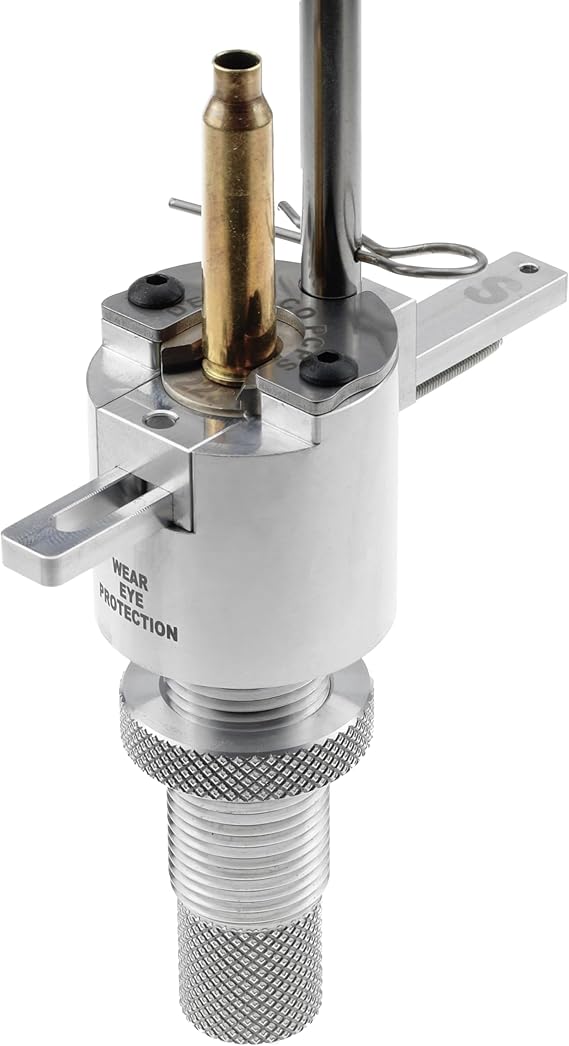 | Poormans PCPS-LITE Die | Check Price |
Our Selected Top 12 Priming Tool Reloading You Can Trust
This list features reliable priming tools designed for efficient and precise reloading. Each review explains how the tool performs, identifies the ideal user, and highlights key strengths and potential drawbacks to help you find the best fit for your reloading needs.
1. Lee Precision Auto Bench Priming Tool
Priming rounds smoothly without causing hand fatigue, making it ideal for anyone reloading regularly. It fits comfortably on the bench and accepts all standard primer boxes thanks to its triangular tray. The main strength lies in its ergonomic design, allowing fast, accurate primer seating without much effort.
Setup takes just a moment; the large and small primer trays hold primers neatly and reduce spills. Loading primers works well because the trays are designed to fit all brands. Its acrylic build keeps it lightweight at just 0.3 kg, so moving it around or adjusting your position is easy during long sessions.
The compact size won’t clutter your workspace either.
Performance is solid, delivering consistent primer seating every time. The acrylic construction feels durable enough for regular use but needs careful handling to avoid cracks.
One common issue is the need to manually place primers in the trays often, which can slow things down somewhat. On the plus side, the ergonomic shape helps reduce strain, which is a big plus during bulk priming.
Users appreciate how the ergonomic design eases repetitive primer seating and the tray size that accommodates different primer brands. Most find handling the acrylic surface cautiously necessary to prevent damage, which can affect longevity.
Reloaders looking for comfort and compatibility with various primer boxes will find this tool satisfying. Those needing an automated or hands-free priming solution might want to explore other options better suited to high-volume priming tasks.
Pros
- Ergonomic design reduces hand fatigue
- Triangular tray fits all primer boxes
- Lightweight acrylic construction
- Includes large and small primer trays
Cons
- Primers must be placed in trays manually
- Acrylic requires careful handling to avoid cracks
| Specification | Details |
|---|---|
| Item Dimensions LxWxH | 11 x 7 x 2 inches |
| Package Weight | 0.45 kg |
| Material | Acrylic |
| Color | Black |
| Brand Name | Lee Precision |
| Number of Items | 1 |
2. RCBS Auto Priming Tool
Great for anyone serious about consistent reloading, the RCBS Auto Priming Tool stands out for its quick and accurate priming with one smooth lever action. It suits reloaders looking for a straightforward, dependable tool that handles primers without fuss or guesswork.
Setting up the tool involves mounting it firmly and loading the included primer feed tubes and rods. The green metal build feels solid, and operating the single-stage lever is easy on your wrist. You don’t need to fiddle with complicated settings, so day-to-day use is simple and keeps your priming speed steady without sacrificing precision.
The tool delivers reliable primer seating every time. Its metal construction adds to its durability and gives a reassuring weight of 2.3 pounds that keeps it stable during use.
The biggest compliment is how smoothly the lever feeds primers, making the process feel mechanical yet seamless. Some users note the bulkier size could be less convenient for limited bench space.
People highlight the tool’s fast, accurate priming action that feels reliable every time. The most frequent downside mentioned is its size, which some find too large for a compact workspace.
Reloaders needing steady speed and accuracy with minimal setup will appreciate this tool. Those with tight bench space or wanting more adjustable features might prefer a different design.
Pros
- Quick and smooth lever action
- Solid metal construction
- Includes two primer rods and feed tubes
- Weighs 2.3 pounds for stability
Cons
- Takes up a fair amount of bench space
- No adjustable settings for primer seating depth
| Specification | Details |
|---|---|
| Item Weight | 2.3 pounds |
| Item Dimensions LxWxH | 14.4 x 5.4 x 2.8 inches |
| Material | Metal blend |
| Included Components | Two primer rod assemblies, two primer feed tubes |
| Color | Green |
3. Poormans PCPS-LITE Precision Priming Die
Stainless steel and aircraft grade aluminium construction gives this priming tool a solid feel that suits anyone looking for precision on a budget. It fits most presses with a 7/8-14 die thread and keeps the primer seating consistent, making it a great pick for hobbyists and reloaders wanting reliable results without breaking the bank.
Setup is straightforward with compatibility for Lee Standard flat-type priming shell holders, and it comes with conversion accessories for large and small primers. The 8mm tube hole accepts common primer tubes, which simplifies daily reloading by keeping everything compatible and easy to swap out.
You won’t have to worry about wobbling with optional competition-grade shell holders offering tighter tolerances if you want to upgrade later.
Priming happens with good consistency thanks to the precision machining of all parts. The stainless steel and T6 aluminium alloy build feels durable and well-made, supporting long-term use. Reviews often mention the excellent consistent primer seating, while a few note that clicking the primer into place can feel a bit stiff, especially at first.
The design focuses well on precision and fit.
Primers seat consistently every time because of the precise machined parts, making it reliable during reloading sessions. Common feedback points to the initial stiffness when seating primers, which eases with use or switching to competition-grade holders.
Those needing dependable and accurate primer seating on a straightforward budget will appreciate it. Reloaders wanting a softer feel might want to look for a pricier system with more refined primer insertion pressure.
Pros
- Compatible with most presses using 7/8-14 threading
- Includes conversion accessories for large and small primers
- Accepts standard priming tubes, improving flexibility
- Precision machining reduces primer wobble
Cons
- Primer insertion can feel stiff initially
- Competition-grade shell holders sold separately
| Specification | Details |
|---|---|
| Material | Stainless Steel, T6 Aircraft Grade Aluminium Alloy |
| Compatible Press Thread | 7/8-14 reloading dies |
| Tube Hole Diameter | 8mm accepts 7.92mm standard tubes |
| Weight | 0.45 kg |
| Package Dimensions | 6.02 x 5.94 x 2.09 inches |
| Included Accessories | Main body, 7/8 conduit, ring, large & small primer conversions |
4. Lyman Gunsmithing Tools
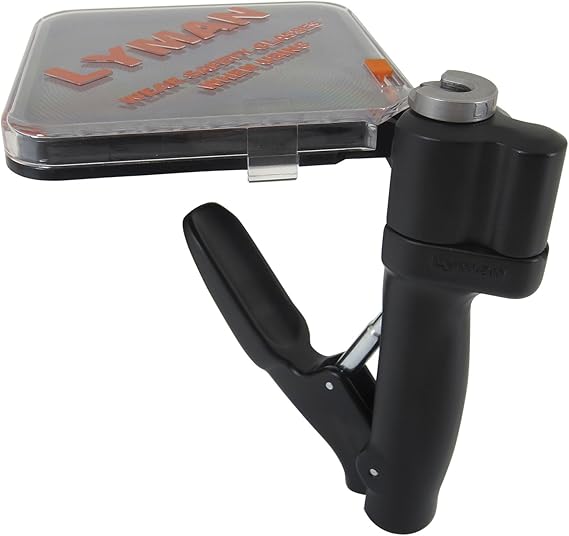
Instant changeover between primer sizes stands out as the biggest strength here, perfect for reloaders who handle multiple calibers regularly. It works with standard shell holders, so anyone looking for flexibility and ease during priming will find it suits their needs well.
Setup is straightforward since it accepts standard shell holders right out of the box. Swapping between large and small primers is quick thanks to the included two primer trays, each with its built-in primer punch. No small parts to lose during the process, and the shut-off gate keeps primers in place, making day-to-day use less fiddly and more efficient.
Priming happens smoothly with less hand fatigue due to the ergonomic design, making long sessions more comfortable. The build quality feels solid, and the integrated trays reduce clutter. The most common drawback mentioned is the tool’s somewhat bulky shape, which can take up more space than smaller handheld priming tools.
People appreciate how the integrated primer trays and shut-off gates simplify switching primer sizes without losing parts. The main drawback noted is the tool’s bulk and weight, which can be a trade-off for its functionality and ergonomic comfort. It gets the job done reliably but takes a bit more space and effort to handle.
Perfect for reloaders who need fast, reliable size changes and dislike losing small parts. Those prioritizing compact and lightweight tools might prefer a different model. This works best for those who load many calibers and want a steady tool to reduce hand strain.
Pros
- Works with standard shell holders for versatility
- Instant changeover between large and small primers
- No small parts to lose during priming
- Ergonomic shape reduces hand fatigue
Cons
- Carries a bulkier shape than some handheld tools
- May feel a bit heavy during extended use
| Specification | Details |
|---|---|
| Brand Name | Lyman |
| Model Number | 7777810 |
| Tray Type | Integrated |
| Included Components | Lyman 7777810 “E-ZEE Prime” Hand Priming Tool |
| Recommended Uses | Reloading ammunition, Hunting, Tactical activities, Sport shooting, Hobbyist use |
| Manufacturer Part Number | 4011617 |
5. Lee Precision Priming Tool Kit
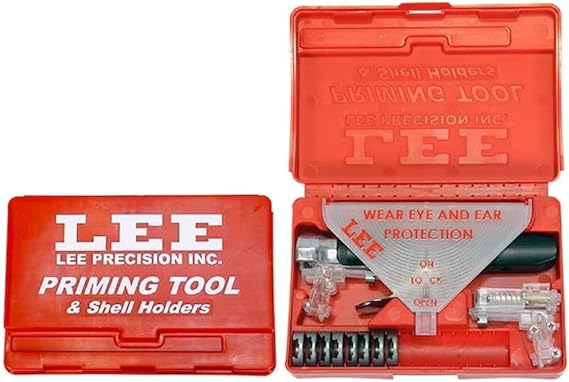
Great for reloaders who prioritize versatility and organization, this priming tool kit covers a wide range of cartridges with its extensive shell holder selection. Perfect for anyone who wants a reliable, compact setup that keeps everything handy and works smoothly across over 130 cartridges.
Setting it up is straightforward with a molded storage box that keeps the Auto-Prime and up to 18 shell holders neatly arranged. The box holds 8 included popular shell holders plus room for 10 extras. This means quick swaps during priming sessions without rummaging for parts, making your reload workflow quicker and more organized.
The kit does a solid job priming cases with consistent force thanks to the Auto-Prime design. Its build is sturdy despite a lightweight feel, weighing just 1.2 pounds overall, so it’s easy to handle. Common praise centers on its wide cartridge compatibility, while some mention the shell holder selection might not cover very rare calibers without buying extras separately.
The kit’s biggest strength is its broad compatibility and convenient storage that keeps priming organized. The most frequent downside is the need to buy extra shell holders for less common cartridges. That can add unexpected costs.
Reloaders working with popular calibers will appreciate the ready-to-go setup and all-in-one organization. Those needing special or rare calibers may want a kit with more included shell holders or a different storage solution.
Pros
- Includes 8 popular shell holders for many cartridges
- Compact molded storage box holds all components
- Lightweight design at just 1.2 pounds
- Works with over 130 different cartridges
Cons
- Some shell holders not included for rare calibers
- Storage box size limits extra accessory options
| Specification | Details |
|---|---|
| Item Dimensions LxWxH | 5.8 x 4.8 x 1.5 inches |
| Package Weight | 1.2 pounds |
| Number of Items | 1 |
| Shell Holders Included | 8 shell holders, holds 10 more |
| Model Name | Lee Precision 90215: Auto Prime Kit |
6. Poormans PCPS Precision Priming Die
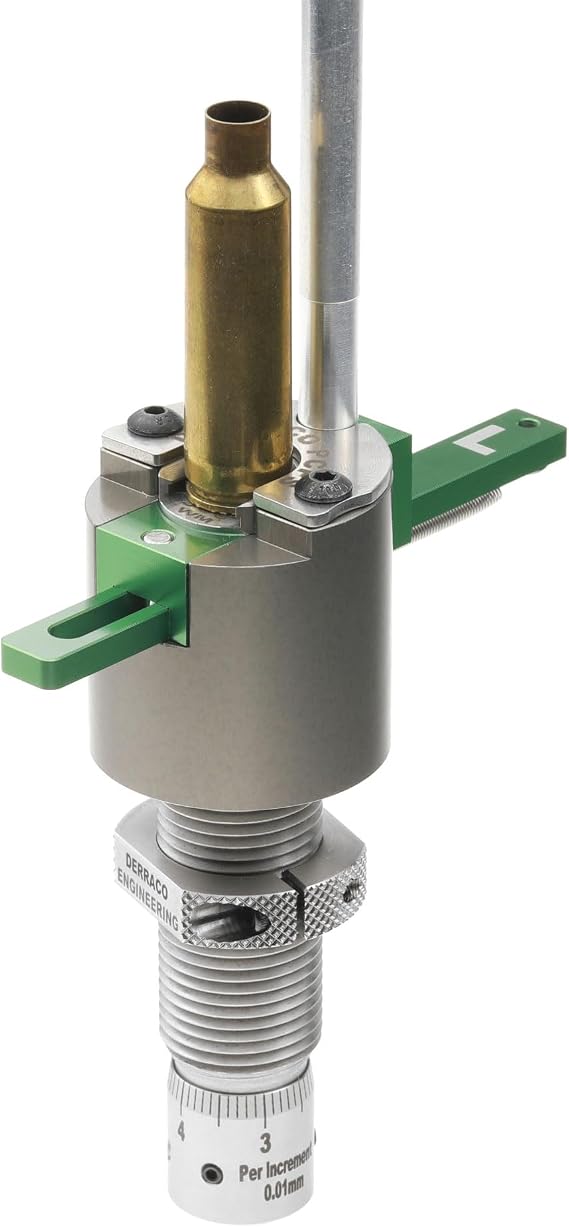
Priming brass cases can be a fussy task when trying to get consistent, precise results. Designed for anyone using a reloading press with standard 7/8-14 die threads, this tool makes primer seating dependable thanks to a micrometer hard stop.
It suits reloaders seeking accuracy without worrying about their press’s price.
Setup involves simply fitting the die into any compatible press and using the included T-shaped shell holder or optionally purchased higher-precision holders. The die works with Lee Standard flat-type priming shell holders and features a color-coded primer tube system to help with organization. Its materials and design keep it light at 0.6 kg, making it easy to handle during repetitive priming work.
Priming is consistently accurate due to the micrometer hard stop. The aircraft-grade T6 aluminium alloy and stainless steel build ensure solid durability.
Users often praise its precision across various presses. A noted drawback is that better precision can require separately purchased premium shell holders to minimize any wobble during seating.
The tool delivers accurate, repeatable primer seating thanks to the micrometer hard stop and durable materials. Most praise its consistent precision across presses, while common criticism focuses on the need for extra shell holders to reduce wobbling during use.
Reloaders valuing exact primer seating on any press will appreciate this die’s performance. Those looking for a fully plug-and-play kit without extra parts might prefer alternatives that include premium holders and primer tubes right away.
Pros
- Micrometer hard stop for precise primer seating
- Built from aircraft-grade aluminium and stainless steel
- Compatible with a wide range of presses
- Includes a T-shaped shell holder for convenience
Cons
- Premium shell holders sold separately for less wobble
- Primer tube color codes require separate purchase
| Specification | Details |
|---|---|
| Package Dimensions (L x W x H) | 6.07 x 5.99 x 2.05 inches |
| Package Weight | 0.6 kg |
| Material | Aircraft-Grade T6 Aluminium Alloy, Stainless Steel |
| Compatibility | 7/8-14 reloading dies, standard T-shaped shell holders |
| Primer Tube Diameter | 8mm tube hole, accepts 7.92mm standard tubes |
7. Hornady Handheld Priming Tool

Compact and lightweight, the Hornady Handheld Priming Tool is ideal for reloaders who need a precise yet portable priming solution. Its aluminum construction makes handling easy without sacrificing durability, perfect for both casual reloaders and those focused on hunting or shooting.
Setup takes moments; just load the tapered die and drop a primer in the tray. The small size fits comfortably in your hand, allowing quick, controlled seating of primers without bulky machinery. Its red aluminum body feels solid and doesn’t slip, making reloading straightforward during any session.
Priming is consistent and reliable thanks to the tool’s precise design. Crafted from aluminum, it balances sturdiness with a light 16-ounce weight that won’t tire your hand during repeated use.
Many praise its lifetime warranty, while some mention that it requires returning to the start position manually between primers rather than auto-feeding.
Many users find the tool’s reliability and solid aluminum build valuable for consistent priming. However, the manual reset between primers is the most frequent inconvenience noted, slowing down rapid loading. Despite this, the compact and sturdy design makes it dependable over time.
The priming tool suits reloaders who prioritize portability and durability in a lightweight package. Those seeking high-volume or automated priming might want to look at tools with auto-feed functions instead.
Pros
- Lightweight aluminum body for easy handling
- Compact size perfect for portability
- Simple to set up and use
- No-risk lifetime warranty included
Cons
- Requires manual reset between primers
- Small size might feel cramped for large hands
| Specification | Details |
|---|---|
| Item Weight | 0.27 g |
| Item Dimensions LxWxH | 8 x 7 x 3 inches |
| Material | Aluminum |
| Package Weight | 16 ounces |
| Package Dimensions L x W x H | 7.6 x 6.6 x 2.3 inches |
8. Accu-Prime Manual Bench Priming Tool

Reloaders looking for a manual priming tool that offers precise control and reliability will appreciate the Accu-Prime Manual Bench Priming Tool. It is designed mainly for bench use, with a straightforward approach to seating primers accurately.
Its biggest strength lies in consistent primer seating depth without the need for electricity or complex setups.
Setup requires mounting the tool securely to a bench and adjusting the primer arm for proper alignment. Day-to-day use involves manually placing primers and cases, then pushing the handle to seat the primers firmly.
The simplicity means less maintenance and easy cleaning, all while fitting standard primer sizes without fuss. Its compact size makes it manageable on any reloading bench.
Performance in seating primers is precise and repeatable, which is key for reloaders focused on safety and consistency. The all-metal construction offers durability, though the metal can feel a bit bulky for some users. A strong point mentioned often is how well it handles primers without damage, while the main downside noted is the manual effort required, which might slow down production for high-volume reloaders.
Accu-Prime Manual Bench Priming Tool is praised for its precise primer seating without damaging primers. The common complaint concerns the manual push action, which can be tiring for multiple loads. This makes it a solid choice for reloaders who value accuracy over speed.
Those who prefer exact control during priming and work at a steady pace will enjoy this tool’s reliability. Reloaders needing to process large quantities quickly might want to look at powered alternatives for less manual strain.
Pros
- Consistent primer seating depth
- Durable all-metal build
- Simple to clean and maintain
- Fits standard primer sizes easily
Cons
- Requires manual effort for each primer
- Feels bulky compared to smaller tools
| Specification | Details |
|---|---|
| Type | Manual Bench Priming Tool |
| Material | All-metal construction |
| Primer Compatibility | Standard small and large primers |
| Weight | Not specified |
| Mounting | Bench-mounted |
9. RCBS Rock Chucker Supreme Auto Priming Tool

Automatic primer seating that cuts down manual effort sets this tool apart for anyone reloading a lot of cartridges. It suits both casual and serious reloaders who need consistent primer placement without hand fatigue.
Its biggest strength lies in speeding up the priming process automatically while maintaining reliable results.
Setup involves attaching it to your reloading bench and loading primer strips. Day-to-day use goes smoothly thanks to the ergonomic design that provides good leverage and comfortable hand-priming.
The aluminum build keeps it lightweight but sturdy. Using it repeatedly doesn’t wear you down, making long sessions more manageable. It handles different calibers, including precise resizing for .22 Hornet, so you don’t need extra tools for most ammunition.
It consistently seats primers accurately with minimal effort, meeting expectations for repeated, reliable use. The aluminum construction feels durable while keeping overall weight low at just over a pound, so it isn’t unwieldy.
The strongest praise centers on how fast and smooth the priming goes, while the occasional drawback is the limited caliber range compared to some other setups.
The tool earns praise for speeding up the priming process and requiring very little effort, making it suitable for high-volume reloads. Some find the lack of support for a wider range of calibers a notable limitation. It consistently delivers on reliable primer seating.
Anyone focused on .22 Hornet and similar calibers who reload frequently will appreciate this tool’s efficiency and comfort. Reloaders needing broader caliber compatibility might want to consider other options better suited for diverse ammunition needs.
Pros
- Automatically seats primers quickly and reliably
- Ergonomic design reduces hand fatigue
- Lightweight aluminum construction
- Precise resizing for .22 Hornet cartridges
Cons
- Limited to certain calibers
- Bench mounting required for use
| Specification | Details |
|---|---|
| Item Dimensions LxWxH | 6 x 3 x 2 inches |
| Item Weight | 1.2 pounds |
| Material | Aluminum |
| Model Name | 9358 |
| Color | Black |
10. Lyman Accu-Prime Auto-Load Bench Priming Tool

Lyman Accu-Prime Auto-Load Bench Priming Tool is designed for reloaders who want quick and consistent primer seating. Its biggest strength is the auto-load feature that feeds primers smoothly, saving time and reducing fumbling during a session.
Setup involves adjusting the tool to fit the primer size, which is straightforward thanks to clear markings. Day-to-day use feels efficient since primers stack neatly in the tray, ready to drop one by one without manual placement.
The tool sits firm on the bench, helping you keep a steady rhythm when priming large batches.
Performance-wise, it consistently places primers at the right depth without damaging them. Construction is solid metal, giving the tool a durable feel. The strongest praise focuses on its speed and reliability.
The common complaint is occasional primer hang-up, which requires clearing to avoid jams.
The tool is praised most for how quickly and reliably it seats primers, reducing the time spent per round. Its main drawback is the occasional primer hang-up that can disrupt the flow and needs manual intervention to clear.
This tool suits reloaders looking for speed without complexity, especially those working on large batches with different primer types. Reloaders prone to primer feeding issues or seeking fully automated priming might look elsewhere.
Pros
- Auto-load speeds up priming process
- Durable metal construction
- Works for various primer sizes
- Steady bench-mounted design
Cons
- Primers occasionally hang up
- Requires occasional clearing to avoid jams
| Specification | Details |
|---|---|
| Primer Types | Small and Large rifle and pistol |
| Power Source | Manual |
| Material | Metal construction |
| Auto-load Feature | Yes |
11. RCBS Automatic Primer Feed

Using the RCBS Automatic Primer Feed feels like cutting a big chunk out of your reloading time. It’s designed for shooters who reload a lot and want a system to automatically feed primers quickly without fuss. The biggest strength is how it holds and feeds up to 100 primers, speeding up the priming stage significantly.
Setting it up is straightforward since it comes as a combo, so you can get right to work. It sits neatly on your bench and holds a full load of primers in one go, which means fewer stops to reload primers manually. This keeps your workflow smooth, especially when you’re cranking out a high volume of reloads, and reduces the chance of fumbling with individual primers.
Priming is consistent and the feed mechanism works reliably, handling primers efficiently without jamming. The build is solid for its weight at 4.8 ounces, compact but sturdy enough for regular use.
The most common praise highlights how much time it saves during busy sessions. Some mention that the capacity is great but you still need to keep an eye on feeding to avoid stalls.
The standout feature is how much faster the feed system makes the priming process, especially when handling high volumes. However, the mechanism still requires attention to prevent stalling during use, which is the main drawback noted. Users appreciate the large 100-primer capacity but keep an eye on primer delivery to avoid hiccups.
Reloaders processing many rounds benefit most from this setup, gaining efficiency and reducing downtime. Those who prime smaller batches or prioritize stability may want a heavier option or something less automatic to keep finer control over each primer.
Pros
- Holds up to 100 primers for longer run times
- Automatic primer feed system speeds up work
- Compact design fits well on any reloading bench
- Includes everything needed to get started
Cons
- Primer feed can stall if not watched closely
- Weight is very light, which may affect stability
| Specification | Details |
|---|---|
| Brand Name | RCBS |
| Item Weight | 4.8 ounces |
| Specific Uses For Product | Reloading |
| Coverage | 100 primers |
| Model Number | 9580 |
12. Hornady Auto Primer Feed

Speed and convenience make priming less of a chore with this Hornady Auto Primer Feed. Ideal for anyone using a Hornady l-n-l classic or 007 press, it simplifies the process and handles both small and large primers, letting you prime cases faster and with less fuss.
Setting up involves simply attaching the device to the appropriate press, filling one of the included large or small primer tubes depending on your needs, and letting it feed primers automatically. It cuts down the manual effort often needed when priming, helping keep your workflow smooth and steady during reloading sessions.
The tool consistently speeds up priming by feeding primers reliably through the chosen tube. Its metal construction forms a sturdy, compact unit, making it feel solid yet lightweight at under 5 ounces.
Common praise highlights how much quicker priming gets done, while some mention occasional primer seating issues depending on primer type or condition.
This priming tool is praised for how much it speeds up the process by feeding primers automatically, reducing manual effort significantly. Most common drawback noted is occasional problems with primer seating consistency, which may require attention to primer type and condition.
Reloaders using Hornady presses looking to accelerate priming work will appreciate this tool. Those seeking a universal fit for other press brands or needing very precise primer seating might want to consider other options.
Pros
- Works with large and small primer tubes
- Fits popular Hornady presses easily
- Lightweight and compact design
- Speeds up priming significantly
Cons
- Some primers may seat unevenly
- No explicit cleaning instructions included
| Specification | Details |
|---|---|
| Item Dimensions LxWxH | 9 x 4 x 1 inches |
| Item Weight | 4.8 ounces |
| Model Name | 070905 |
| Included Components | Auto Primer |
| Fits | Hornady l-n-l classic and 007 press |
| Color | Metal |
Best Priming Tool Reloading Comparison Table
| Product | Weight | Size (LxWxH inches) | Material | Warranty |
|---|---|---|---|---|
| Lee Auto Bench Primer | 0.3 kg | 11x7x2 | – | Free first replacement |
| RCBS Auto Priming Tool | 2.3 lbs | 14.4×5.4×2.8 | Blend | Limited manufacturer |
| Poormans PCPS-LITE Die | 0.45 kg | 6.02×5.94×2.09 | Stainless steel, aluminum | Limited lifetime |
| Lyman Gunsmithing Tools | – | – | – | – |
| Lee Priming Tool Kit | 1.2 lbs | 5.8×4.8×1.5 | Other | – |
| Poormans PCPS Die | 0.6 kg | 6.07×5.99×2.05 | Aluminum, stainless steel | Limited lifetime |
| Hornady Handheld Primer | 16 oz | 8x7x3 | Aluminum | Lifetime warranty |
| Accu-Prime Manual Bench | – | – | – | – |
| RCBS Rock Chucker Auto | 1.2 lbs | 6x3x2 | Aluminum | See manufacturer |
| Lyman Accu-Prime Bench | – | – | – | – |
| RCBS Auto Primer Feed | – | – | – | – |
| Hornady Auto Primer Feed | 4.8 oz | 9x4x1 | Other | Lifetime warranty |
- Weight0.3 kg
- Size (LxWxH inches)11x7x2
- Material–
- WarrantyFree first replacement
- Weight2.3 lbs
- Size (LxWxH inches)14.4×5.4×2.8
- MaterialBlend
- WarrantyLimited manufacturer
- Weight0.45 kg
- Size (LxWxH inches)6.02×5.94×2.09
- MaterialStainless steel, aluminum
- WarrantyLimited lifetime
- Weight–
- Size (LxWxH inches)–
- Material–
- Warranty–
- Weight1.2 lbs
- Size (LxWxH inches)5.8×4.8×1.5
- MaterialOther
- Warranty–
- Weight0.6 kg
- Size (LxWxH inches)6.07×5.99×2.05
- MaterialAluminum, stainless steel
- WarrantyLimited lifetime
- Weight16 oz
- Size (LxWxH inches)8x7x3
- MaterialAluminum
- WarrantyLifetime warranty
- Weight–
- Size (LxWxH inches)–
- Material–
- Warranty–
- Weight1.2 lbs
- Size (LxWxH inches)6x3x2
- MaterialAluminum
- WarrantySee manufacturer
- Weight–
- Size (LxWxH inches)–
- Material–
- Warranty–
- Weight–
- Size (LxWxH inches)–
- Material–
- Warranty–
- Weight4.8 oz
- Size (LxWxH inches)9x4x1
- MaterialOther
- WarrantyLifetime warranty
How to Choose the Best Priming Tool
Choosing a good priming tool depends on reliability, ease of use, and consistent primer seating to ensure safety and accuracy in reloading. Selecting the right tool prevents malfunctions and saves money by reducing wasted primers and avoiding damage to cases or firearms during use.
Compatibility with Cartridge Types
Some reloaders quickly find out that a tool that’s perfect for one caliber won’t work well, or at all, for others. Reloading different cases often means dealing with varying primer sizes and pocket depths, and a tool that doesn’t handle both small and large primers can force you to buy multiple setups. Having a tool that accommodates the full range of calibers used in your collection makes the process smoother and saves money down the road.
Look for a tool that explicitly lists compatibility with the cartridges you reload: 9mm, .223 Remington, .308 Winchester, and so on. Clear markings or adjustable parts for small and large primers are key.
Also, check that the tool can handle common case types without excessive adapters. This versatility eliminates guesswork and avoids primer seating problems like partial seating or damage.
Priming Mechanism Quality
Loading primers can become frustrating when inconsistent seating depths cause misfires or squibs. Tools that don’t deliver primers smoothly often leave you guessing whether the primer is properly seated.
A reliable mechanism delivers consistent, repeatable primer seating, which reduces wasted components and reload time.
Tools mounted on a bench tend to be more stable and accurate but take up space, while hand-held models offer flexibility at the cost of some precision. The best tools allow primer delivery with simple, smooth action and a feeding system that prevents double primers, this is important for safety and functionality.
Check if the tool provides uniform primer seating without needing excessive force.
Build Material and Durability
Practice shows that cheap tool components quickly wear out or deform, especially under repeated pressure. Materials like hardened steel or quality aluminum are what keep the tool functional and aligned over thousands of reloads.
A tool prone to corrosion can jam or fail, so corrosion-resistant finishes or coatings matter, particularly if you reload in humid environments.
The weight and feel also affect daily use. A tool too light might feel flimsy, while an overly hefty one can tire your hands during long sessions. Balanced ergonomics with textured grips improve control and comfort.
The combination of solid build and resistant coatings extends the tool’s lifespan and reliability.
Ease of Use and Ergonomics
The effort it takes to seat a primer adds up during long reloading days. Tools with easy primer loading often feature a convenient tray or holder to keep primers readily accessible without fumbling. Press actions or triggers that operate smoothly reduce hand strain and speed up work.
Comfortable grips and well-designed pressing mechanisms prevent slipping or excess pressure on your palms. Ability to adjust primer seating depth and tension is also important because different brands or primer types may require slight tweaks.
These adjustments ensure consistent seating without damaging primers or cases.
Safety Features
Accidental primer ignition can cause injury and damage components, so safety features aren’t optional. Tools that have built-in mechanisms to prevent primers from sliding out or setting off unintentionally lower risk substantially. Designs with clear, readable instructions help prevent user errors during loading and seating.
Look for features like primer cups or holders that shield primers until the actual press, reducing exposure. Some tools also use tension springs or locking systems to keep primers secure. Such design choices minimize mishandling and improve safety during the entire reloading process.
Proper Maintenance and Cleaning Techniques for Priming Tools
Priming tools require regular cleaning to maintain reliability and safe operation. Spent primer residue can quickly build up in the tool’s seating components, affecting how consistent each primer seats.
Stray powder or dirt may also cause misfires or double charges.
Basic maintenance steps include:
- Disassembling the priming assembly according to the manufacturer’s instructions.
- Cleaning primer cups and seating pins with a small brush and a mild solvent free of oils.
- Wiping down all parts to remove gunpowder residue and dust before reassembling.
- Lightly lubricating moving parts only if the tool’s manual recommends it; too much oil can attract debris.
Regular inspection for any wear or warping, especially in manual tools, helps prevent seating issues. A clean and properly maintained priming tool ensures consistent primer seating force, which translates to better ammunition performance.
Common Mistakes to Avoid When Using Priming Tools
Avoid common errors that can cause problems when using priming tools. One frequent mistake is seating primers too deeply or unevenly.
This happens when the priming force is applied too forcefully or at an angle, resulting in inconsistent ignition or primer damage.
Another issue is failing to properly size primer pockets before inserting new primers, which can cause primers to sit loosely or get damaged when seated. Using the wrong size primers or attempting to seat already spent primers also leads to wasted components and unreliable reloads.
Many reloaders underestimate the importance of using the tool on a stable, flat surface. Movement during seating can cause misalignment and uneven primer placement.
Double-check the following:
- Use the correct primer size specified for the cartridge.
- Handle primers carefully to avoid dents or damage before seating.
- Apply steady, straight pressure during priming.
- Regularly inspect primers for proper seating depth after use.
Comparing Manual vs. Electric Priming Tools: Pros and Cons
The choice between manual and electric priming tools depends on batch size and user preference. Manual tools generally offer greater control over seating depth since you apply the force yourself.
This often results in consistent primer placement, essential for precision handloading.
Manual devices are simpler with fewer parts that can fail. They tend to be lighter and do not require power sources, making them portable and easy to maintain.
On the other hand, electric priming tools speed up the process significantly, especially in larger volumes. These tools automate primer seating, reducing the physical effort required for mass reloading.
Consider these points:
- Manual tools are generally less expensive with fewer mechanical failures.
- Electric models reduce priming time but usually require a power supply and more regular cleaning.
- For small to medium reloads, manual priming remains practical and reliable.
- High-volume reloaders might benefit from electric tools to save time.
Balancing speed and precision helps determine the better option for your specific reloading needs.
People Also Asked
How Do I Properly Size Primers with a Priming Tool?
Primers should be seated just below the case mouth using a priming tool, not pressed too deep or above the case surface. Use a consistent amount of force on the handle to avoid crushing the primer or leaving it loose.
What Safety Precautions Should I Take When Using a Priming Tool?
Work in a well-lit area and wear safety glasses to protect from accidental primer ignition. Keep primers in their packaging until ready to use to minimize accidental discharge and keep your workspace clean of stray primers.
Can I Use a Priming Tool with Different Primer Types?
Most priming tools handle both small and large primers, but it’s important to use the correct shell holder and adjust spring tension where possible for consistent seating. Check the tool specifications before mixing primer sizes.
How Do I Clean and Maintain a Priming Tool for Longevity?
After each use, remove any powder residue or dirt with a soft brush and light oil on pivot points to keep the tool working smoothly. Avoid soaking the tool in water as it can cause rust on metal parts.
What Are Common Problems When Using a Priming Tool and Fixes?
Common problems include primers not seating evenly or the tool jamming, often caused by dirty tools or wrong shell holders. Regular cleaning and using the proper shell holder size typically fix these issues.
Conclusion
Choosing a good priming tool comes down to ease of use, consistency, and durability. You want a tool that fits comfortably in your hand and provides even pressure on each primer.
It also needs to hold up well through repeated use without parts wearing out too quickly.
Consider how much space you have and how often you’ll be reloading. Some tools take up less room but might be slower, while others handle big batches better but need more storage space.
Review the comparison table and the detailed options above to find the priming tool that fits your routine and budget best.